

Class: Primary Two
term: First Term
Subject: Cultural & Creative Arts
Curriculum Theme:
previous Lesson:
Topic: Shapes And Sizes
Content/Learning Area: Identifying different shapes, Mentioning 2 types of shapes, Drawing different shapes
Time allocation: 40 minutes
Performance Objectives
By the end of the lesson, pupils should be able to:
- Cognitive Domain:
- Identify different shapes.
- mention two types of shapes.
- Explain the characteristics of different shapes.
- Affective Domain:
- Show interest in learning about shapes.
- Appreciate the importance of shapes in art and everyday life.
- Psychomotor Domain:
- draw different shapes accurately.
- Reproduce shapes from memory.
- Social Domain:
- Participate actively in class discussions.
- Work cooperatively with peers during activities.
Reference Materials
- 9 – Years Basic Education Curriculum
- Abuja Educational Resource Center Scheme of Work
- NAPPS National unified Scheme of Work
- Relevant Textbooks
Instructional Materials
To deliver this lesson, the teacher will use the following materials:
- Whiteboard or chart paper
- Markers or crayons
- pictures of different shapes
- Drawing paper and pencils for each pupil
Rationale for the Lesson
Understanding shapes is essential to art and design. This lesson provides a foundation for future lessons in art and other subjects.
Prerequisite/Previous Knowledge
The teacher will start by asking pupils what shapes they see around them in the classroom. The teacher will than show pictures of various shapes, encouraging pupils to name them.
Lesson Content
Shapes And Sizes
Shapes are fundamental in art and everyday life, helping us recognize and create objects and designs.
What are Shapes?
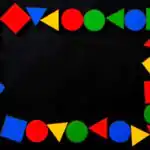
Shapes are two-dimensional figures with specific outlines, found in various forms around us. Common shapes include circles, squares, rectangles, triangles, and ovals.
Types of Shapes
shapes are basic geometric forms that define the outline of an object. They come in various forms, each with unique properties. The following are examples:
- Circles: Round shapes with no corners or edges, like a ball or coin.
- Squares: Four equal sides and four right angles, like a box or paper.
- Rectangles: Four sides, but not all equal; two long and two short sides, like a door or window.
- Triangles: Three sides and three corners, like a pizza slice or pyramid.
- Ovals: Stretched-out circles, like an egg or football.
- Diamonds: Four equal sides forming pointed corners, like a kite or gemstone.
- Stars: Five or more points extending from a central shape, like a celestial star or holiday decoration.
Teaching Methods
To deliver this lesson, the teacher will adopt the following methods: Discussion, Presentation, Guided Practice, Autonomous Practice
Instructional Procedures
To deliver this lesson, the teacher will adopt the following steps:
Step 1: introduction
Time: 5 minutes
Teaching Skill: Set Induction
Teacher’s Activity: Review previous lesson and introduce the topic of shapes. Ask pupils what shapes they see around them.
Pupils’ activity: respond to teacher’s questions, identify shapes in the classroom.
Step 2: Explanation of Key concepts
Time: 10 minutes
Teaching Skill: Explanation
teacher’s Activity: Explain what shapes are and show examples of different shapes using pictures and drawings.
Pupils’ Activity: Listen attentively, observe examples, and ask questions.
step 3: Presentation/guided practice
time: 10 minutes
Teaching Skill: Modeling
Teacher’s Activity: Demonstrate how to draw different shapes on the board. Guide pupils in drawing simple shapes.
Pupils’ Activity: Observe the teacher’s demonstration, practice drawing shapes with guidance.
Step 4: Independent practice
Time: 10 minutes
Teaching Skill: Monitoring
Teacher’s Activity: Allow pupils to draw different shapes independently. Monitor their progress and provide individual feedback.
Pupils’ Activity: Draw various shapes independently, apply what they have learned.
step 5: Note-Taking
Time: 2 minutes
Teaching Skill: Summarizing
Teacher’s Activity: Summarize the key concepts of the lesson. Encourage pupils to take notes.
Pupils’ Activity: Take notes on the key concepts.
Step 6: Evaluation/Review
Time: 3 minutes
Teaching Skill: Questioning
Teacher’s Activity: Ask evaluation questions to assess pupils’ understanding.
Pupils’ Activity: Answer the evaluation questions.
Objective-aligned checks:
- mention two types of shapes.
- Explain the characteristics of different shapes.
- draw different shapes accurately.
Step 7: Conclusion
Time: 3 minutes
Teaching Skill: Summarizing
Teacher’s Activity: Conclude the lesson by summarizing the key concepts and commending pupils for their active participation. Assign homework where pupils will draw different shapes at home.
Pupils’ Activity: Listen to the summary and note the homework assignment.
lesson Keywords
- Shapes – Two-dimensional figures with specific outlines.
- Circle – A round shape with no corners or edges.
- Square – A shape with four equal sides and four right angles.
- Rectangle – A shape with four sides, two long and two short.
- Triangle – A shape with three sides and three corners.
Lesson Evaluation
To evaluate the learning, the teacher asks pupils to:
- Name two types of shapes we discussed today.
- What is the importance of learning about shapes?
- Draw a circle on your paper.
- How many sides does a square have?
- Draw a rectangle and count its sides.
Assignment/Homework
- Draw a square and a triangle.
- Find three objects at home that are shaped like a circle.
- Draw a rectangle and label its sides.
Differentiation
- For slower learners: Provide one-on-one assistance and use simpler shapes.
- For advanced learners: Encourage them to create more complex designs using different shapes.
- For visual/auditory/kinesthetic learners: Use visual aids, verbal explanations, and hands-on activities to cater to different learning styles.
Note for Teachers
Ensure to provide ample examples and real-life applications of shapes to make the lesson engaging and relevant for the pupils. Encourage active participation and provide constructive feedback to support their learning.
Community Join the conversation Open discussion +