

Class: Primary Two
Term: Third Term
Subject: Cultural & Creative Arts
curriculum theme:
Previous Lesson: Story Telling, Formation Of Story
Topic: Conventional Festivals
Content/Learning Area: What traditional festivals are, Examples of traditional festivals in Nigeria, Importance of traditional festivals
Time Allocation: 40 minutes
Performance Objectives
By the end of the lesson, pupils should be able to:
- Cognitive Domain:
1. Describe what traditional festivals are.
2. Identify at least two examples of traditional festivals in Nigeria.
3. Explain the importance of traditional festivals.
- Affective Domain:
1. Show thankfulness for the cultural heritage of Nigeria.
2. Develop a sense of pride in their own cultural traditions.
- Psychomotor Domain:
1. Actively participate in class discussions about traditional festivals.
- Social Domain:
1. work collaboratively with peers in group activities.
Reference Materials
- 9 – Years Basic education Curriculum
- Abuja Educational Resource Center scheme of Work
- NAPPS National Unified Scheme of Work
- Relevant Textbooks
Instructional materials
to deliver this lesson, the teacher will use the following materials:
- Whiteboard or chart paper
- Markers or crayons
- Pictures or videos of traditional festivals
Rationale for the Lesson
This lesson is crucial for pupils to understand and appreciate their cultural heritage. Learning about traditional festivals fosters a sense of identity and belonging,promoting cultural preservation and national unity.
Prerequisite/Previous Knowledge
The teacher will begin by asking pupils what they know about celebrations and special events in their communities. The teacher will then introduce the topic of traditional festivals, highlighting their importance and unique aspects.
Lesson Content
Traditional Festivals
Traditional festivals are special celebrations unique to different communities. They offer insights into the history, culture, and traditions of a specific group.
Examples of Traditional Festivals in Nigeria
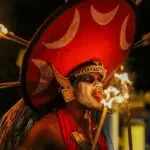
Traditional festivals in Nigeria showcase the country’s rich cultural diversity. They are:
- Eyo Festival – lagos: This Lagos Island festival features colorful masquerades in white flowing robes.
- New Yam Festival – Ijebu land: Celebrated by the Ijebu people, this festival marks the harvest’s end and the start of a new farming season.
- Argungu Fishing Festival (Kebbi State): This festival showcases fishermen competing in a fishing competition.
- Durbar Festival (Kano): Held in Kano, this festival is celebrated after Ramadan and during Eid-el-Kabir, featuring horsemen and dancers.
- Ojude Oba Festival (Ijebu-Ode): in Ijebu-Ode, people pay homage to their king, the Awujale of Ijebuland.
- Osun-Osogbo Festival (Osun State): This is an annual celebration in honor of the river goddess Osun, featuring cultural dances and rituals.
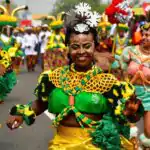
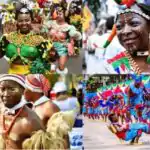
- Calabar Carnival (Cross River State): A vibrant street parade with colorful costumes, music, and dance, promoting tourism and cultural exchange.
Importance of Traditional Festivals
Traditional festivals play a vital role in preserving and promoting cultural heritage.They are:
- Preserve Culture: They keep traditions alive and pass them to future generations.
- promote Unity: They bring people together, fostering unity and belonging.
- Celebrate Heritage: They celebrate history and the achievements of ancestors.
- Boost Tourism: They attract visitors,showcasing the beauty and richness of our culture.
- Educate the Youth: They provide opportunities for younger generations to learn about their cultural roots.
- Strengthen Community Bonds: They reinforce social connections and cooperation within communities.
Teaching Methods
To deliver this lesson, the teacher will adopt the following methods: Discussion, Question and answer, Visual aids
Instructional Procedures
To deliver this lesson, the teacher will adopt the following steps:
Step 1: Introduction
Time: 5 minutes
Teaching Skill: Set Induction
Teacher’s Activity: Asks pupils about celebrations and special events they know.
Pupils’ activity: Share their knowledge and experiences.
Step 2: Description of Key Concepts
Time: 10 minutes
Teaching Skill: Explanation
Teacher’s Activity: Explains what traditional festivals are and their meaning.
Pupils’ Activity: listen attentively and ask clarifying questions.
Step 3: Exhibition/Guided Practice
Time: 10 minutes
Teaching Skill: Demonstration
Teacher’s Activity: Shows pictures or videos of different Nigerian traditional festivals.
Pupils’ Activity: Observe and identify key features of each festival.
Step 4: Independent Practice
Time: 5 minutes
Teaching Skill: Guided Practice
Teacher’s Activity: Asks pupils to name and describe two traditional festivals.Pupils’ Activity: Respond individually or in pairs.
Step 5: Note-Taking
Time: 5 minutes
Teaching Skill: Note-Taking
Teacher’s Activity: Guides pupils in taking notes on key concepts.
pupils’ Activity: Write down significant information.
Step 6: Evaluation/Review
Time: 5 minutes
Teaching Skill: Questioning
Teacher’s Activity: Asks review questions to assess understanding.
Pupils’ Activity: Answer questions to demonstrate learning.
Objective-aligned checks:
- Describe what traditional festivals are.
- Identify at least two examples of traditional festivals in Nigeria.
- Explain the importance of traditional festivals.
Step 7: Conclusion
Time: 5 minutes
Teaching Skill: Summarizing
Teacher’s Activity: Summarizes the key points about traditional festivals.
Pupils’ Activity: Listen and share what they learned with their families.
Lesson Keywords
- Traditional Festivals – Special celebrations unique to different communities.
- Culture – The customs, arts, social institutions, and achievements of a particular nation, people, or group.
- Heritage – The traditions, achievements, beliefs, etc., that are part of the history of a group or nation.
- Unity – The state of being united or joined as a whole.
- Preservation – The action of preserving something.
lesson Evaluation
To evaluate the learning, the teacher asks pupils to:
- What are traditional festivals?
- Name two Nigerian traditional festivals and describe their uniqueness.
- Why are traditional festivals critically important?
- What activities take place during traditional festivals?
- Are there any traditional festivals celebrated in your community?
Assignment/homework
- Ask your parents or grandparents about a traditional festival in your community and write a short paragraph about it.
- Draw a picture of your favorite traditional festival.
- List three reasons why it is important to preserve traditional festivals.
Differentiation
- For slower learners: The teacher will provide one-on-one assistance and simplified explanations.
- For advanced learners: The teacher will encourage independent research on additional traditional festivals.
- For visual/auditory/kinesthetic learners: Use visual aids like pictures and videos, encourage discussions, and incorporate movement activities like acting out festival scenes.
Note for Teachers
Encourage pupils to share personal experiences related to traditional festivals to make the lesson more engaging and relevant. Emphasize the importance of respecting and appreciating all cultures.

Community Join the conversation Open discussion +