

Class: Primary Two
term: Third Term
Subject: Cultural & Creative Arts
Curriculum Theme:
Previous Lesson: Meaning and Examples of Traditional Festivals
Topic: Painting a Carnival of Festivals
Content/Learning Area: Identifying and describing various elements of a carnival of festivals,appreciating the cultural importance of traditional festivals,working collaboratively in groups to discuss and share ideas about festival celebrations
Time Allocation: 40 minutes
Performance Objectives
By the end of the lesson,pupils should be able to:
- Cognitive Domain:
1. Identify and describe various elements of a carnival of festivals.
2. Understand the cultural meaning of traditional festivals.
- Affective Domain:
1. Appreciate the cultural significance of traditional festivals.
2. Show enthusiasm for participating in group activities.
- Psychomotor Domain:
1. Create a painting depicting a carnival scene.
2. Use paints and brushes effectively.
- Social domain:
1. Work collaboratively in groups.
2. Share ideas and opinions respectfully.
Reference Materials
- 9 – Years Basic Education Curriculum
- Abuja Educational resource Center Scheme of Work
- NAPPS National Unified Scheme of Work
- Relevant Textbooks
Instructional Materials
To deliver this lesson, the teacher will use paints, brushes, and drawing paper.
Rationale for the Lesson
This lesson helps pupils understand and appreciate the cultural significance of festivals while developing their artistic skills. Painting allows for creative expression and enhances their understanding of cultural diversity.
prerequisite/Previous Knowledge
The teacher will begin by asking pupils to share their experiences of attending festivals or celebrations. The teacher will then introduce the concept of a carnival as a vibrant festivity of culture and traditions.
Lesson content
Painting a Carnival of Festivals
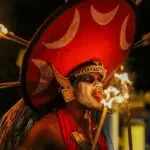
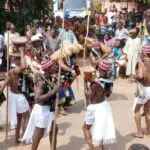
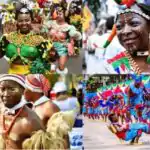
A carnival is a festive season with parades, public street parties, and other entertainments. Examples in Nigeria include the eyo festival in Lagos and the Egungun festival.
What is a Carnival?
A carnival is a party bringing people together to enjoy music, dance, food, and cultural traditions. It’s a time for joy, excitement, and community spirit.
Materials Needed
The main materials needed for painting a carnival scene are paints, brushes, and drawing paper.
Steps to Paint a Carnival Scene
Painting a carnival scene involves several steps to capture the festive atmosphere. These include:
- Sketch the outline of your scene lightly with a pencil.
- Choose luminous colors to depict the lively atmosphere.
- Start with the background, painting the sky, trees, or buildings.
- Add main elements like dancers, floats, and musicians.
- Include details such as costumes, masks, and instruments.
- Allow your painting to dry, then add final touches.
Teaching Methods
To deliver this lesson, the teacher will adopt the following methods: Presentation, Group Work, and Discussion.
instructional Procedures
To deliver this lesson, the teacher will adopt the following steps:
step 1: Introduction
Time: 5 minutes
Teaching Skill: Set Induction
Teacher’s Activity: Introduces the topic, engages pupils with questions about festivals.
Pupils’ Activity: Respond to questions, share experiences.
Step 2: Explanation of Key Concepts
Time: 10 minutes
Teaching Skill: Explaining, illustrating
Teacher’s activity: Explains the concept of a carnival, shows examples of carnival paintings.Pupils’ Activity: Listen attentively, ask clarifying questions.
Step 3: Demonstration/Guided practice
Time: 10 minutes
Teaching Skill: Demonstrating, guiding
Teacher’s Activity: Demonstrates the steps of painting a carnival scene.
Pupils’ Activity: Observe carefully, ask questions.
Step 4: Autonomous Practice
Time: 10 minutes
Teaching Skill: Monitoring, assisting
Teacher’s Activity: Supervises pupils as they paint their own carnival scenes.
Pupils’ Activity: Paint their own carnival scenes, using the demonstrated techniques.
Step 5: Note-Taking
Time: Not applicable for this lesson
Teaching Skill: Not applicable
Teacher’s Activity: Not applicable
Pupils’ Activity: Not applicable
step 6: Evaluation/Review
Time: 5 minutes
Teaching Skill: Questioning,summarizing
Teacher’s Activity: Asks review questions,summarizes key concepts.
Pupils’ Activity: Answer questions, participate in discussion.
Objective-aligned checks:
- Identify and describe various elements of a carnival of festivals.
- Show enthusiasm for participating in group activities.
- Use paints and brushes effectively.
step 7: Conclusion
Time: Not specified
Teaching Skill: Summarizing, Encouraging
Teacher’s Activity: Reviews key concepts, commends pupils, displays artwork.Pupils’ Activity: Share experiences, appreciate artwork.
Lesson Keywords
- Carnival – A festive season with parades and public celebrations.
- Festival – A celebration of culture and traditions.
- Painting – The art of applying color to a surface to create an image.
- Culture – The customs, arts, and social institutions of a group of people.
- Tradition – A custom or belief passed down through generations.
Lesson Evaluation
To evaluate the learning, the teacher asks pupils to:
- Name one traditional festival you know.
- Why are festivals vital in our culture?
- Describe one element you would include in your carnival painting.
- what materials did we use today?
- What is the first step in painting a carnival scene?
Assignment/Homework
- Draw a picture of your favorite festival.
- Write a short paragraph about what you like most about festivals.
Differentiation
- For slower learners: Provide one-on-one assistance and simplified instructions.
- For advanced learners: Encourage them to explore more complex techniques and add more details to their paintings.
- For visual/auditory/kinesthetic learners: Use visual aids, verbal explanations, and hands-on activities to cater to different learning styles.
Note for Teachers
Encourage creativity and self-expression in pupils’ artwork. Provide positive feedback and constructive criticism to help them improve their skills. ensure all pupils have access to the necessary materials and support.
Community Join the conversation Open discussion +