

Class: Primary Two
Term: Third Term
Subject: cultural & Creative Arts
Topic: Customary Festivals
Previous Lesson: Painting A Carnival of Festivals
Content/Learning Area: What Are Traditional Festivals?, Things Associated with Festivals, Quiz & Evaluation
time Allocation: 40 minutes
Performance Objectives
By the end of the lesson, pupils should be able to:
- cognitive Domain:
1. Define traditional festivals.
2. Identify key elements associated with traditional festivals.
3. Explain the meaning of body decoration, hair decoration, and masks in festivals.
4. Describe the role of music, dance, food, and games in festivals.
- Affective Domain:
1. Show gratitude for cultural diversity.
2. Demonstrate respect for cultural traditions.
- Psychomotor Domain:
1. Participate actively in class discussions.
2. Complete the quiz accurately.
- Social Domain:
1. Work cooperatively with peers.
2. Share ideas and opinions respectfully.
Reference Materials
- 9 – Years Basic Education Curriculum
- Abuja Educational Resource Center Scheme of Work
- NAPPS National Unified Scheme of Work
- Online Details
- Relevant Textbooks
Instructional Materials
to deliver this lesson, the teacher will use the following materials:
- Whiteboard or chart paper
- Markers or crayons
- Pictures or videos of traditional festivals
- Quiz sheets
Rationale for the Lesson
Understanding traditional festivals helps pupils appreciate cultural diversity and the importance of preserving cultural heritage. This knowledge fosters respect for different traditions and promotes cultural understanding.
Prerequisite/Previous Knowledge
Pupils have likely attended or heard about local celebrations.
Lesson Content
What Are Traditional Festivals?
Traditional festivals are special events celebrated by communities to honor their cultural, religious, or historical traditions. These festivals include various activities, rituals, and ceremonies passed down through generations.
Things Associated with Festivals
These are common elements that are often seen during traditional festivals:
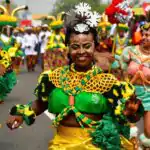
- Body Decoration: This involves painting the body with natural dyes,wearing special clothing,and adorning oneself with jewelry.
- Hair Decoration: This includes styling hair in various ways and using accessories such as beads, feathers, and colorful threads.
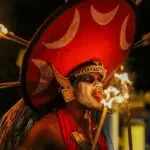
- Masks: These are worn to represent spirits, ancestors, or characters from local folklore.
- Music: Traditional music is played using drums, flutes, and other instruments to create a festive atmosphere.
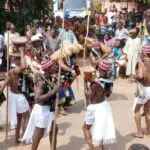
- Dance: Traditional dances are performed to tell stories, celebrate events, or honor deities.
- Food: Special dishes are prepared and shared among community members.
- Games: Traditional games and sports are played for entertainment and to promote community bonding.
- Rituals: These are ceremonies performed to honor gods, ancestors, or crucial events.
- Storytelling: Folktales and legends are shared to pass down cultural knowledge and values.
- Parades: Colorful processions through the community, showcasing cultural symbols and traditions.
Teaching Methods
To deliver this lesson, the teacher will adopt the following methods: discussion, Question and answer, Use of visuals, Quiz
Instructional Procedures
To deliver this lesson, the teacher will adopt the following steps:
Step 1: Introduction
Time: 5 minutes
Teaching Skill: Set Induction
Teacher’s Activity: ask pupils about festivals they know.
Pupils’ Activity: Share their knowledge and experiences.
Step 2: Description of Key Concepts
Time: 15 minutes
Teaching Skill: Explanation
Teacher’s Activity: Explain what traditional festivals are and their significance.
Pupils’ Activity: Listen attentively and ask questions.
Step 3: Exhibition/Guided Practice
Time: 10 minutes
Teaching Skill: Presentation
Teacher’s Activity: Show pictures or videos of different festivals, highlighting key elements.
Pupils’ Activity: Observe and participate in discussions.
Step 4: Independent Practice
Time: 5 minutes
Teaching Skill: Monitoring
Teacher’s Activity: Supervise pupils as they complete the quiz.
Pupils’ Activity: Answer the quiz questions independently.
Step 5: Note-Taking
Time: 2 minutes
Teaching skill: Note-taking
Teacher’s Activity: Guide pupils in taking notes on key concepts.
Pupils’ Activity: Wriet down vital points.
Step 6: Evaluation/Review
Time: 3 minutes
Teaching Skill: Review
Teacher’s Activity: Review answers to the quiz and address any questions.
Pupils’ Activity: Participate in the review.
Objective-aligned checks:
- Define traditional festivals.
- Identify key elements associated with traditional festivals.
- Explain the meaning of body decoration, hair decoration, and masks in festivals.
Step 7: Conclusion
Time: 2 minutes
Teaching Skill: Closure
Teacher’s Activity: Summarize the lesson and highlight the importance of cultural preservation.
Pupils’ Activity: Listen and ask any final questions.
Lesson Keywords
- Traditional Festivals – Special events celebrated by communities to honor their cultural, religious, or historical traditions.
- Body Decoration – Painting the body with natural dyes,wearing special clothing,and adorning oneself with jewelry.
- Hair Decoration – Styling hair in various ways and using accessories such as beads, feathers, and colorful threads.
- Masks – Worn to represent spirits,ancestors,or characters from local folklore.
- Rituals – Ceremonies performed to honor gods, ancestors, or important events.
Lesson Evaluation
To evaluate the learning, the teacher asks pupils to:
- Define what traditional festivals are.
- List three things associated with traditional festivals.
- Explain the importance of body and hair decoration in festivals.
- Describe the role of music and dance in traditional festivals.
Assignment/Homework
- Ask your parents or grandparents about a traditional festival in your community.
- Draw a picture of your favorite part of a traditional festival.
- Write a short paragraph about why it is important to preserve our cultural traditions.
Differentiation
- For slower learners: Provide simplified explanations and visual aids. Pair them with stronger learners for support.
- For advanced learners: Encourage them to research and present on a specific traditional festival in Nigeria.
- For visual/auditory/kinesthetic learners: Use videos, music, and hands-on activities like creating simple masks or body paint designs.
Note for Teachers
Ensure to use local examples of traditional festivals familiar to the pupils to make the lesson more relatable and engaging. Encourage active participation and respect for diverse cultural practices.

Community Join the conversation Open discussion +