

Class: Primary 1
Term: 2nd Term
Subject: Cultural And Creative arts
Previous lesson: Beads Decoration, Identification, Uses and Making
Topic: Woven Clothes; Identification Of Different Types
Content/Learning Area: Identification of different types of woven clothes e.g., aso oke, akwete, saki, kente.
Time Allocation: 40 minutes
Performance Objectives
By the end of the lesson,pupils should be able to:
- Cognitive Domain: Identify and name five different types of woven clothes.
- Affective Domain: Appreciate the beauty and importance of conventional woven clothes.
- Psychomotor Domain: Recognise and point out woven clothes when shown examples.
- Social Domain: Share ideas about how woven clothes are used in thier communities.
Reference Materials
the following resources were used in planning this lesson:
- 9–years Basic Education Curriculum
- abuja educational Resource Center Scheme of Work
- NAPPS National Unified Scheme of Work
- Online facts from Wikipedia – Woven fabric
- Relevant textbooks
Instructional Materials
To deliver this lesson, the teacher will use the following materials:
- Samples of woven clothes such as aso oke, akwete, saki, and kente
- Pictures or posters showing people wearing woven clothes
- A chart displaying the names of different woven clothes
Rationale for the lesson
Understanding woven clothes fosters recognition for cultural heritage and diversity. It also helps pupils recognize their cultural identity and its role in modern life.
Prerequisite/Previous Knowledge
Pupils are familiar with beads and how they are used for decoration. They may have seen people wearing traditional woven clothes during events.
Lesson Content
Woven Clothes; Identification of Different Types
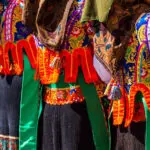
Woven clothes are made by weaving threads together to create gorgeous patterns. They are used for traditional ceremonies and cultural events. Below are some types:
- Aso oke: A special hand-woven fabric from the Yoruba people in Nigeria.
- Akwete: A woven cloth from the Igbo people, known for its colorful designs.
- Saki: A traditional woven fabric often used in festivals.
- Kente: A famous cloth from Ghana, woven in vibrant colors and patterns.
- Ashanti Fabric: Another colorful woven cloth from Ghana, often used for royalty.
Teaching Methods
To deliver this lesson, the teacher will adopt the following methods: discussion, Visual Aids, Demonstration, Guided Practice, Question and Answer.
Instructional Procedures
To deliver this lesson, the teacher will adopt the following steps:
Step 1: Introduction (Set Induction)
Time: 5 mins
Teaching Skill: Set Induction
Teacher’s Activity: Display woven clothes and ask pupils if they recognize them.
Pupils’ Activity: Observe the items and respond to the teacher’s questions.
Step 2: Description
Time: 10 mins
Teaching Skill: Direct Teaching
Teacher’s Activity: Describe woven clothes and their cultural significance.
Pupils’ Activity: Listen and ask questions where needed.
Step 3: Identification
Time: 10 mins
Teaching Skill: Guided Practice
Teacher’s Activity: Show each woven cloth (aso oke, akwete, etc.) and state its name clearly.
Pupils’ Activity: Observe and repeat the names after the teacher.
Step 4: Note-Taking
Time: 5 mins
Teaching skill: Writing
Teacher’s Activity: Write the lesson content on the board for pupils to copy.
Pupils’ Activity: Copy notes into their books.
Step 5: Evaluation/Review
Time: 5 mins
Teaching Skill: Questioning
Teacher’s Activity: Ask pupils to name types of woven clothes and their uses.
Pupils’ Activity: Respond to questions and give examples.
Step 6: Conclusion
Time: 3 mins
Teaching skill: Recap
Teacher’s Activity: Recap names and uses of woven clothes; give a takeaway message.
Pupils’ Activity: listen and answer if called upon.
Lesson Keywords
- Aso Oke – Hand-woven fabric from the Yoruba people in Nigeria.
- Akwete – Woven cloth from the Igbo people, known for its colorful designs.
- Kente – A famous cloth from Ghana,woven in vibrant colors and patterns.
- Woven Clothes – Fabrics made by interlacing threads.
- Cultural Significance – The importance of something to a particular culture.
Lesson Evaluation
To evaluate the learning, the teacher asks pupils to:
- mention two types of woven clothes they learned.
- Describe one way woven clothes are used in traditional events.
- Identify any woven cloth they recognize from the lesson.
- state one reason why woven clothes are important in our culture.
Assignment/Homework
- Ask your parents or grandparents about the woven clothes they have worn.
- Draw your favorite type of woven cloth and colour it.
- Find pictures of people wearing woven clothes in your community.
Differentiation
- For slower learners: Provide picture cards with the names of the woven clothes.
- For advanced learners: Research and present on the history of a specific woven cloth.
- For visual/auditory/kinesthetic learners: Use more visual aids, verbal explanations, and hands-on activities with fabric samples.
Note for Teachers
Ensure the woven clothes or pictures are colorful and engaging for pupils. Let the pupils touch the fabric to make the lesson interactive.happy teaching!


Community Join the conversation Open discussion +