

Class: Primary One
Term: Second Term
Subject: Basic Science and Technology
Curriculum Theme: Basic Technology
Previous Lesson: Pressing Iron as a Simple Machine
Topic: Simple Machines – Basket
Content/Learning Area: Identifying a basket, Listing uses of a basket
Time Allocation: 40 minutes
Performance Objectives
By the end of the lesson, pupils should be able to:
- Cognitive Domain:
1. Identify a basket.
2. List at least two uses of a basket.
3. Name materials used to make baskets.
- Psychomotor Domain:
1. Handle a basket safely.
- affective Domain:
1. Show thankfulness for the usefulness of baskets.
- Social Domain:
1. Work cooperatively in group activities.
Reference Materials
- 9 – Years Basic Education Curriculum
- abuja Educational Resource Center Scheme of Work
- NAPPS national Unified Scheme of Work
- Relevant Textbooks
Instructional Materials
To deliver this lesson, the teacher will use the following materials:
- Different types of baskets (woven, plastic, etc.)
- Pictures of baskets in various uses
- Whiteboard or chart paper
- Markers
Rationale for the Lesson
Understanding simple machines like baskets is crucial for developing problem-solving skills and appreciating everyday technology. This lesson lays the foundation for understanding more complex machines later.
Prerequisite/Previous Knowledge
The teacher will begin by asking pupils what they know about containers.
Lesson Content
What is a Basket?
A basket is a container. It’s made from materials like wood, plastic, or woven plants. It has an open top and usually has handles to make it easy to carry.
Uses of a Basket:
baskets are versatile tools used in various aspects of daily life. The following are some uses of a basket:
- Organizing items at home or school.
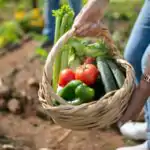
- Gathering fruits and vegetables.
- Carrying food and drinks for picnics or outings.
- Storing dirty laundry.
- Transporting goods to the market.
- Displaying decorative items.
A Basket as a Useful Object
A basket is a container made by weaving materials such as cane, raffia, palm strips or plastic. It may be used to carry or store fruits, vegetables, clothes and other light items. Open spaces in some baskets allow air to pass through.
Pupils compare a basket with a bowl: both can hold objects, but they may be made from different materials and may suit different tasks. A damaged basket with sharp ends should not be used.
Class Activity
Let pupils identify the handle, base and woven sides of a safe sample, then choose suitable objects to place in it.
Teaching Methods
To deliver this lesson, the teacher will adopt the following methods: Discussion, Demonstration, question and Answer
Instructional Procedures
To deliver this lesson, the teacher will adopt the following steps:
Step 1: Introduction (Set Induction)
Time: 5 minutes
Teaching Skill: Questioning
teacher’s activity: Show various baskets and ask pupils to identify them.
pupils’ Activity: Identify and name the baskets.
Step 2: Explanation of Key Concepts
Time: 10 minutes
Teaching Skill: Explaining
Teacher’s Activity: Define a basket and explain its characteristics.
Pupils’ Activity: Listen attentively and ask clarifying questions.
Step 3: Demonstration/Guided Practice
Time: 10 minutes
Teaching Skill: Demonstrating
Teacher’s Activity: Demonstrate different uses of a basket.
Pupils’ Activity: Observe and participate in demonstrations.
Step 4: Autonomous Practice
Time: 5 minutes
Teaching Skill: Monitoring
Teacher’s activity: Guide pupils as they brainstorm additional uses for baskets.
Pupils’ Activity: Brainstorm and share ideas.
Step 5: Note-Taking
Time: 5 minutes
Teaching Skill: Summarizing
Teacher’s Activity: Summarize key points on the board.
Pupils’ Activity: Copy notes from the board.
step 6: Evaluation/Review
Time: 5 minutes
Teaching Skill: Questioning
Teacher’s Activity: Ask evaluation questions.
Pupils’ Activity: Answer evaluation questions.
Objective-aligned checks:
- Identify a basket.
- List at least two uses of a basket.
- Name materials used to make baskets.
Step 7: Conclusion
Time: 5 minutes
Teaching Skill: Summarizing
Teacher’s Activity: Review the key points and assign homework.
Pupils’ Activity: Share what they learned and note the homework.
Lesson keywords
- Basket – A container made from woven material.
- Container – An object used for holding or storing things.
- Woven – Made by interlacing strands of material.
- Materials – Substances used for making things.
- Organizing – Arranging items in a neat and structured way.
Lesson Evaluation
To evaluate the learning, the teacher asks pupils to:
- what is a basket?
- give two uses of a basket.
- What are some materials used to make baskets?
- Can you think of any other uses for a basket?
Assignment/homework
- Draw a picture of a basket.
- Write down three uses of a basket.
Differentiation
- For slower learners: Provide one-on-one assistance and use simpler language.
- For advanced learners: Encourage them to research and present additional information about different types of baskets and their origins.
- For visual/auditory/kinesthetic learners: Use visual aids, verbal explanations, and hands-on activities to cater to different learning styles.
Note for Teachers
Ensure to bring a variety of baskets to class to make the lesson more engaging. Encourage pupils to share their personal experiences with using baskets.
Community Join the conversation Open discussion +