

Note for teachers using this lesson plan
This lesson introduces Primary 1 pupils to the basic elements of culture. Prepare a variety of colourful pictures or actual objects representing different cultural elements like food, dress, and musical instruments. Encourage active participation and ensure pupils can identify and give simple examples of cultural elements from their own communities by the end of the lesson.
Class: Primary 1
Term: Third Term
Week: 2
Age: 6 years
Duration: 45 minutes
Subject: Cultural & Creative Arts
Curriculum Theme: Culture and Tradition
Focal competence: Recognising various cultural artworks
Key competencies/values: Critical Thinking; ICT and Digital Competencies
Skills:
- Identifying elements and types of culture
Previous Lesson: Culture and Examples of Cultural Elements
Topic: Culture: Elements
Subject Matter: Elements/examples of culture
Specific Objectives
By the end of the lesson, pupils should be able to:
Cognitive Domain
- Identify selected elements of culture.
- Give examples of cultural elements from familiar settings.
Affective Domain
- Appreciate the diversity of cultural elements.
Psychomotor Domain
- Point to pictures or objects representing different cultural elements.
Reference Materials
The following resources were used in planning this lesson:
- 2025 Revised 9 Years Basic Education Curriculum
- Relevant State Unified Scheme of Work
- Cultural and Creative Arts for Primary 1, A.B. Bello and S. K. Usman
- The HeadTeacher Scheme of work
Instructional Materials
The teacher will teach this lesson with the aid of:
- Pictures showing different cultural dresses (e.g., Agbada, wrapper and blouse)
- Pictures of traditional foods (e.g., Jollof rice, Amala, Tuwo)
- Pictures of musical instruments (e.g., talking drum, xylophone)
- Flashcards with words for different languages (e.g., Hausa, Igbo, Yoruba)
- Teacher-made charts showing elements of culture
- Pencils, crayons or colours
Rationale for the Lesson
This lesson helps pupils understand what culture is by exploring its basic elements. It enables them to recognise different aspects of their own culture and the cultures of others around them. This foundational knowledge promotes appreciation for diversity and creative expression from a young age.
Prerequisite/Previous Knowledge
Pupils can identify different objects and people in their immediate environment.
Lesson Content/Board Summary
Culture: Elements
What is Culture?
Culture is the way of life of a group of people. It includes everything they do, think, and believe.
Elements of Culture
Culture has many parts, called elements. Some common elements of culture are:
- Language: This is how people talk to each other. Examples are Hausa, Igbo, Yoruba, Efik, Tiv.
- Food: These are the special dishes people eat. Examples are Jollof rice, Amala and Ewedu, Tuwo Shinkafa, Akpu.
- Dress: These are the special clothes people wear. Examples are Agbada, Buba and Iro, wrapper and blouse, Ankara.
- Music: These are the songs and sounds people make. Examples are traditional songs, drumming, flute music.
- Dance: These are the special movements people make to music. Examples are cultural dances like Atilogwu, Bata, Koroso.
- Beliefs: These are the things people think are true or important. Examples are respecting elders, believing in God.
- Customs: These are the special ways people do things. Examples are greeting elders, celebrating festivals.
Teaching Methods/Instructional Techniques
Discussion, Demonstration, Guided Practice, Question and Answer, Explanation, Observation, Group Work, Individual Practice
Instructional Procedures
Step 1: Introduction
Time: 5 minutes
Teaching Skill: Storytelling/Questioning
Teacher’s Activity: The teacher greets the pupils and asks them to name some things they do at home or school, like how they greet their parents or what they eat. The teacher then tells a short, simple story about a child visiting a different community and noticing new foods and clothes.
Pupils’ Activity: Pupils respond to the teacher’s questions and listen to the story.
Learning Point: Introduction to culture
Step 2: Explanation of Culture
Time: 7 minutes
Teaching Skill: Explanation/Visual Aid
Teacher’s Activity: The teacher explains in simple terms that “culture is the way of life of a group of people.” The teacher shows a picture of people from a specific Nigerian ethnic group and points out their unique way of dressing or eating.
Pupils’ Activity: Pupils listen attentively and observe the pictures shown by the teacher.
Learning Point: Meaning of culture
Step 3: Introducing Elements – Dress and Food
Time: 7 minutes
Teaching Skill: Demonstration/Identification
Teacher’s Activity: The teacher displays pictures of various cultural dresses (e.g., Agbada, traditional wrapper and blouse) and traditional foods (e.g., Jollof rice, Amala). The teacher asks pupils to identify what they see and name the items.
Pupils’ Activity: Pupils identify the dresses and foods, naming them where possible.
Learning Point: Cultural dress and food
Step 4: Introducing Elements – Language and Music
Time: 7 minutes
Teaching Skill: Auditory/Visual Aid
Teacher’s Activity: The teacher plays a short clip of traditional Nigerian music or a talking drum sound. The teacher also uses flashcards with words like “Sannu” (Hausa), “Kedu” (Igbo), “E kaaro” (Yoruba) and explains that these are different languages. The teacher asks pupils if they know any other languages.
Pupils’ Activity: Pupils listen to the music, look at the flashcards, and mention languages they know.
Learning Point: Cultural language and music
Step 5: Introducing Elements – Dance, Beliefs, and Customs
Time: 7 minutes
Teaching Skill: Explanation/Examples
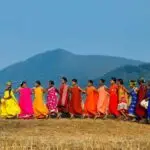
Teacher’s Activity: The teacher briefly demonstrates a simple dance step or shows a picture of cultural dancers. The teacher explains that beliefs are things people think are true (like respecting elders) and customs are special ways of doing things (like greeting). The teacher asks pupils to share how they greet their parents.
Pupils’ Activity: Pupils observe the dance, listen to explanations, and share their greeting customs.
Learning Point: Cultural dance and customs
Step 6: Grouping Activity
Time: 5 minutes
Teaching Skill: Guided Practice/Categorisation
Teacher’s Activity: The teacher displays a mix of pictures/objects representing different cultural elements (dress, food, language, music, dance). The teacher guides pupils to identify each item and group them under the correct element category (e.g., putting Agbada under ‘dress’).
Pupils’ Activity: Pupils identify the items and work in groups to sort them into categories as guided by the teacher.
Learning Point: Identifying cultural elements
Step 7: Evaluation/Review
Time: 5 minutes
Teaching Skill: Questioning/Assessment
Teacher’s Activity: The teacher evaluates the learning by asking the following questions:
- What is culture?
- Name two elements of culture.
- Give one example of cultural food.
- Show me a picture of a cultural dress.
Pupils’ Activity: Pupils answer orally and in writing.
Learning Point: Understanding cultural elements
Step 8: Note-Taking
Time: 4 minutes
Teaching Skill: Guided Writing
Teacher’s Activity: The teacher guides pupils to copy the essential Board Summary notes on “What is Culture?” and “Elements of Culture” into their notebooks.
Pupils’ Activity: Pupils copy the notes carefully into their notebooks.
Learning Point: Recording cultural elements
Step 9: Conclusion
Time: 3 minutes
Teaching Skill: Reinforcement
Teacher’s Activity: The teacher summarises the lesson by reminding pupils that culture is our way of life and has many parts like our food, dress, and language. The teacher encourages them to be proud of their culture and respect others’.
Pupils’ Activity: Pupils listen and affirm their understanding.
Learning Point: Culture elements reinforced
Continuous Assessment/Further Study
Type: Homework
Instruction: Draw and colour one cultural dress and one cultural food from your community in your drawing book.
- Draw a picture of a traditional dress worn by people in your community.
- Draw a picture of a special food eaten in your community.
- Colour your drawings neatly.
Lesson Keywords
- Culture – The way of life of a group of people.
- Elements – The different parts that make up something.
- Language – How people communicate using words.
- Food – Special dishes eaten by people.
- Dress – Special clothes worn by people.
Differentiation
For weaker learners, focus on identifying just two or three common elements like food and dress, using very simple, clear pictures. For faster learners, encourage them to name more examples of each cultural element or to draw a picture of a cultural activity like dancing or playing music.
Suggested Lesson Videos
For further understanding, search on YouTube for: elements of culture for primary 1 nigeria
Teacher Guide for Using This Lesson Plan
Before the lesson, gather clear and colourful pictures or actual small items representing various cultural elements such as different traditional clothes, foods, and musical instruments. Arrange them so they are easily visible to all pupils. Begin by engaging pupils with familiar examples from their daily lives to connect with the concept of culture. Guide them through identifying each element using the displayed materials. During the grouping activity in Step 6, encourage collaboration and provide support to ensure all pupils participate. When pupils are copying notes in Step 8, ensure they write legibly and understand what they are writing. Emphasise respect for all cultures throughout the lesson. Be mindful of classroom management, especially during group activities, to maintain a conducive learning environment.
Community Join the conversation Open discussion +