

Class: Primary Three
Term: Second Term
Subject: Cultural & Creative Arts
Curriculum Theme:
Previous Lesson: Definition And Media For Moulding
Topic: Clay Preparation
Content/Learning Area: identifying the steps in preparing clay for molding, appreciating the importance of teamwork in social activities, Demonstrating the proper technique for kneading clay, Collaborating with peers in the collection and preparation of clay
Time Allocation: 40 minutes
Performance Objectives
By the end of the lesson, pupils should be able to:
- Cognitive Domain:
1. Identify the steps involved in preparing clay for molding.
2. Explain the importance of kneading clay before use.
3. List the benefits of using well-kneaded clay.
- Affective Domain:
1. Appreciate the importance of teamwork in clay preparation.
- Psychomotor Domain:
1. Demonstrate the proper technique for kneading clay.
- Social Domain:
1. Collaborate effectively with peers during clay collection and preparation.
Reference Materials
- 9 – Years Basic Education Curriculum
- Abuja Educational Resource Centre Scheme of Work
- NAPPS National Unified Scheme of Work
- Relevant Textbooks
Instructional Materials
To deliver this lesson, the teacher will use the following materials:
- Clay
- Containers
- Whiteboard or chart
- Markers
Rationale for the Lesson
This lesson is crucial for developing pupils’ artistic skills and understanding the process of creating art from natural materials. It also emphasizes teamwork and collaboration,essential life skills.
Prerequisite/Previous Knowledge
Pupils have likely had some experience with clay or similar materials in play or previous art activities.
Lesson Content
Clay preparation
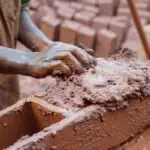
Clay preparation is a vital first step in any art project using clay. It involves gathering and preparing the clay for molding.
Importance Of Kneading Clay Before Use
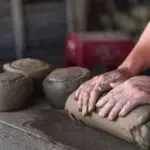
Kneading clay is essential to prepare it for use in modeling and other art projects.
The following are reasons why kneading clay is critically crucial:
- Even Consistency: Kneading ensures uniform texture, making the clay easier to work with.
- Air Bubble Removal: It removes air bubbles that can cause cracks and imperfections. Air bubbles are a common problem.
- Improved Plasticity: Kneading increases the clay’s plasticity, making it more responsive and easier to shape.
- Ease of Manipulation: Kneaded clay is more pliable and less likely to break.
- Enhanced Workability: It reduces cracking and breakage during molding by strengthening the clay’s structure.
- Moisture Distribution: Kneading helps to evenly distribute moisture throughout the clay,preventing some areas from drying out faster than others.
- Warm-Up: The process of kneading warms up the clay, making it more flexible and easier to mold.
Teaching Methods
To deliver this lesson, the teacher will adopt the following methods: Demonstration, Clarification, Group Work, Question and Answer.
Instructional Procedures
To deliver this lesson, the teacher will adopt the following steps:
Step 1: Introduction
Time: 5 minutes
teaching Skill: Set Induction
Teacher’s activity: Engage pupils in a brief discussion about clay and its uses.Introduce the topic: Clay Preparation.
Pupils’ Activity: Participate in the discussion, listen attentively to the introduction.
Step 2: Explanation of Key Concepts
Time: 10 minutes
Teaching Skill: Explanation
Teacher’s Activity: Explain the importance of kneading clay and the steps involved. Demonstrate the proper kneading technique.
Pupils’ Activity: Listen attentively, observe the demonstration.
step 3: Demonstration/Guided Practice
Time: 10 minutes
Teaching Skill: Guided Practice
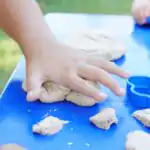
Teacher’s Activity: Guide pupils as they practice kneading clay in small groups.
Pupils’ Activity: Practice kneading clay under teacher supervision.
Step 4: Independent Practice
Time: 5 minutes
Teaching Skill: Monitoring
Teacher’s Activity: Monitor pupils as they continue practicing independently.
Pupils’ Activity: Continue practicing kneading clay independently.
step 5: Note-Taking
Time: 5 minutes
Teaching Skill: Note-Taking
Teacher’s Activity: Guide pupils in taking notes on the key steps of clay preparation.
Pupils’ Activity: Take notes on the key steps.
Step 6: Evaluation/Review
Time: 5 minutes
Teaching Skill: Questioning
Teacher’s Activity: Ask evaluation questions to assess understanding.
Pupils’ Activity: Answer the evaluation questions.
Objective-aligned checks:
- Identify the steps involved in preparing clay for molding.
- Explain the importance of kneading clay before use.
- List the benefits of using well-kneaded clay.
Step 7: Conclusion
Time: 2 minutes
Teaching Skill: Summarizing
Teacher’s Activity: Summarize the key points of the lesson and commend pupils for their participation.
Pupils’ Activity: Listen to the summary and reflect on what they have learned.
Lesson Keywords
- Clay – A natural, earthy material that can be molded and hardened.
- Kneading – The process of working clay to make it smooth and remove air bubbles.
- Molding – Shaping clay into a desired form.
- Plasticity – The quality of clay that allows it to be shaped and hold its form.
- Consistency – The uniformity of the clay’s texture and moisture.
Lesson Evaluation
To evaluate the learning, the teacher asks pupils to:
- What are the steps involved in preparing clay for molding?
- Why is kneading clay critically important?
- What are the benefits of using well-kneaded clay?
- How does teamwork help in clay preparation?
- What safety precautions should be taken when working with clay?
Assignment/Homework
- Collect different types of clay samples from your surroundings.
- Practice kneading clay at home and observe the changes in its texture.
- write a short paragraph on the importance of clay in art and craft.
Differentiation
- For slower learners: Provide one-on-one assistance with kneading techniques.
- For advanced learners: Challenge them to create more complex shapes and experiment with different clay preparation methods.
- For visual learners: Use visual aids such as charts and diagrams to illustrate the steps of clay preparation.
- For auditory learners: Provide verbal instructions and explanations, encouraging them to ask questions.
- for kinesthetic learners: Allow them plenty of hands-on practice with clay, guiding them through the kneading process.
Note for Teachers
Ensure that the clay is of good quality and free from impurities.Supervise pupils closely during the kneading process to prevent injuries.Encourage teamwork and collaboration among pupils.

Community Join the conversation Open discussion +