

Class: Primary 3
Term: 1st Term
Week: 10
Age: 8 years
Duration: 40 minutes
Subject: Cultural And Creative Arts
Curriculum Theme: Cultural And Creative Arts
Previous Lesson: Designing Patterns From Basic Shapes
Topic: Making Designs With Simple Repeat
Content/Learning Area: simple repeat patterns, Making patterns to form design using simple repeat
Performance Objectives
By the end of the lesson, pupils should be able to:
- Cognitive Domain: Identify and explain the meaning of simple repeat patterns.
- Affective Domain: Appreciate the beauty of patterns made through simple repeat.
- Psychomotor Domain: Create simple repeat patterns to form a design.
- Social Domain: Work cooperatively in groups to produce repeat designs.
Reference Materials
The following resources were used in planning this lesson:
- 9 Years Basic Education Curriculum
- Abuja Educational Resource Centre Scheme of work
- NAPPS National Unified Scheme of Work
- Online information from: The Sewing Retreat – The Sewing Retreat: Pattern cutting
- Relevant Textbooks
Instructional Materials
The teacher will teach this lesson with the aid of:
- Drawing paper
- Rulers and pencils
- Colouring materials (crayons, markers)
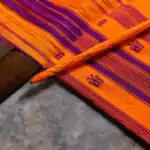
- Samples of fabric with simple repeat designs
- Charts showing repeated shapes and objects
Rationale for the Lesson
This lesson will help pupils understand how to use simple shapes to make repeat patterns and create beautiful designs around them.
Prerequisite/Previous Knowledge
Pupils have seen patterns in clothes, floor tiles, and wall decorations, and can recognize repeated shapes.
Lesson Content
Making Designs with Simple Repeat
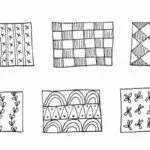
Simple repeat means using the same shape or line again and again in order to make a pattern. It makes the design look neat and beautiful.
Examples of Shapes for Simple Repeat
The following are examples of shapes that can be used for simple repeat:
- Circle
- Square
- Triangle
- Star
- Line
Steps in Making Designs with Simple Repeat
These are steps in making a simple repeat design:
- Choose a shape to repeat
- Draw the shape neatly on paper
- Repeat the same shape many times in rows or columns
- Colour the pattern to make it bright
- Arrange the shapes in a neat order to form a design
Importance of Simple Repeat Patterns
The following are importance of simple repeat patterns:
- They make clothes and fabrics beautiful
- They are used to decorate walls and floors
- They make books and art works look attractive
- They help us create order and balance in design
Teaching Methods
Discussion, Explanation, Demonstration, Visual Aids, Group Work
Instructional Procedures
To deliver this lesson, the teacher will adopt the following steps:
Step 1: Introduction
Time: 5 mins
Teaching Skill: Set Induction
Teacher’s Activity: Teacher shows pupils fabrics and charts with repeated shapes, asks them to identify the shapes and patterns they see.
Pupils’ Activity: Pupils observe, answer questions and describe patterns.
Learning Point: Pupils recall prior knowledge of patterns.
Step 2: Meaning of Simple Repeat
Time: 5 mins
Teaching Skill: Explanation
Teacher’s Activity: Teacher explains that simple repeat means repeating one shape many times to make a design.
Pupils’ Activity: Pupils listen and repeat the meaning after the teacher.
Learning Point: Pupils understand the meaning of simple repeat.
Step 3: Examples of Shapes for Simple Repeat
Time: 7 mins
Teaching Skill: Demonstration
Teacher’s Activity: Teacher draws different shapes (circle, triangle, star, etc.) on the board and shows how they can be repeated.
Pupils’ Activity: Pupils identify the shapes and watch teacher’s demonstration.
Learning Point: Pupils learn examples of shapes used in simple repeat.
Step 4: Steps in Making Designs
Time: 10 mins
Teaching Skill: Guided Practice
Teacher’s Activity: Teacher demonstrates step-by-step how to choose a shape, repeat it, and colour it.
Pupils’ Activity: Pupils follow along by drawing and repeating their own shapes.
Learning Point: Pupils practice steps in making simple repeat patterns.
Step 5: Importance of Simple Repeat
Time: 5 mins
Teaching Skill: Discussion
Teacher’s Activity: Teacher asks pupils where they see repeat patterns in their environment.
Pupils’ Activity: Pupils mention clothes, floors, and decorations.
Learning Point: Pupils learn importance of repeat patterns.
Step 6: Note Taking
Time: 3 mins
Teaching Skill: Reinforcement
Teacher’s Activity: Teacher writes summarized notes on the board.
Pupils’ Activity: Pupils copy notes into their books.
Learning Point: Pupils retain key lesson points.
Step 7: Evaluation
Time: 3 mins
Teaching Skill: Questioning
Teacher’s Activity: Teacher asks pupils to explain meaning, steps, and examples of simple repeat patterns.
Pupils’ Activity: Pupils answer questions individually.
Learning Point: Teacher assesses pupils’ understanding.
Step 8: Conclusion
Time: 2 mins
Teaching Skill: Closure
Teacher’s Activity: Teacher praises pupils’ efforts and reminds them to look for repeat patterns in their environment.
Pupils’ Activity: Pupils listen and respond.
Learning Point: Pupils connect lesson to real life.
Home Task: Describe or illustrate one lesson example of Making Designs With Simple Repeat and include one safety or performance rule. Do not practise a risky activity without adult supervision.
Lesson Keywords
- Pattern: A design made by repeating shapes or lines
- Repeat: Doing the same thing again and again
- Design: A plan or drawing that shows arrangement of shapes or objects
- Shape: The outline of an object like circle or square
- Colour: What makes a design bright and attractive
Lesson Evaluation
To evaluate the learning, the teacher asks pupils to:
- Define simple repeat.
- Mention three shapes that can be used for simple repeat.
- List the steps in making a simple repeat design.
- State two importance of simple repeat patterns.
- Draw a simple repeat pattern using one shape.
Differentiation
Fast learners can create more complex repeat designs using two shapes, while slower learners can repeat one simple shape with guidance.
Note for teachers using this lesson plan
Encourage creativity by allowing pupils to choose colours and shapes of their choice. Use real-life materials like fabrics to sustain their interest.
Community Join the conversation Open discussion +