

Class: Primary Three
Term: third Term
Subject: Cultural & Creative Arts
Previous Lesson: Examples of Traditional Fabric and Dresses
Topic: Importance of Customary Fabric
Content/Learning area: Cultural Identity, Economic benefit, Artistic Expression, social Unity, Ancient Meaning
Time Allocation: 40 minutes
Performance Objectives
By the end of the lesson, pupils should be able to:
- Cognitive Domain:
1. Identify and describe the importance of customary fabrics in their culture.
2. Explain how traditional fabrics promote cultural unity and identity.
3. Discuss the economic benefits of traditional fabrics.
- Psychomotor Domain:
1. Draw a simple sketch of a traditional fabric pattern.
- affective Domain:
1. Appreciate the aesthetic and cultural value of traditional fabrics.
- Social Domain:
1. Participate actively in class discussions about traditional fabrics.
Reference Materials
- 9 – Years Basic Education Curriculum
- Abuja Educational Resource Center Scheme of Work
- NAPPS National Unified Scheme of work
- Online Details
- relevant Textbooks
instructional Materials
To deliver this lesson, the teacher will use the following materials:
- Pictures of different traditional fabrics
- chart showing the importance of traditional fabrics
- drawing materials
Rationale for the Lesson
Understanding the importance of traditional fabrics helps pupils connect with their heritage and appreciate the cultural richness of their community. This knowledge fosters a sense of identity and pride.
Prerequisite/Previous Knowledge
Pupils are familiar with examples of traditional fabrics.
Lesson Content
Cultural Identity
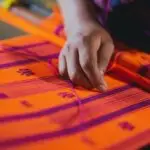
Traditional fabrics represent a culture’s heritage and identity. Such as, the vibrant Aso-Oke fabric symbolizes Yoruba culture in Nigeria. The unique designs and colors tell a story about the peopel and their history.
Economic Benefit
Many communities rely on the creation and sale of traditional fabrics for their income. This provides jobs and supports local economies,ensuring financial stability for many families.
Artistic Expression
Each fabric showcases unique artistic styles specific to a region. The intricate patterns and designs tell stories about the creators and their traditions. These designs are often passed down thru generations.
Social Unity
Wearing traditional fabrics unites people during cultural events. It fosters a sense of belonging and shared identity, strengthening community bonds.
Historical Meaning
Traditional fabrics often carry historical stories and meanings. They serve as reminders of significant events and honor ancestors, preserving cultural memory.
Teaching methods
To deliver this lesson, the teacher will adopt the following methods: Discussion, question and answer, Visual aids, Drawing activity
Instructional Procedures
To deliver this lesson, the teacher will adopt the following steps:
Step 1: Introduction
Time: 5 minutes
Teaching Skill: Set Induction
Teacher’s Activity: Review previous lesson, introduce the topic, and set learning objectives.
Pupils’ Activity: Respond to teacher’s questions, listen attentively.
Step 2: Explanation of Key Concepts
Time: 15 minutes
Teaching Skill: Explanation
Teacher’s Activity: Explain the five key aspects of the importance of traditional fabrics using visual aids.
Pupils’ Activity: Listen attentively, ask clarifying questions.
Step 3: Presentation/Guided Practice
Time: 10 minutes
Teaching Skill: modeling
Teacher’s Activity: Demonstrate how to draw a simple traditional fabric pattern.
Pupils’ Activity: Observe the demonstration, ask questions.
Step 4: Self-Reliant Practice
Time: 5 minutes
Teaching Skill: Monitoring
Teacher’s Activity: Supervise pupils as they draw their own patterns.Pupils’ Activity: Draw a simple sketch of a traditional fabric pattern.
Step 5: Note-Taking
Time: 2 minutes
Teaching Skill: Note-taking
Teacher’s Activity: Guide pupils in summarizing key points.
Pupils’ Activity: Write down key points in their notebooks.
Step 6: Evaluation/Review
time: 3 minutes
Teaching skill: Questioning
Teacher’s Activity: ask evaluation questions.
Pupils’ Activity: Answer evaluation questions.
Objective-aligned checks:
- Identify and describe the importance of customary fabrics in their culture.
- Explain how traditional fabrics promote cultural unity and identity.
- Draw a simple sketch of a traditional fabric pattern.
Step 7: Conclusion
Time: 2 minutes
Teaching Skill: Closure
Teacher’s Activity: Summarize the key points and encourage pupils to continue exploring the rich world of traditional fabrics in their own communities.
Pupils’ Activity: Listen attentively and ask any remaining questions.
Lesson Keywords
- Cultural Identity – The sense of belonging to a particular culture or group.
- Economic Benefit – Financial advantages or gains.
- Artistic Expression – The use of creativity to convey emotions or ideas.
- social Unity – The state of being united or in agreement within a community.
- Historical Significance – The importance of something based on its historical context.
Lesson Evaluation
To evaluate the learning,the teacher asks pupils to:
- Name two types of traditional fabrics discussed today.
- describe one way traditional fabric is used in your community.
- Explain why traditional fabrics are important for cultural identity.
- Draw a simple sketch of any traditional fabric pattern you remember.
Assignment/homework
- Research and write a short paragraph about a traditional fabric from your region.
- Find a picture of someone wearing traditional fabric and describe the occasion.
Differentiation
- For slower learners: Provide one-on-one assistance and simplified instructions.
- For advanced learners: Challenge them to research and present on a specific traditional fabric from their region.
- For visual/auditory/kinesthetic learners: Use visual aids, verbal explanations, and hands-on activities like drawing.
Note for Teachers
Ensure to provide a variety of visual aids and hands-on activities to cater to different learning styles. Encourage pupils to share their personal experiences with traditional fabrics to make the lesson more engaging and relevant.


Community Join the conversation Open discussion +