

Class: Primary 3
Term: 1st Term
Week: 1
Age: 8 years
Duration: 40 minutes
Subject: Cultural And Creative Arts
Curriculum Theme: Cultural And Creative Arts
Previous Lesson:
Topic: Meaning Of Nature Drawing And Environment
Content/Learning Area: Meaning Of Nature Drawing And Environment
Performance Objectives
By the end of the lesson, pupils should be able to:
Cognitive Domain:
- Explain the meaning of nature drawing.
- State the meaning of environment.
Affective Domain:
- Appreciate the beauty of natural objects in their surroundings.
Psychomotor Domain:
- Practice simple sketches of natural objects.
Social Domain:
- Work together in identifying natural objects around them.
Reference Materials
The following resources were used in planning this lesson:
- 9 Years Basic Education Curriculum
- Abuja Educational Resource Centre Scheme of work
- NAPPS National Unified Scheme of Work
- Online information from: Merriam-Webster – ENVIRONMENT Definition & Meaning
- Relevant Textbooks
Instructional Materials
The teacher will teach this lesson with the aid of:
- Pictures of trees, flowers, rivers, and mountains
- Drawing books and pencils
- Real natural objects like leaves, stones, and flowers
- Blackboard and chalk/marker
- Charts showing natural environment
Rationale for the Lesson
This lesson helps pupils understand their environment, recognize the beauty of nature, and express it through simple drawing.
Prerequisite/Previous Knowledge
Pupils have seen trees, rivers, flowers, animals, and other natural objects in their environment.
Lesson Content
Meaning of Nature Drawing and Environment
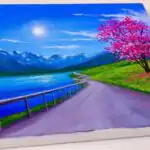
Nature drawing is making pictures of objects found in nature. It shows how we see trees, animals, rivers, mountains, flowers, and the sky.
Environment
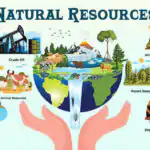
The environment is the world around us. It includes all living things like plants and animals, and non-living things like soil, water, and air.
Examples of Things Found in Nature
The following are things found in our environment:
- Trees
- Flowers
- Rivers
- Mountains
- Animals
- Sun
- Moon
- Stars
- Grass
- Stones
Nature Drawing and Observation
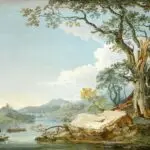
Nature drawing represents living or non-living things observed in the environment, such as leaves, flowers, fruits, shells, stones or landscapes. Careful observation helps the artist notice overall shape, proportion, line, texture, light and shade.
Begin with light construction lines, compare the size and position of parts, add important details and then shade or colour. The drawing should show the pupil’s own observation rather than a memorised symbol. Harmless objects should be collected responsibly without damaging living plants.
Teaching Methods
Discussion, Lecture, Explanation, Storytelling, Visual Aids, Group Work
Instructional Procedures
To deliver this lesson, the teacher will adopt the following steps:
Step 1: Introduction
Time: 5 mins
Teaching Skill: Set Induction
Teacher’s Activity: Teacher asks pupils to mention things they can see outside their classroom like trees, sun, and flowers, then shows pictures of natural objects.
Pupils’ Activity: Pupils mention things and observe the pictures.
Learning Point: Pupils get interested and ready for the lesson.
Step 2: Meaning of Nature Drawing
Time: 5 mins
Teaching Skill: Explanation
Teacher’s Activity: Teacher explains that nature drawing means making pictures of natural things we see around us. Teacher shows examples of simple nature drawings.
Pupils’ Activity: Pupils listen and look at the examples.
Learning Point: Pupils understand what nature drawing means.
Step 3: Meaning of Environment
Time: 5 mins
Teaching Skill: Explanation
Teacher’s Activity: Teacher defines environment as everything around us both living and non-living things, then points to objects in and outside the class.
Pupils’ Activity: Pupils listen and identify objects around them.
Learning Point: Pupils understand the meaning of environment.
Step 4: Examples of Things in Nature
Time: 10 mins
Teaching Skill: Illustration
Teacher’s Activity: Teacher lists and explains examples of things found in the environment using pictures and real objects.
Pupils’ Activity: Pupils observe, listen, and repeat examples of natural things.
Learning Point: Pupils can identify natural things around them.
Step 5: Drawing Activity
Time: 10 mins
Teaching Skill: Demonstration
Teacher’s Activity: Teacher guides pupils to draw simple natural objects like leaves or flowers.
Pupils’ Activity: Pupils practice simple nature drawings in their books.
Learning Point: Pupils practice how to draw natural things.
Step 6: Note Taking
Time: 2 mins
Teaching Skill: Writing
Teacher’s Activity: Teacher dictates and writes short notes on the board.
Pupils’ Activity: Pupils copy notes into their books.
Learning Point: Pupils have correct notes for revision.
Step 7: Evaluation
Time: 2 mins
Teaching Skill: Questioning
Teacher’s Activity: Teacher asks pupils to explain the meaning of nature drawing and environment, and list examples of natural objects.
Pupils’ Activity: Pupils answer questions orally.
Learning Point: Pupils recall and apply what they have learned.
Objective-aligned checks:
- Explain the meaning of nature drawing.
- State the meaning of environment.
Step 8: Conclusion
Time: 1 min
Teaching Skill: Closure
Teacher’s Activity: Teacher summarizes the lesson and encourages pupils to observe nature and practice drawing at home.
Pupils’ Activity: Pupils listen and ask final questions.
Learning Point: Pupils are motivated to apply knowledge in real life.
Home Task: Describe or illustrate one lesson example of Meaning Of Nature Drawing And Environment and include one safety or performance rule. Do not practise a risky activity without adult supervision.
Lesson Keywords
- Nature – Things that exist in the world naturally.
- Drawing – Making pictures with pencil or colours.
- Environment – Everything around us.
- Living things – Things that can grow and move.
- Non-living things – Things that cannot grow or move.
Lesson Evaluation
To evaluate the learning, the teacher asks pupils to:
- Explain the meaning of nature drawing.
- Say what environment means.
- Mention three things found in nature.
- Draw a simple leaf or flower.
- Work in pairs to identify natural objects around the school.
Differentiation
Teacher supports slower learners with guided examples and group work while fast learners draw more detailed objects.
Note for teachers using this lesson plan
Use real-life examples to make the lesson more practical. Encourage pupils to observe their surroundings daily. Allow creativity when pupils practice drawing.
Community Join the conversation Open discussion +