

Class: Primary Three
Term: Second Term
Subject: cultural & Creative Arts
Curriculum Theme:
Previous Lesson: Fabrics Decoration, Concept Of Making Adire Or Batik, Basic Materials Needed
Topic: Fabric Decoration
Content/Learning Area: What is Fabric Decoration?, Adire and Batik Production, Steps in Adire and Batik Production, Importance of Fabric Decoration in Culture
Time Allocation: (Time allocation needs to be added here)
Performance Objectives
By the end of the lesson, pupils should be able to:
- Cognitive Domain:
- Identify at least three steps in the production of Adire and Batik clothes.
- Understand the cultural importance of adire and batik in Nigerian heritage.
- affective Domain:
- Appreciate the cultural meaning of Adire and Batik.
- Psychomotor Domain:
- Demonstrate basic skills in the practical production of Adire and Batik (if applicable).
- Social Domain:
- Collaborate with peers in the production process, fostering teamwork (if applicable).
Reference Materials
- 9 – Years Basic Education Curriculum
- Abuja educational Resource Center Scheme of Work
- NAPPS national Unified Scheme of Work
- Online Details
- Relevant Textbooks
Instructional Materials
To deliver this lesson, the teacher will use the following materials:
- Plain white fabrics
- wax
- Fabric dyes in various colors
- Brushes
- Rubber bands
- Plastic buckets
- Water containers
- Aprons
- newspapers
- Other relevant materials
Rationale for the Lesson
This lesson introduces pupils to customary fabric decoration techniques, fostering an thankfulness for cultural heritage and artistic expression. Understanding these techniques provides a foundation for future art projects and creative endeavors.
Prerequisite/Previous Knowledge
The teacher will begin by asking pupils what they know about clothes and different ways clothes can be decorated. A brief discussion will follow, leading into the lesson on fabric decoration.
Lesson Content
What is Fabric Decoration?
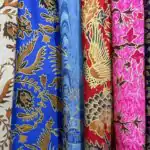
Fabric decoration is a traditional art where fabrics are made more stunning using different techniques. It’s crucial in many cultures, showing identity, telling stories, and making things look nicer.
Adire and Batik Production
Adire and Batik are two prominent fabric decoration techniques with rich cultural significance.
Adire
Adire is a Yoruba way of decorating fabric. It involves tying, stitching, or knotting the fabric before dyeing it. The tied parts don’t get dyed, making patterns.
Examples are:
- Adire Eleko: uses a special tool (“eleko”) for geometric patterns.
- Adire Onile-Ere: Uses needle and thread for detailed designs.
- Adire Omi: Uses cassava starch paste to make patterns.
- adire Alabere: Involves folding and sewing the fabric to create intricate patterns.
- Adire Tie and Dye: A simpler method where fabric is tied in various ways to resist the dye.
Batik
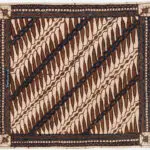
Batik, from Indonesia, uses wax on the fabric with a “canting” or stamp. the waxed parts don’t get dyed, creating patterns. The wax is removed by heating,showing the design. Intricate patterns are created this way.
Steps in Adire and Batik Production
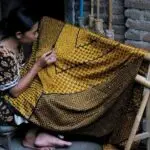
the production of adire and Batik involves several key steps to achieve the desired patterns and designs.
They are:
- Planning: Gather materials: fabrics, wax, dyes, brushes, rubber bands, buckets, water, aprons, newspapers.
- Applying Wax or Resist: Create patterns. wax or resist prevents dye from coloring those areas.
- Dyeing Process: Dip the fabric in dyes for the desired colors.
- Setting the Dye: Let the fabric sit to set the dye.
- Removing Wax or Resist: heat the fabric (for wax) or wash (for resist) to reveal the pattern.
- Washing and Finishing: Wash to remove excess dye or wax.
- Drying and Display: Dry the fabric and display it.
- ironing: iron the fabric to smooth out any wrinkles and set the design.
- Quality Check: Inspect the finished product for any imperfections or areas needing touch-up.
Importance of Fabric Decoration in culture
Fabric decoration plays a significant role in preserving and promoting cultural heritage.
These include:
- Cultural Identity: Shows cultural identity and heritage. Different patterns mean different things.
- Symbolism and Storytelling: Patterns tell stories and show beliefs and values.
- Economic Empowerment: Provides income for artisans and communities.
- Artistic Expression: Allows for creativity and innovation in design.
- Preservation of Tradition: Ensures that traditional techniques are passed down through generations.
Teaching Methods
To deliver this lesson, the teacher will adopt the following methods: Discussion, Exhibition, Practical Activity (if applicable).
Instructional procedures
To deliver this lesson, the teacher will adopt the following steps:
Step 1: Introduction
Time: (Time needs to be added here)
Teaching Skill: Set Induction
Teacher’s Activity: Introduces the topic of fabric decoration, engages pupils in a brief discussion about clothes and their decoration.
Pupils’ Activity: participate in the discussion, sharing their prior knowledge.
Step 2: Explanation of Key Concepts
Time: (Time needs to be added here)
Teaching Skill: Explanation
Teacher’s Activity: Explains the concept of fabric decoration, introduces Adire and Batik, highlighting their cultural significance.
pupils’ Activity: Listen attentively,ask clarifying questions.
Step 3: Demonstration/Guided Practice
Time: (time needs to be added here)
Teaching Skill: Demonstration
Teacher’s Activity: Demonstrates the steps involved in Adire and/or Batik production (if applicable).
Pupils’ Activity: Observe the demonstration, participate in guided practice (if applicable).
Step 4: Self-Reliant Practice
Time: (Time needs to be added here)
Teaching Skill: Monitoring
Teacher’s Activity: Supervises pupils as they engage in autonomous practice (if applicable).
Pupils’ Activity: Apply the learned techniques to create their own fabric decorations (if applicable).
Step 5: note-Taking
Time: (Time needs to be added here)
Teaching Skill: Note-Taking
Teacher’s Activity: Guides pupils in taking notes on key concepts and steps.
Pupils’ Activity: Take notes, summarize key facts.
Step 6: Evaluation/Review
Time: (Time needs to be added here)
Teaching skill: Questioning
Teacher’s Activity: Asks evaluation questions,provides feedback.
Pupils’ Activity: Answer evaluation questions.
Objective-aligned checks:
- Identify at least three steps in the production of Adire and Batik clothes.
- Demonstrate basic skills in the practical production of Adire and Batik (if applicable).
Step 7: Conclusion
Time: (Time needs to be added here)
Teaching Skill: Summarizing
Teacher’s Activity: Summarizes the lesson, provides concluding remarks.
Pupils’ Activity: Listen attentively.
Lesson Keywords
- Fabric Decoration – The art of embellishing fabrics using various techniques.
- Adire – A Yoruba dyeing technique that produces patterned cloth.
- Batik – A wax-resist dyeing technique used to create designs on fabric.
- Dyeing – The process of adding color to fabric.
- Resist – A substance used to prevent dye from penetrating certain areas of the fabric.
Lesson Evaluation
To evaluate the learning, the teacher asks pupils to:
- What are two main fabric decoration techniques we learned about?
- What is the difference between Adire and Batik?
- Why is fabric decoration significant in culture?
Assignment/Homework
- Research and write a short paragraph about another fabric decoration technique used in Nigeria.
- Create a simple Adire-inspired design on paper using different patterns and symbols.
differentiation
- For slower learners: Provide one-on-one assistance and simplified instructions.
- For advanced learners: Challenge them to create more complex designs and explore additional techniques.
- For visual/auditory/kinesthetic learners: Use visual aids, verbal explanations, and hands-on activities to cater to different learning styles.
Note for Teachers
Encourage pupils to explore their creativity and express themselves through fabric decoration.Provide ample opportunities for hands-on practice and experimentation.

Community Join the conversation Open discussion +