

Class: Primary 3
Term: 1st Term
Week: 2
Age: 8 years
Duration: 40 minutes
Subject: Cultural And Creative Arts
Curriculum Theme: Cultural And Creative Arts
Previous Lesson: Meaning Of Nature Drawing And Environment
Topic: Animals Found In The Environment
Content/Learning Area: Different types of animals found in the environment and their characteristics.
Performance Objectives
By the end of the lesson, pupils should be able to:
Cognitive Domain:
- Identify different types of animals found in the environment.
Affective Domain:
2. Show appreciation for animals and their role in our surroundings.
Psychomotor Domain:
3. Draw or describe simple features of common animals.
Social Domain:
4. Work in groups to classify animals based on their characteristics.
Reference Materials
The following resources were used in planning this lesson:
- 9 Years Basic Education Curriculum
- Abuja Educational Resource Centre Scheme of Work
- NAPPS National Unified Scheme of Work
- Online information from: Britannica – Animals & Nature
- Relevant Textbooks
Instructional Materials
The teacher will teach this lesson with the aid of:
- Charts or flashcards of animals
- Real objects like feathers, shells, or animal toys
- Picture books of animals
- A short video or slideshow of animals
- Blackboard and chalk/marker
Rationale for the Lesson
Animals are part of our daily environment, and pupils need to recognize and understand them for better appreciation of nature.
Prerequisite/Previous Knowledge
Pupils have seen animals in their homes, farms, markets, and on television, and can mention a few by name.
Lesson Content
Animals Found in the Environment
Animals live around us in different places like land, water, and the sky. They are important to people and the environment.
Types of Animals found in the environment
Animals can be found everywhere. Some live on land, some in water, and some can fly in the sky.
The following are types of animals found in the environment:
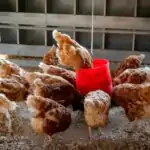
- Domestic animals like goat, sheep, dog, cat
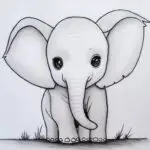
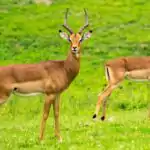
- Wild animals like lion, tiger, elephant, monkey
- Water animals like fish, crab, crocodile
- Flying animals like bird, bat, butterfly
Characteristics of Animals
Animals have different features that help us know them.
These include:
- Some animals have two legs while others have four
- Some animals can fly
- Some animals live in water
- Some animals are used for food
- Some animals are kept as pets
Teaching Methods
Discussion, Lecture, Storytelling, Explanation, Visual Aids, Group Work
Instructional Procedures
To deliver this lesson, the teacher will adopt the following steps:
Step 1: Introduction
Time: 5 mins
Teaching Skill: Set Induction
Teacher’s Activity: Teacher greets pupils, asks them to mention animals they have seen around their homes, farms, or markets, and shows a chart of animals.
Pupils’ Activity: Pupils respond by mentioning names of animals and observe the chart.
Learning Point: Pupils recall familiar animals in their environment.
Step 2: Types of Animals
Time: 7 mins
Teaching Skill: Explanation and Discussion
Teacher’s Activity: Teacher explains different types of animals (domestic, wild, water, flying) using charts and pictures.
Pupils’ Activity: Pupils observe, listen, and repeat the types of animals after the teacher.
Learning Point: Pupils learn the classification of animals.
Step 3: Characteristics of Animals
Time: 7 mins
Teaching Skill: Description and Questioning
Teacher’s Activity: Teacher describes features of animals (legs, wings, where they live, uses) and asks pupils to compare.
Pupils’ Activity: Pupils answer questions and identify features on charts.
Learning Point: Pupils understand how animals differ from one another.
Step 4: Importance of Animals
Time: 7 mins
Teaching Skill: Storytelling and Explanation
Teacher’s Activity: Teacher narrates short examples of how animals help people and asks pupils to give more uses.
Pupils’ Activity: Pupils listen, give answers, and suggest more examples.
Learning Point: Pupils learn why animals are important in life.
Step 5: Group Work
Time: 5 mins
Teaching Skill: Supervision and Guidance
Teacher’s Activity: Teacher divides pupils into groups to classify animals shown in pictures into domestic, wild, water, and flying.
Pupils’ Activity: Pupils work in groups and classify animals.
Learning Point: Pupils practice teamwork and classification of animals.
Step 6: Note Taking
Time: 3 mins
Teaching Skill: Guidance
Teacher’s Activity: Teacher writes short notes on the board for pupils to copy into their books.
Pupils’ Activity: Pupils copy notes.
Learning Point: Pupils have notes for future study.
Step 7: Evaluation
Time: 4 mins
Teaching Skill: Questioning
Teacher’s Activity: Teacher asks pupils to name and describe different animals, their characteristics, and importance.
Pupils’ Activity: Pupils answer questions individually and in groups.
Learning Point: Pupils demonstrate understanding of the lesson.
Step 8: Conclusion
Time: 2 mins
Teaching Skill: Instructional, Cognitive, Social
Teacher’s Activity: Teacher summarizes the lesson, corrects errors, praises pupils, and encourages them to observe animals in their surroundings.
Pupils’ Activity: Pupils listen and respond happily.
Learning Point: Pupils appreciate animals around them.
Home Task: Describe or illustrate one lesson example of Animals Found In The Environment and include one safety or performance rule. Do not practise a risky activity without adult supervision.
Lesson Keywords
- Domestic animals – Animals kept at home or farm
- Wild animals – Animals that live in the forest
- Characteristics – Things that make animals different
- Environment – The place where living things are found
- Importance – The reason why something is useful
Lesson Evaluation
To evaluate the learning, the teacher asks pupils to:
- Mention two domestic animals.
- List two wild animals.
- State two characteristics of animals.
- Mention two importance of animals.
- Group the following: dog, fish, bird, lion.
Differentiation
The teacher supports slower learners with pictures and repetition, while advanced learners are encouraged to give more examples of animals and their uses.
Note for teachers using this lesson plan
Use real-life examples and pictures to make the lesson interesting. Encourage group work to keep all pupils engaged. Relate the animals to pupils’ immediate environment for better understanding.
Community Join the conversation Open discussion +