

Class: Primary 3
Term: 1st Term
Week: 5
Age: 8 years
Duration: 40 minutes
Subject: Cultural And Creative Arts
Curriculum Theme: Cultural And Creative Arts
Previous Lesson: Flowering Plants In The Environment
Topic: Designing And Colouring Flowering Plants
Content/Learning Area: Drawing and painting different type of flower
Performance Objectives
By the end of the lesson, pupils should be able to:
- Cognitive Domain: Identify different types of flowering plants and their basic shapes.
- Affective Domain: Appreciate the beauty of flowers and show interest in creative art.
- Psychomotor Domain: Draw and colour flowering plants neatly using crayons, pencils, or paints.
- Social Domain: Share materials with classmates and work cooperatively in art activities.
Reference Materials
The following resources were used in planning this lesson:
- 9 Years Basic Education Curriculum
- Abuja Educational Resource Centre Scheme of Work
- NAPPS National Unified Scheme of Work
- Online information from: Britannica – Flower | Definition, Parts, Anatomy, Whorls, Types, & Facts
- Relevant Textbooks
Instructional Materials
The teacher will teach this lesson with the aid of:
- Drawing papers
- Crayons, coloured pencils, watercolour paints
- Pictures of different types of flowers
- Real flower samples (hibiscus, sunflower, rose)
- Chalkboard and chalk
- Chart showing steps of drawing and colouring flowers
Rationale for the Lesson
To develop pupils’ creativity, observation skills, and ability to express beauty through drawing and colouring flowers.
Prerequisite/Previous Knowledge
Pupils have seen flowers in their environment and can recognize their colours and shapes.
Lesson Content
Designing And Colouring Flowering Plants
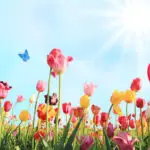
Flowers are beautiful plants that make our environment bright and colourful. We can draw and colour them to make our work attractive.
Steps in Drawing a Flower
To draw a flower, we follow simple steps.
The following are steps in drawing a flower:
- Draw a small circle for the middle part of the flower.
- Draw petals around the circle.
- Add a stem under the circle.
- Draw two or more leaves on the stem.
Steps in Colouring a Flower
Colouring makes the flower look bright and real.
The following are steps in colouring a flower:
- Colour the petals with bright colours like red, pink, or yellow.
- Colour the middle part of the flower with brown or black.
- Colour the stem green.
- Colour the leaves green.
Importance of Drawing and Colouring Flowers
These include:
- It helps us to practice neatness.
- It makes us creative.
- It makes our work attractive.
- It helps us to enjoy art.
Teaching Methods
Discussion, Lecture, Demonstration, Explanation, Question and Answer, Group Work, Practical Work, Use of Visual Aids
Instructional Procedures
To deliver this lesson, the teacher will adopt the following steps:
Step 1: Introduction
Time: 5 mins
Teaching Skill: Set Induction
Teacher’s Activity: Teacher shows real flowers and asks pupils to name them. Teacher also recalls the previous lesson.
Pupils’ Activity: Pupils observe the flowers and respond to questions.
Learning Point: Pupils become interested in the lesson.
Step 2: Drawing Flowers
Time: 10 mins
Teaching Skill: Explanation, Demonstration
Teacher’s Activity: Teacher demonstrates how to draw a flower on the board step by step.
Pupils’ Activity: Pupils watch and follow the steps on their papers.
Learning Point: Pupils learn the steps of drawing flowers.
Step 3: Colouring Flowers
Time: 10 mins
Teaching Skill: Demonstration, Practical
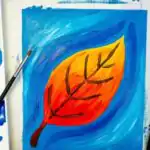
Teacher’s Activity: Teacher shows how to colour petals, stems, and leaves neatly using crayons.
Pupils’ Activity: Pupils practise colouring their own flower drawings.
Learning Point: Pupils understand how to use colours properly.
Step 4: Importance of Drawing and Colouring Flowers
Time: 5 mins
Teaching Skill: Explanation, Discussion
Teacher’s Activity: Teacher explains why drawing and colouring flowers is important.
Pupils’ Activity: Pupils listen and give answers when asked.
Learning Point: Pupils learn the benefits of art activities.
Step 5: Note Taking
Time: 3 mins
Teaching Skill: Writing
Teacher’s Activity: Teacher dictates and writes short notes on the board.
Pupils’ Activity: Pupils copy the notes into their books.
Learning Point: Pupils record key points of the lesson.
Step 6: Evaluation
Time: 5 mins
Teaching Skill: Questioning
Teacher’s Activity: Teacher asks pupils questions on the steps and importance of drawing flowers.
Pupils’ Activity: Pupils answer the questions.
Learning Point: Pupils recall what they have learnt.
Objective-aligned checks:
- Identify different types of flowering plants and their basic shapes.
- Draw and colour flowering plants neatly using crayons, pencils, or paints.
Step 7: Conclusion
Time: 2 mins
Teaching Skill: Closure
Teacher’s Activity: Teacher praises pupils’ work, corrects mistakes, and links lesson to environment.
Pupils’ Activity: Pupils display their drawings and share with others.
Learning Point: Pupils consolidate learning and gain confidence.
Home Task: Describe or illustrate one lesson example of Designing And Colouring Flowering Plants and include one safety or performance rule. Do not practise a risky activity without adult supervision.
Lesson Keywords
- Flower: A colourful part of a plant.
- Petal: The soft colourful part of a flower.
- Stem: The part that holds the flower upright.
- Leaf: The green part of a plant that grows on the stem.
- Colouring: Adding colours to make drawings attractive.
Lesson Evaluation
To evaluate the learning, the teacher asks pupils to:
- Mention two types of colours used in colouring flowers.
- List the steps in drawing a flower.
- List the steps in colouring a flower.
- State two importance of drawing and colouring flowers.
- Draw and colour a simple flower neatly.
Differentiation
Teacher will support slower learners by guiding their hand during drawing and colouring, while fast learners can be asked to draw and colour more flowers.
Note for teachers using this lesson plan
Encourage neatness, creativity, and correct colour use. Provide enough materials for group work and allow pupils to observe real flowers for better understanding.
Community Join the conversation Open discussion +