

Class: Primary Three
Term: Third Term
Subject: Cultural & Creative Arts
Curriculum Theme:
Previous Lesson:
Topic: Conventional Fabric and Dresses
Content/Learning Area: Types of Traditional Fabrics, Traditional Dresses, Meaning of Traditional Fabrics and dresses
Time Allocation: 40 minutes
Performance Objectives
By the end of the lesson, pupils should be able to:
- Cognitive Domain:
1. Identify and explain traditional fabrics.
2. Explain the importance of traditional fabrics and dresses.
- Affective Domain:
1. Show appreciation for the diversity of traditional fabrics and dresses in Nigeria.
- Psychomotor Domain:
1. Demonstrate basic folds and handling techniques of traditional fabrics.
- Social Domain:
1. Participate actively in class discussions.
Reference Materials
- 9 – Years Basic Education Curriculum
- Abuja Educational resource Centre Scheme of Work
- NAPPS National Unified Scheme of Work
- Relevant Textbooks
Instructional Materials
To deliver this lesson, the teacher will employ the help of the following materials:
- Pictures of different traditional fabrics and dresses.
- Samples of different traditional fabrics (if available).
- Whiteboard or chart paper.
- Markers or crayons.
Rationale for the Lesson
Understanding traditional fabrics and dresses helps pupils appreciate thier cultural heritage and the artistry involved in their creation. This knowledge fosters cultural pride and understanding of diverse traditions.
prerequisite/Previous Knowledge
Pupils are familiar with different types of clothing materials.
Lesson Content
Types of Traditional Fabrics
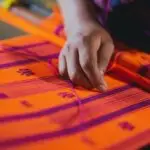
Traditional fabrics are textiles that reflect the cultural heritage, techniques, and materials unique to a specific community or region. These fabrics often carry deep cultural significance and are used in various ceremonies, celebrations, and everyday wear. The following are examples:
- Adire: A resist-dyed fabric, popular in Yoruba culture, where parts of the fabric are tied or blocked to prevent dye from reaching them.
- Batik: Created by applying wax to the fabric, creating patterns that resist dye. Common in Yoruba, Igbo, and Edo cultures.
- Ankara: Also known as “African wax print,” a printed cotton fabric with vibrant colors and intricate designs, widely used across Africa.
- Kente: Woven from hand-spun silk or cotton strips, creating intricate patterns and colors, significant in Ashanti culture (Ghana) but also popular in Nigeria.
- Bogolanfini: Made from mud-dyed cotton, creating earthy tones and patterns, traditional to the Dogon people (Mali) but also found in parts of nigeria.
- Akwa Ocha: A woven fabric from the Igbo people of Nigeria, traditionally white or cream-colored, often adorned with intricate embroidery.
- aso Oke: A hand-woven cloth created by the Yoruba people of Nigeria, used for important ceremonies and events, known for its intricate patterns and vibrant colors.
Traditional Dresses
Traditional dresses are garments that reflect the cultural identity, customs, and history of a particular group or region. These dresses often incorporate unique fabrics, designs, and embellishments that hold symbolic meaning. Examples are:
- Buba: A loose-fitting, long-sleeved top worn by both men and women.
- Iro: A wrapper worn by women, often paired with a buba or blouse.
- Agbada: A long, flowing robe worn by men, often with a matching cap.
- Gele: A headwrap worn by women, often made from a colorful fabric like Ankara.
- Isiagu: A traditional Igbo attire for men, featuring a shirt adorned with lion head patterns, often worn during special occasions.
- Etibo: A traditional attire from the Niger Delta region of Nigeria, typically worn by men, consisting of a long-sleeved shirt and trousers, often made from high-quality fabric.
- Wrapper and Headtie: A common traditional dress for women in many Nigerian cultures, consisting of a wrapped skirt (wrapper) and a matching headscarf (headtie), often made from vibrant fabrics like Ankara or adire.
Significance of Traditional Fabrics and Dresses
Traditional fabrics and dresses hold deep cultural, historical, and social importance within communities.They serve as symbols of identity, heritage, and artistic expression, often carrying stories and meanings passed down through generations. They are:
- Identity: Often associated with specific ethnic groups or regions, defining cultural identity.
- History: Passed down through generations, preserving cultural traditions and stories.
- Ceremony: Worn during special occasions, such as weddings, festivals, and religious ceremonies.
- Art: considered works of art, showcasing the creativity and skill of the creators.
- Status: Indicate social status or rank within a community, with certain fabrics or designs reserved for specific individuals or groups.
- Trade: Historically used as valuable trade items, connecting communities and facilitating cultural exchange.
- Ritual: Used in traditional rituals and ceremonies, believed to possess spiritual or protective powers.
Teaching Methods
To deliver this lesson, the teacher will adopt the following methods: Discussion, Presentation, Question and Answer.
Instructional Procedures
To deliver this lesson,the teacher will adopt the following steps:
Step 1: Introduction
Time: 5 minutes
Teaching Skill: Set Induction
Teacher’s Activity: Review previous lesson and introduce the topic of traditional fabrics and dresses.Pupils’ Activity: Respond to teacher’s questions and listen attentively.
Step 2: Description of Key Concepts
Time: 10 minutes
Teaching Skill: Explaining
Teacher’s Activity: Explain the definition and significance of traditional fabrics and dresses.
Pupils’ Activity: Listen attentively and ask questions.
Step 3: Demonstration/Guided Practise
Time: 10 minutes
Teaching Skill: Demonstrating
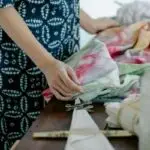
Teacher’s Activity: Demonstrate basic folding techniques using a sample fabric.
Pupils’ Activity: observe and practice folding techniques.
Step 4: Self-reliant Practice
Time: 5 minutes
Teaching Skill: Monitoring
Teacher’s Activity: Supervise pupils as they practice folding techniques independently.
Pupils’ Activity: Practice folding techniques independently.
Step 5: Note-Taking
Time: 5 minutes
Teaching Skill: Guiding
Teacher’s Activity: Guide pupils in taking notes on key concepts.
Pupils’ Activity: Take notes on key concepts.
Step 6: Evaluation/Review
Time: 5 minutes
Teaching Skill: Questioning
Teacher’s Activity: Ask evaluation questions to assess understanding.
Pupils’ Activity: Answer evaluation questions.
Objective-aligned checks:
- Identify and explain traditional fabrics.
- Explain the importance of traditional fabrics and dresses.
- Show appreciation for the diversity of traditional fabrics and dresses in Nigeria.
Step 7: Conclusion
Time: 2 minutes
Teaching Skill: Summarizing
Teacher’s Activity: Summarize the key points of the lesson.
Pupils’ Activity: Listen attentively and ask questions for clarification.
Lesson keywords
- Adire – Yoruba resist-dyed fabric.
- Batik – Wax-resist dyeing technique.
- Ankara – African wax print fabric.
- Kente – Woven fabric from Ghana.
- Agbada – Flowing robe worn by men.
Lesson Evaluation
To evaluate the learning, the teacher asks pupils to:
- what are two traditional fabrics and their cultural origins?
- Describe one way in which traditional fabric and dresses are used in cultural festivals.
- Demonstrate how to fold a piece of fabric using the technique shown in class.
- What are some of the cultural meanings associated with traditional fabrics and dresses in Nigeria?
- Why is it crucial to preserve traditional fabrics and dresses?
Assignment/Homework
- Research and write a short paragraph about a traditional fabric or dress from your own culture or ethnic group.
- Draw a picture of your favorite traditional dress and label its key features.
Differentiation
- For slower learners: provide one-on-one assistance and use simpler language.
- For advanced learners: Encourage them to research and present information on additional traditional fabrics and dresses.
- for visual/auditory/kinesthetic learners: Use visual aids, verbal explanations, and hands-on activities to cater to different learning styles.
Note for Teachers
Encourage pupils to bring in examples or pictures of traditional fabrics and dresses from their own cultures to promote inclusivity and appreciation for diversity.

Community Join the conversation Open discussion +