

Class: Primary Three
Term: Second Term
Subject: Cultural & Creative Arts
Topic: Fabric Decoration: adire Making
previous Lesson: Drama, Drama Or Play On Dignity Of Labour
Content/Learning Area: Making Adire, Materials Needed To Make Adire
Time Allocation: 40 minutes
Performance Objectives
By the end of the lesson, pupils should be able to:
- Cognitive Domain:
1. Explain the concept of making Adire or batik.
2. List materials needed for making Adire.
- Psychomotor Domain:
1. Demonstrate basic skills in the process of making Adire.
- Affective Domain:
1. Appreciate the cultural importance of Adire.
- Social domain:
1. Work collaboratively in group activities.
Reference Materials
- 9 – Years Basic Education Curriculum
- Abuja Educational Resource Center Scheme of Work
- NAPPS national Unified Scheme of Work
- Relevant Textbooks
Instructional Materials
To deliver this lesson, the teacher will employ the help of the following materials:
- White plain fabrics
- Wax
- Fabric dye
- Brushes
- Bowls
- Rubber bands
- Aprons
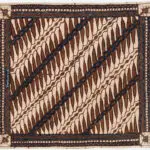
- Charts or pictures of designs
Rationale for the Lesson
This lesson introduces pupils to a notable aspect of Nigerian culture, fostering thankfulness for traditional arts and crafts. Understanding Adire making connects them to their heritage and encourages creativity.
Prerequisite/Previous Knowledge
The teacher will begin by asking pupils what they know about conventional Nigerian fabrics. A brief discussion will follow, leading into the introduction of Adire making.
Lesson Content
Fabric Decoration: Adire Making
Adire is a traditional Nigerian fabric decoration technique. It involves applying wax to fabric before dyeing it, creating unique patterns. Learn more about the process.
Materials Needed To Make Adire
Adire making requires specific materials to achieve the desired patterns and effects. These include:
The following are the materials needed to make Adire:
- White plain fabrics
- Wax
- Fabric dye
- brushes
- Bowls
- Rubber bands
- Aprons
- Charts or pictures of designs
- Stencils
- Needles and threads
Basic Materials and Their Purposes
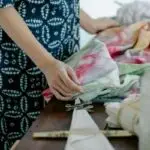
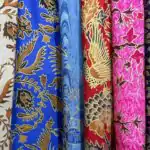
Adire is a resist-dyed cloth associated with Yoruba textile traditions. Batik also uses a resist method, commonly with wax, to prevent dye from reaching selected areas. Materials may include suitable cotton fabric, dye, water, containers, tying materials or starch paste for some adire methods, and wax and a heating arrangement for batik.
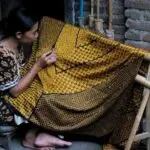
Design planning comes before dyeing. The resist creates uncoloured or differently coloured patterns when removed. Because dyes, hot wax and heating equipment can injure pupils, practical work requires ventilation, protective clothing and close adult supervision.
Teaching Methods
To deliver this lesson, the teacher will adopt the following methods: Demonstration, Description, Question and Answer, Group Work.
Instructional Procedures
to deliver this lesson, the teacher will adopt the following steps:
Step 1: Introduction
Time: 5 minutes
Teaching Skill: Set Induction
Teacher’s Activity: Briefly review previous lesson and introduce Adire making.
Pupils’ Activity: Listen attentively and participate in the discussion.
Step 2: Explanation of Key Concepts
Time: 10 minutes
teaching Skill: Explanation
Teacher’s Activity: Explain the concept of Adire and its cultural meaning.Pupils’ Activity: Listen attentively and ask clarifying questions.
Step 3: Demonstration/Guided practice
Time: 15 minutes
Teaching Skill: Demonstration
Teacher’s Activity: Demonstrate the basic steps of Adire making.
Pupils’ Activity: Observe carefully and ask questions.
Step 4: Autonomous Practice
Time: 5 minutes
Teaching Skill: Monitoring
Teacher’s Activity: Supervise pupils as they practice Adire making.
Pupils’ Activity: Practice Adire making with provided materials.
Step 5: Note-Taking
Time: 2 minutes
Teaching Skill: Note-taking
Teacher’s Activity: Guide pupils in taking notes on key concepts and steps.
Pupils’ Activity: Take notes on key concepts and steps.
Step 6: Evaluation/Review
Time: 3 minutes
Teaching Skill: Questioning
Teacher’s Activity: Ask evaluation questions to assess understanding.
Pupils’ Activity: Answer evaluation questions.
Objective-aligned checks:
- Explain the concept of making Adire or batik.
- List materials needed for making Adire.
- Demonstrate basic skills in the process of making Adire.
Step 7: Conclusion
Time: 2 minutes
Teaching Skill: Summarizing
Teacher’s Activity: Summarize the key concepts of Adire making.
Pupils’ activity: listen attentively and ask questions.
Lesson Keywords
- Adire – A traditional nigerian fabric decoration technique using wax-resist dyeing.
- Wax – A substance used to create patterns on fabric by preventing dye from penetrating.
- Dye – A substance used to add color to fabrics.
- Fabric – The material used as the base for Adire designs.
- patterns – The designs created on the fabric using wax and dye.
Lesson Evaluation
To evaluate the learning, the teacher asks pupils to:
- What is Adire?
- name three materials used in making Adire.
- Describe one step in the adire making process.
Assignment/Homework
- Research and write about the history of Adire in Nigeria.
- List five different patterns commonly used in Adire designs.
- Draw a simple Adire design and label the materials you would need to create it.
Differentiation
- For slower learners: Provide one-on-one assistance and simplified instructions.
- For advanced learners: Challenge them to create more complex designs and research different Adire techniques.
- For visual/auditory/kinesthetic learners: Use visual aids, verbal explanations, and hands-on activities to cater to different learning styles.
Note for Teachers
Encourage pupils to explore their creativity and appreciate the cultural significance of Adire. Provide ample support and guidance during the practical session to ensure successful outcomes.
Community Join the conversation Open discussion +