

Class: Primary Two
Term: Second Term
Subject: Pre-vocational Studies
Curriculum Theme: Home Economics
Previous Lesson:
Topic: Uses Of Various Rooms In The Home
Content/Learning Area: Identifying rooms in the home, Understanding the uses of each room
Time Allocation: 40 minutes
Performance Objectives
By the end of the lesson, pupils should be able to:
- Cognitive Domain:
- Identify three different rooms in the home.
- understand the uses of each room.
- Psychomotor Domain:
- Point to pictures of different rooms in the home.
- Affective Domain:
- Show interest in learning about different rooms in the home.
- Social domain:
- participate actively in class discussions.
Reference Materials
- 9 – Years Basic Education Curriculum
- Abuja Educational resource Center Scheme of work
- NAPPS national Unified Scheme of Work
- Online Details
- Relevant Textbooks
Instructional Materials
To deliver this lesson, the teacher will use the following materials: Pictures of different rooms in the home, Whiteboard or chart paper, Markers.
Rationale for the Lesson
This lesson is important because it helps pupils understand the different functions of rooms in a home and how these spaces contribute to organized living.
Prerequisite/Previous Knowledge
Pupils are familiar with different types of houses and their basic components.
Lesson Content
Rooms in the Home
A room is a part of a building where we live. it has a specific purpose, helping us organize our daily activities.
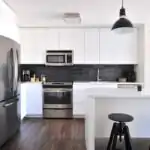
Kitchen
The kitchen is where we prepare and cook food.
These include:
- It usually has appliances like a stove.
- Oven.
- Refrigerator.
- Sink.
- Microwave.
- Blender.
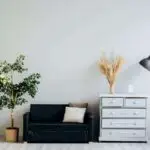
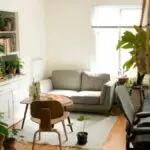
Living Room
Also called the sitting room, this is where we relax, entertain guests, and have family time. It often has pleasant furniture.
These include:
- Sofas.
- chairs.
- Television.
- Bookshelves.
- Center tables.
- Rugs.
Dining Room
This is where we eat our meals. It usually has a dining table and chairs.
These include:
- Dining table.
- Chairs.
- Sideboard.
- Tablecloth.
- Cutlery.
- Crockery.
Bedroom
This is a private space where we sleep and rest. It typically has a bed, wardrobe, and sometimes a desk or dressing table.
These include:
- Bed.
- Wardrobe.
- Desk.
- Dressing table.
- Nightstand.
- Lamp.
Bathroom
Used for bathing and showering. It has a bathtub or shower, toilet, and sink.
These include:
- Bathtub or shower.
- Toilet.
- Sink.
- Mirror.
- Towel rack.
- Toiletries.
Toilet
A room for personal hygiene where we use the toilet.
These include:
- Toilet bowl.
- Toilet paper dispenser.
- Hand sanitizer.
- Ventilation fan.
Store
A space for keeping food and other household items. It helps keep things organized.
These include:
- Shelves.
- Containers.
- Food supplies.
- Cleaning supplies.
garage
A sheltered area for parking cars and storing tools.
These include:
- Parking space.
- Tools.
- Storage cabinets.
- Work bench.
Many modern homes have many special rooms, but conventional homes may not have all of these.
Teaching Methods
To deliver this lesson, the teacher will adopt the following methods: Discussion, Question and answer, Pictures.
Instructional Procedures
To deliver this lesson, the teacher will adopt the following steps:
Step 1: Introduction (Set Induction)
Time: 5 minutes
Teaching Skill: Questioning
Teacher’s Activity: Ask pupils to name rooms in their homes.
Pupils’ Activity: Respond to the teacher’s questions.
Step 2: Description of Key Concepts
Time: 10 minutes
Teaching Skill: Clarification
Teacher’s Activity: Explain the different rooms in a home and their uses.
Pupils’ Activity: Listen attentively and ask questions.
Step 3: Demonstration/Guided Practice
Time: 10 minutes
Teaching Skill: Demonstration
Teacher’s Activity: Show pictures of different rooms and discuss their uses.
Pupils’ Activity: Identify the rooms and their uses.
Step 4: Autonomous Practice
Time: 5 minutes
Teaching Skill: Guided Practice
Teacher’s Activity: Ask pupils to draw their favorite room and describe its use.
Pupils’ Activity: Draw and describe their favorite room.
Step 5: Note-Taking
Time: 5 minutes
Teaching Skill: Note-Taking
Teacher’s Activity: Guide pupils to write down key points about the different rooms and their uses.
Pupils’ Activity: Write down key points.
Step 6: Evaluation/Review
Time: 5 minutes
Teaching Skill: questioning
Teacher’s Activity: Ask review questions to assess understanding.
Pupils’ Activity: Answer review questions.
Step 7: Conclusion
time: 2 minutes
Teaching Skill: Summarizing
Teacher’s Activity: Summarize the key points about the different rooms in a home and their uses. Assign homework where pupils draw their homes and label the rooms.
Pupils’ Activity: Listen to the summary and note the homework assignment.
Lesson keywords
- Kitchen – Room for preparing and cooking food.
- Living Room – Room for relaxing and entertaining guests.
- Bedroom – Room for sleeping and resting.
- Bathroom – Room for bathing and personal hygiene.
- Dining Room – Room for eating meals.
Lesson Evaluation
To evaluate the learning,the teacher asks pupils to:
- Name three rooms in your home and say what they are used for.
- What is the main purpose of the living room?
- Why is the kitchen critically important?
- What are some other rooms found in homes, and what are their uses?
Assignment/Homework
- Draw your home and label the different rooms.
- Write a short paragraph about your favorite room and why you like it.
Differentiation
- For slower learners: Provide one-on-one assistance and simplified explanations.
- For advanced learners: Ask them to research and present on additional rooms found in homes.
- For visual/auditory/kinesthetic learners: Use visual aids, verbal explanations, and hands-on activities to cater to different learning styles.
note for Teachers
Ensure to use real-life examples and relatable scenarios to make the lesson engaging and understandable for the pupils. Encourage active participation and create a supportive learning habitat.

Community Join the conversation Open discussion +