

Class: Primary two
term: First Term
Subject: Cultural & Creative Arts
curriculum Theme:
Previous Lesson: Making Patterns with Shapes
Topic: Introduction to craft Making
Content/Learning Area: What are crafts?, Types of crafts
Time Allocation: 40 minutes
Performance Objectives
By the end of the lesson, pupils should be able to:
- Cognitive domain:
1. Define craft.
2.List types of crafts.
3. Identify examples of different crafts.
- Psychomotor Domain:
1. Draw examples of different crafts.
- affective Domain:
1. Show interest in craft making.
2. Appreciate the value of crafts.
- Social Domain:
1. Work cooperatively in group activities (if applicable).
Reference Materials
- 9 – Years Basic Education Curriculum
- Abuja Educational Resource Center Scheme of Work
- NAPPS National Unified Scheme of Work
- Relevant Textbooks
Instructional Materials
To deliver this lesson, the teacher will use the following materials:
- Whiteboard or chart paper
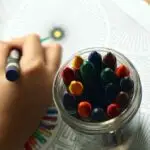
- Markers or crayons
- Examples of different crafts (optional)
- Pictures of various crafts
Rationale for the Lesson
This lesson introduces pupils to the world of crafts, fostering creativity and developing fine motor skills. Understanding crafts lays a foundation for future art and design exploration.
Prerequisite/Previous Knowledge
Pupils have basic knowledge of using their hands to make things.
Lesson Content
What are crafts?
Craft refers to the creative and skillful making of objects or artworks using materials like paper, fabric, or other things. Crafts are usually made by hand and can include things like handmade cards, drawings, and other artistic creations.
Types of crafts
Crafts can be categorized based on the materials and techniques used.
The following are some major types of crafts:
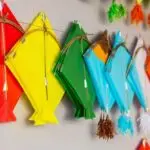
- Paper craft
- Fabric craft
Paper crafts
Paper crafts involve using paper as the primary material.
Examples of paper crafts are:
- Origami
- Paper quilling
- Paper mache
- Paper cutting
- Card making
Fabric crafts
Fabric crafts use fabric as the main material.
Examples of fabric crafts include:
- Embroidery
- Knitting
- Crocheting
- Sewing
- Applique
Teaching Methods
To deliver this lesson, the teacher will adopt the following methods: Explanation, Presentation, Discussion, Practical Activity.
Instructional Procedures
To deliver this lesson, the teacher will adopt the following steps:
Step 1: Introduction (set Induction)
time: 5 minutes
teaching Skill: Questioning, Introduction
Teacher’s Activity: Introduce the topic, “Introduction to Craft Making,” and engage pupils with questions about their experiences with making things.
Pupils’ Activity: Respond to teacher’s questions and participate in the introduction.
Step 2: Explanation of Key Concepts
Time: 10 minutes
Teaching Skill: Explanation, Definition
Teacher’s Activity: Define “craft” and explain what it entails. Provide examples of different crafts.
Pupils’ Activity: Listen attentively and ask clarifying questions.
Step 3: Demonstration/Guided Practice
Time: 10 minutes
teaching Skill: demonstration, Guided Practice
Teacher’s Activity: Show examples of paper crafts and fabric crafts. Guide pupils in identifying the materials used.
pupils’ Activity: observe the demonstration and participate in identifying materials.
Step 4: Self-Reliant Practice
Time: 10 minutes
Teaching Skill: Independant Practice, Observation
Teacher’s Activity: Ask pupils to draw examples of different crafts they have seen or can imagine.
Pupils’ Activity: Draw examples of crafts independently.
Step 5: Note-taking
Time: 2 minutes
Teaching Skill: Note-Taking
Teacher’s Activity: Guide pupils in summarizing key points of the lesson.
Pupils’ Activity: Take notes on key concepts.
Step 6: Evaluation/Review
Time: 3 minutes
Teaching Skill: Questioning, review
Teacher’s Activity: ask review questions to assess understanding.
Pupils’ Activity: Answer review questions.
Objective-aligned checks:
- List types of crafts.
- Identify examples of different crafts.
- Draw examples of different crafts.
Step 7: Conclusion
Time: 2 minutes
Teaching Skill: Summarizing
Teacher’s Activity: Summarize the lesson and encourage pupils to explore crafts further.
Pupils’ Activity: Listen to the summary and ask any remaining questions.
Lesson keywords
- Craft – The skillful making of objects by hand.
- Paper Craft – Crafts that primarily use paper as the main material.
- Fabric Craft – crafts that primarily use fabric as the main material.
- Origami – The art of folding paper into decorative shapes and figures.
- Embroidery – The art of decorating fabric using needle and thread.
Lesson Evaluation
To evaluate the learning, the teacher asks pupils to:
- What is a craft, and why is it meaningful?
- Name two types of crafts discussed in class.
- Draw a simple example of a craft (e.g., a collage or embroidery design).
- What are some other types of crafts you know about?
- What are some materials used in craft making?
Assignment/Homework
- Find and bring to class examples or pictures of different types of crafts.
- Write a short paragraph about your favorite type of craft and why you like it.
Differentiation
- For slower learners: Provide one-on-one assistance and simpler drawing activities.
- For advanced learners: encourage more complex designs and exploration of different craft techniques.
- For visual/auditory/kinesthetic learners: Use visual aids, verbal explanations, and hands-on activities to cater to different learning styles.
Note for Teachers
Encourage pupils to explore their creativity and provide a supportive surroundings for them to express themselves through crafts. Emphasize the value of handmade items and the skills involved in craft making.
Community Join the conversation Open discussion +