

Class: Primary 6
Term: 3rd Term
Subject: National Value Education
Curriculum Theme: Civic Education
Previous Lesson: Elements Of Unity, Sports
Topic: Elements Of Unity: Cultural Activities
Content/Learning Area: Cultural activities (e.g. fishing festivals, carnivals, etc.)
Time Allocation: 40 minutes
Performance Objectives
By the end of the lesson, pupils should be able to:
- Cognitive Domain: Identify different types of cultural activities in Nigeria.
- Affective Domain: Show respect and appreciation for Nigeria’s cultural events.
- Psychomotor Domain: Mention cultural festivals practiced in their local habitat.
- Social Domain: Participate in class discussions on how cultural activities bring people together.
Reference Materials
The following resources were used in planning this lesson:
- 9 Years Basic Education Curriculum
- Abuja Educational Resource Center Scheme of work
- NAPPS National Unified Scheme of Work
- Online Details from: britannica – Culture | Definition, Characteristics, Examples, Types, Tradition, & Facts
- Relevant Textbooks
Instructional Materials
To deliver this lesson, the teacher will use the following:
- Pictures of cultural festivals
- Audio-visual clips of carnival or fishing festival
- Flashcards with festival names
- Maps showing different states of Nigeria
- Charts showing cultural symbols
Rationale for the Lesson
Understanding cultural activities helps pupils appreciate diversity and promotes national unity in a multi-ethnic country like Nigeria.
Prerequisite/Previous Knowledge
Pupils have learned about unity and cooperation and can relate to cultural events celebrated in their community.
Lesson Content
Elements of Unity: Cultural Activities
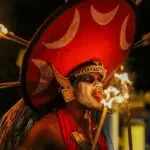
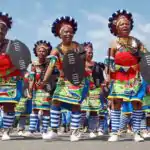
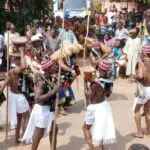
Cultural activities are celebrations and events that show the way of life of people in different parts of Nigeria. These events help people come together and understand each other better.
The following are types of cultural activities:
- fishing festivals
- Carnivals
- New Yam festivals
- Conventional dances
- Masquerade displays
- Durbar festivals
- Boat regattas
Importance of Cultural Activities
Cultural activities help people understand and respect each other.They promote peace and unity among people from different places.
These include:
- They bring people from different tribes together
- They help people learn about each other’s culture
- They promote love and unity
- They teach us to respect others
- They make us proud of our tradition
- They boost tourism
- They preserve heritage
Examples of Cultural Activities in Nigeria
Examples are:
- Argungu Fishing Festival in Kebbi State
- Calabar Carnival in cross River state
- Osun Osogbo Festival in Osun State
- New Yam Festival in Igbo land
- Eyo Festival in Lagos State
- Sango Festival in Oyo State
- Igogo Festival in Ondo State
Teaching Methods
To deliver this lesson, the teacher will adopt the following methods: Discussion,lecture,Storytelling,Explanation,Visual aids,Group Work
Instructional Procedures
To deliver this lesson,the teacher will adopt the following steps:
Step 1: Introduction
Time: 5 mins
teaching Skill: Set Induction
Teacher’s Activity: Teacher tells a short story about a local festival and asks pupils if they’ve attended any cultural event.
Pupils’ Activity: Pupils listen to the story and share their own festival experiences.
Step 2: Meaning of Cultural Activities
Time: 7 mins
Teaching Skill: Explanation
Teacher’s Activity: Teacher explains the meaning of cultural activities and uses flashcards and pictures to show examples.
Pupils’ Activity: Pupils observe pictures and repeat after the teacher.
Step 3: Importance of Cultural Activities
Time: 8 mins
Teaching Skill: discussion
Teacher’s Activity: Teacher explains the importance of cultural activities and discusses how they promote unity.
Pupils’ Activity: Pupils contribute by sharing how festivals unite people in their communities.
Step 4: Examples of Cultural Activities
Time: 8 mins
Teaching Skill: Visual Aids
Teacher’s Activity: Teacher shows a video or chart and describes different festivals in Nigeria and their locations.
Pupils’ Activity: Pupils watch and identify the festivals and the states where they take place.
Step 5: Note-Taking
Time: 3 mins
Teaching Skill: Writing Skills
Teacher’s Activity: teacher dictates or writes the main points on the board for pupils to copy into their notebooks.
Pupils’ Activity: Pupils copy the notes neatly.
Step 6: Evaluation/Review
Time: 5 mins
Teaching Skill: Questioning
Teacher’s Activity: Teacher asks questions to check pupils’ understanding and gives a short activity.
Pupils’ Activity: Pupils answer questions and complete tasks.
Objective-aligned checks:
- Identify different types of cultural activities in Nigeria.
- Show respect and appreciation for Nigeria’s cultural events.
- Mention cultural festivals practiced in their local habitat.
Step 7: conclusion
Time: 4 mins
Teaching Skill: Cognitive, Instructional
Teacher’s Activity: Teacher summarizes the lesson, emphasizes the importance of unity through culture, and encourages pupils to appreciate cultural events around them.
Pupils’ Activity: Pupils listen to summary and respond to final questions.
lesson Keywords
- Culture – The way of life of a group of people
- Festival – A special event celebrated by people
- Carnival – A fun parade with music and dance
- Masquerade – A cultural display with masked dancers
- Unity – Living together in peace and harmony
Lesson Evaluation
To evaluate the learning,the teacher asks pupils to:
- Explain what cultural activities are
- Mention three examples of cultural activities in Nigeria
- List two reasons why cultural activities are important
- Name one festival celebrated in their local area
- say how cultural events help bring people together
Assignment/Homework
- Research and write about a cultural festival in your state.
- Draw a picture of a cultural activity you find interesting.
- interview a family member about their experience at a cultural event.
Differentiation
- For slower learners: Provide visual aids and repeated explanations.
- For advanced learners: Encourage them to research and present on a cultural activity.
- For visual/auditory/kinesthetic learners: Use videos, music, and role-playing activities.
Note for Teachers
Use real-life pictures and encourage pupils to share their cultural experiences. Create an inclusive environment where all cultures are respected.

Community Join the conversation Open discussion +