

Class: Primary Two
Term: Second Term
Subject: Basic Science and Technology
Curriculum Theme: Basic Science
Previous Lesson: Meaning and Examples of Animal Identification
Topic: Identifying Animals and Their Babies
Content/Learning Area: Identifying and naming animals and their babies
Time Allocation: 40 minutes
Performance Objectives
By the end of the lesson, pupils should be able to:
- Cognitive Domain:
1. Identify various animals and their corresponding babies.
2.Name different baby animals correctly.
3.Explain the importance of knowing animal names and their babies.
- Psychomotor Domain:
1.Actively participate in class discussions.2. Correctly answer questions related to animals and their babies.
- Affective Domain:
1. Show interest in learning about animals and their babies.
2. Develop a sense of gratitude for the natural world.
- Social Domain:
1. Work cooperatively with classmates during activities.
2.Share their knowledge and understanding with others.
Reference Materials
- 9 – Years Basic Education Curriculum
- Abuja Educational Resource Center scheme of Work
- NAPPS National Unified Scheme of Work
- Relevant Textbooks
Instructional Materials
To deliver this lesson, the teacher will use the following materials:
- Whiteboard or chart paper
- Markers or crayons
- Pictures or flashcards of animals and their babies
Rationale for the Lesson
Understanding animal life cycles and the relationship between parents and offspring is crucial for developing environmental awareness and appreciation for biodiversity.
Prerequisite/Previous Knowledge
The teacher will start by asking students what they know about animals and their young. A brief discussion will follow, leading into the lesson’s topic. Pictures of animals will be shown to generate excitement and engagement.
Lesson Content
What are Animals and Their Babies?
Animals, like humans, have babies. These babies depend on their parents for food, safety, and care until they can look after themselves. This special relationship is vital for the survival of the young.
Examples of Animals and Their Babies:
The following are examples of animals and their babies:
- Pig: Piglet
- Cat: Kitten
- Cow: Calf
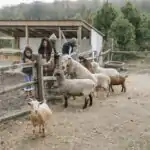
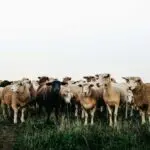
- Sheep: Lamb
- Duck: Duckling
- Dog: Puppy
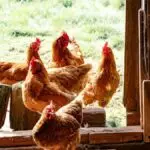
- Hen: chick
- Goat: Kid
More Animal–Young Pairs
Other examples are horse—foal, lion—cub, frog—tadpole and butterfly—caterpillar (larva). Some young animals resemble smaller versions of the adult, while others change greatly as they grow.
Mammals usually feed their young with milk, birds hatch from eggs, and many young animals require protection until they can find food or escape danger. Pupils can sort picture cards into adult-and-young pairs and explain one difference between a chick and an adult hen.
Teaching Methods
To deliver this lesson, the teacher will adopt the following methods: Discussion, Question and answer, Use of visual aids
Instructional procedures
To deliver this lesson, the teacher will adopt the following steps:
Step 1: Introduction (Set Induction)
Time: 5 minutes
Teaching Skill: Questioning
Teacher’s Activity: Ask students what they know about animals and their young. Show pictures of animals.Pupils’ Activity: Respond to teacher’s questions and observe the pictures.
Step 2: Explanation of Key Concepts
Time: 10 minutes
Teaching Skill: Explaining
Teacher’s Activity: explain the concept of animals and their babies,using examples.Pupils’ activity: Listen attentively and ask clarifying questions.
Step 3: Demonstration/Guided Practice
Time: 10 minutes
Teaching Skill: Demonstrating
Teacher’s Activity: Show flashcards of animals and their babies,and say their names.
Pupils’ Activity: Repeat the names of the animals and their babies.
Step 4: Self-Reliant Practice
Time: 5 minutes
Teaching Skill: Monitoring
Teacher’s Activity: Ask students to name animals and their babies from memory.Pupils’ Activity: name animals and their babies from memory.
Step 5: Note-Taking
Time: 5 minutes
Teaching Skill: Guiding
Teacher’s Activity: Guide students in writing down key terms and examples.
Pupils’ Activity: Write down key terms and examples.
Step 6: Evaluation/Review
Time: 5 minutes
Teaching Skill: Assessing
Teacher’s Activity: Ask evaluation questions.Pupils’ activity: Answer evaluation questions.
Objective-aligned checks:
- Identify various animals and their corresponding babies.
- Name different baby animals correctly.
- Explain the importance of knowing animal names and their babies.
Step 7: Conclusion
Time: 2 minutes
Teaching Skill: Summarizing
Teacher’s Activity: Summarize the key concepts learned and encourage students to continue learning about animals and their babies.
pupils’ Activity: Listen to the summary and ask any remaining questions.
Lesson Keywords
- animal – A living organism that can move and eat.
- Baby – A young animal or human.
- Piglet – A baby pig.
- Kitten – A baby cat.
- Calf – A baby cow.
Lesson Evaluation
To evaluate the learning, the teacher asks pupils to:
- What is a baby pig called?
- Name another animal and its baby.
- Why is it meaningful to know the names of animals and their babies?
- Can you think of any other animals and their babies?
- What is the most crucial thing a parent animal does for its baby?
Assignment/homework
- Draw pictures of three different animals and their babies.
- Write down the names of five animals and their babies.
- Ask your parents or guardians to tell you about other animals and their babies.
Differentiation
- For slower learners: Provide one-on-one assistance and use simpler language.
- For advanced learners: Encourage them to research and present additional examples of animals and their babies.
- For visual/auditory/kinesthetic learners: Use visual aids, songs, and hands-on activities to reinforce learning.
Note for Teachers
Ensure to use real-life examples and visual aids to make the lesson engaging and understandable for the pupils. Encourage active participation and provide positive reinforcement.

Community Join the conversation Open discussion +