

Class: Primary One
Term: Second Term
Subject: National Values Education
Curriculum Theme: Security Education
Previous lesson: Security Agency, NSCDC
Topic: Security Agencies: Police and Army
Content/Learning Area: Identification and Functions of Police and Army Agents
Time Allocation: Not Specified
Performance Objectives
By the end of the lesson, pupils should be able to:
- Cognitive Domain:
– List five ways to identify Police and Army Agents.
- Affective Domain:
– Demonstrate respect for the roles of Police and Army in society.
- Psychomotor Domain:
– Point to pictures or items associated with Police and Army.
- Social Domain:
– Discuss why it is vital to obey instructions from Police and Army agents.
Reference Materials
- 9–Years Basic Education Curriculum
- Abuja Educational Resource Center Scheme of Work
- NAPPS national Unified Scheme of Work
- Online Facts from: Defense Headquarters – Army affairs – Ministry of Defence
- Relevant Textbooks
instructional Materials
To deliver this lesson, the teacher will use the following materials:
- Pictures of police and Army Agents in uniforms.
- Flashcards showing the functions of Police and Army.
- A toy police badge and toy soldier cap.
- A chart displaying the differences between Police and Army uniforms.
Rationale for the Lesson
This lesson helps children understand the roles of Police and Army in society,fostering respect for law enforcement and national security. This knowledge is crucial for their safety and understanding of community helpers.
Prerequisite/Previous Knowledge
Pupils have likely seen police officers or soldiers in their community or on television.
Lesson Content
Security Agencies; Police,Army
The Police maintain law and order,while the Army protects the country from external threats.
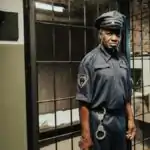
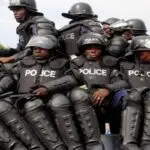
Police Agents: Ways to Identify Police:
identifying police agents involves recognizing their distinct uniforms,equipment,and roles. The following are ways to identify police:
- They wear black uniforms.
- They carry a baton and whistle.
- they have badges on their uniforms.
- Police stations are their offices.
- They use Police vans with sirens.
- They often wear reflective vests for visibility.
- they may have visible name tags or identification numbers.
Functions of Police:
The police perform several critical functions to maintain peace, order, and safety within the community.These include:
- Maintain law and order.
- Help lost people find their way.
- Investigate crimes.
- Protect lives and property.
- Arrest criminals.
- Direct traffic and ensure road safety.
- Respond to emergencies and provide assistance.
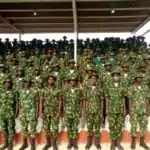
Army Agents: Ways to Identify Army:
Identifying army agents involves recognizing their distinct uniforms, equipment, and roles. These include:
- They wear camouflage uniforms.
- They carry guns.
- They have boots and helmets.
- They train in military camps.
- They ride armored vehicles.
- they often wear military-style backpacks or gear.
- They may have insignias or patches indicating their rank or unit.
Functions of Army:
The army performs several critical functions to protect the nation, maintain security, and respond to crises. These include:
- Defend the country from attacks.
- Assist in national emergencies.
- Secure borders.
- Fight terrorism.
- Keep peace during wars.
- Participate in peacekeeping missions abroad.
- Provide support during natural disasters.
Teaching Methods
To deliver this lesson, the teacher will adopt the following methods: Storytelling, Discussion, Demonstration, and Visual Aids.
Instructional Procedures
To deliver this lesson, the teacher will adopt the following steps:
Step 1: Introduction
Time: 5 mins
Teaching Skill: Set Induction
Teacher’s Activity: Narrate a short story about a child lost in the market helped by Police and Army. Ask pupils if they have seen Police or Army before.
pupils’ Activity: Listen and answer questions.
Learning Point: Pupils understand the context of Police and Army as helpers and protectors.
Step 2: Identifying Police Agents
Time: 8 mins
Teaching Skill: Clarification
Teacher’s activity: Show pictures of Police Agents and their badges. Explain their uniforms and tools (baton, whistle, badge).
Pupils’ Activity: Observe and identify police features.
Learning Point: Pupils can identify police Agents by their uniforms and tools.
step 3: Functions of Police
Time: 5 mins
Teaching Skill: Discussion
Teacher’s Activity: Explain the functions of police, such as maintaining peace and arresting lawbreakers.
Pupils’ Activity: Participate and listen attentively.
Learning Point: Pupils understand the roles of Police in maintaining order.
Step 4: Identifying Army Agents
Time: 8 mins
Teaching Skill: Demonstration
Teacher’s Activity: Show pictures and a toy soldier cap. Discuss their camouflage uniforms and roles.
Pupils’ Activity: Observe and answer questions.
Learning Point: Pupils can identify Army Agents by their uniforms and responsibilities.
Step 5: Functions of Army
Time: 5 mins
Teaching Skill: Explanation
Teacher’s Activity: List Army functions like defending the country and assisting during crises.Pupils’ Activity: Participate actively.
Learning Point: Pupils recognize the Army as national defenders and crisis responders.
Step 6: Note Taking
Time: 7 mins
Teaching Skill: Guided note-taking
Teacher’s Activity: Help pupils copy concise notes into their books.Pupils’ Activity: Write notes in their books.
Learning Point: Pupils retain key facts about Police and Army.
Step 7: Conclusion and Evaluation
Time: 2 mins
Teaching Skill: Recap
Teacher’s Activity: Summarize the lesson and ask review questions.
Pupils’ Activity: Answer the questions.
Learning Point: Pupils consolidate their learning about police and Army Agents.
Lesson Keywords
- Police – A security agency responsible for maintaining law and order.
- Army – A military force that protects a country from external threats.
- Uniform – Special clothing worn by members of a particular group or institution.
- Functions – The specific duties or roles performed by someone or somthing.
- Security – Measures taken to protect against harm or danger.
Lesson Evaluation
To evaluate the learning, the teacher asks pupils to:
- Mention two ways to identify Police Agents.
- list two functions of Police Agents.
- Mention two ways to identify Army Agents.
- List two functions of Army Agents.
- Why is it critically important to obey Police and Army?
Assignment/Homework
- Draw a picture of a police officer or a soldier in their uniform.
- Ask your parents or guardians about a time when the police or army helped them.
- Write down one thing you learned about the police and one thing you learned about the army.
Differentiation
- For slower learners: Provide one-on-one assistance and use simpler language.
- for advanced learners: Assign additional research tasks on Police and Army.
- For visual/auditory/kinesthetic learners: Use visual aids, storytelling, and role-playing activities to engage different learning styles.
Note for Teachers
Encourage pupils to ask questions and share their experiences related to police and army personnel. Emphasize the importance of respecting and cooperating with these security agencies for their safety and the well-being of the community.

Community 2 comments Open discussion +