

Class: Primary One
Term: Second Term
Subject: National Values Education
curriculum Theme: Security Education
previous Lesson: Security Tips When Relating With Strangers and How to interact with security agents
Topic: Identification Of Security Agencies
Content/Learning Area: How to identify security agencies and agents: Mode of dressing, etc.
Time Allocation: 40 minutes
Performance Objectives
By the end of the lesson, pupils should be able to:
- Cognitive Domain: Identify at least three security agencies in Nigeria.
- Affective Domain: Show gratitude for the roles of security agents in ensuring safety.
- Psychomotor Domain: Mimic the uniform of one security agent in Nigeria.
- Social Domain: Discuss with classmates how security agents help the community.
Reference Materials
- 9 – Years Basic education Curriculum.
- Abuja Educational Resource Centre Scheme of Work.
- NAPPS National Unified Scheme of Work.
- Online Details from: Sheriff Deputies – 9 Major Security Agencies in Nigeria
- Relevant Textbooks.
Instructional materials
to deliver this lesson, the teacher will use the following materials:
- Pictures of different security agents.
- Uniform samples or drawings.
- A chart displaying names of security agencies.
- Flashcards with key terms.
Rationale for the Lesson
This lesson is crucial for building childrenS awareness of security agencies and their roles. Knowing how to identify them promotes safety and fosters respect for authority figures.
Prerequisite/Previous Knowledge
Pupils have a basic understanding of community helpers.
Lesson Content
Identification of Security Agencies
Security agencies are special groups of people who help keep our country safe, protect lives and property, and make sure everyone obeys the law.
Some ways to identify security agents in Nigeria includes:
-
Uniforms – Each agency has its own special uniform.
-
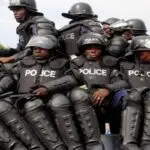
The Police often wear blue and black.
-
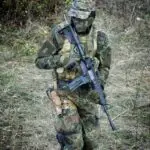
The Army wears green camouflage.
-
The Navy wears white uniforms.
-
The Air Force wears sky-blue uniforms.
-
-
Badges and Symbols – Security agents usually wear badges or symbols on their chest, arm, or cap that show their job, rank, and agency.
-
Vehicles – Their cars, vans, or motorcycles have the agency’s name, logo, and colors painted on them.
-
Example: Police cars usually have “POLICE” written boldly on them.
-
-
Tools and Equipment – Security agents carry tools to help them work, such as:
-
Handcuffs
-
Walkie-talkies or radios
-
Guns (for soldiers and police)
-
Batons or whistles
-
-
Work Stations – They operate from official places like:
-
Police stations
-
Army barracks
-
Immigration offices
-
Fire service stations
-
-
Identity Cards (ID Cards) – They carry official ID cards to prove they are real security agents.
-
Special Vehicles or Machines – Some agencies use helicopters, armored tanks, fire trucks, or rescue boats.
-
Salutes and Discipline – Many security agents greet each other with salutes and always behave in an orderly, disciplined way.
👉 Quick Reminder for Kids:
Not everyone in a uniform is a real security agent. Always look for their badge, ID card, and official vehicle before trusting them.
Teaching Methods
To deliver this lesson, the teacher will adopt the following methods: Interactive teaching,Visual aids,Guided discussion,Peer interaction,Explanation,Writing and copying,Questioning,Oral questioning,Recap,Summary.
Instructional Procedures
To deliver this lesson, the teacher will adopt the following steps:
Step 1: Introduction
time: 5 mins
Teaching Skill: Set induction
Teacher’s Activity: Displays pictures of security agents and asks pupils to name them.
Pupils’ Activity: Respond with names of familiar agents.
step 2: Explanation of Security Agencies
Time: 10 mins
Teaching Skill: Interactive teaching
teacher’s Activity: Explains the meaning of security agencies and shows uniforms.
Pupils’ Activity: Listen attentively and ask questions.
Step 3: Discussion on Identifying Security Agents
Time: 10 mins
teaching Skill: Guided discussion
Teacher’s Activity: Guides pupils to discuss ways to identify security agents.
Pupils’ Activity: Participate in group discussions.
Step 4: Note-Taking
Time: 5 mins
Teaching Skill: Explanation
Teacher’s Activity: Asks pupils to copy the note on the board.
Pupils’ Activity: Copy the note into their notebooks.
Step 5: Evaluation/review
Time: 5 mins
Teaching Skill: Questioning
Teacher’s Activity: asks questions to evaluate understanding.
Pupils’ Activity: Answer questions verbally.
Step 6: Conclusion
Time: 5 mins
Teaching Skill: Recap
Teacher’s Activity: Summarizes key points and appreciates pupils’ effort.Pupils’ Activity: Share what they learned.
Lesson Keywords
- Security Agencies – Organizations that protect people and maintain order.
- Uniforms – Special clothing worn by security agents to identify them.
- Badges – Identification cards or emblems worn by security agents.
- Vehicles – cars or trucks used by security agencies, often marked with their logo.
- Tools – Equipment used by security agents, such as handcuffs or radios.
Lesson Evaluation
To evaluate the learning, the teacher asks pupils to:
- Name two security agencies in Nigeria.
- Describe one way to identify a police officer.
- Mention the tools used by security agents.
- Discuss why security agents are crucial in their community.
- Say one thing they learned today about security agents.
Assignment/Homework
- Draw and color the uniform of a security agent.
- Ask your parents about the role of security agents in your community.
- List three security agencies in Nigeria.
Differentiation
- For slower learners: Provide one-on-one assistance and use simpler language.
- For advanced learners: Encourage them to research other security agencies and present their findings to the class.
- For visual/auditory/kinesthetic learners: Use visual aids, discussions, and role-playing activities.
Note for Teachers
Ensure to use real-life examples and visual aids to enhance understanding.Encourage pupils to ask questions and participate actively in discussions. Praise and encourage pupils for their efforts to promote a positive learning surroundings.
Community Join the conversation Open discussion +