

Class: Primary 6
term: 3rd Term
Week: 6
Age: 11 years
Duration: 40 minutes
Subject: Cultural And creative Arts
Previous Lesson: Uses Of Tie And DyeCurriculum Theme: Craft, Design and Decoration
Previous Lesson:
Topic: Meaning Of batik
Content/Learning Area: Meaning Of Batik, Types of Batik, importance of Batik
performance Objectives
By the end of the lesson, pupils should be able to:
- Cognitive Domain: Explain the meaning of Batik and mention its types
- Affective Domain: Show recognition for the cultural relevance of Batik in Nigerian art
- Psychomotor domain: Identify samples or pictures of Batik fabric
- Social Domain: Collaborate with peers in discussing the use of Batik in clothing
Reference Materials
The following resources were used in planning this lesson:
- 9 Years Basic Education Curriculum
- Abuja Educational Resource Center Scheme of work
- NAPPS national Unified Scheme of Work
- Online information from: wikipedia – batik
- Relevant Textbooks
Instructional Materials
The teacher will teach this lesson with the aid of:
- Samples or pictures of batik fabric
- Whiteboard and marker
- Chart showing Batik types
- Fabric dye and wax (for demonstration)
- Cultural fabric materials
Rationale for the Lesson
Understanding Batik helps pupils appreciate cultural arts and opens their minds to creative design and textile production.
Prerequisite/Previous knowledge
pupils are familiar with fabric and clothing materials and have seen local designs on clothing.
Lesson Content
Meaning Of Batik
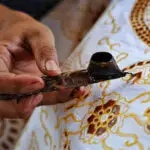
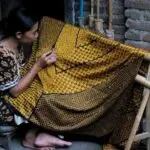
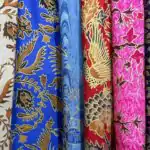
Batik is a method of making designs on cloth using wax and dye. It is a popular way of decorating fabrics in many cultures. Batik fabrics are colourful and used for clothes and decoration.
Types of Batik
There are different ways Batik is made. Each type has a special design.
These include:
- Hand-drawn Batik
- Stamp Batik
- Screen-print Batik
Importance of Batik
Batik is useful in many ways in our society. It helps preserve our culture and creates jobs.
The following are:
- It is used to make clothes
- It helps promote culture
- It provides jobs for artists
- It is used in decoration
- It helps people earn income
Meaning and Distinctive Feature of Batik
Batik is a resist-dyeing process in which wax or another suitable resist is applied to selected fabric areas before dyeing. The resisted lines or shapes remain undyed or take later colours in a planned sequence.
Batik differs from tie-dye mainly in how the resist is applied. Hot wax can burn and is handled by adults under safe conditions.
Teaching Methods
Discussion, lecture, demonstration, description, visual aids, storytelling
Instructional Procedures
To deliver this lesson, the teacher will adopt the following steps:
Step 1: Introduction
Time: 5min
Teaching Skill: Set Induction
Teacher’s Activity: Shows a Batik fabric and asks pupils to describe what they see
Pupils’ Activity: Pupils observe and respond with what they notice
Learning Point: Arouses curiosity and connects to topic
Step 2: Meaning Of Batik
Time: 7min
Teaching Skill: Explanation
Teacher’s Activity: Explains the meaning of Batik and shows pictures of Batik fabric
Pupils’ Activity: Pupils listen and look at the pictures
Learning Point: Understands what batik means
Step 3: Types of Batik
Time: 8min
Teaching Skill: Demonstration
Teacher’s Activity: Explains the different types of Batik and shows samples or diagrams
Pupils’ Activity: Pupils watch and identify types from the materials
Learning Point: Learns types of Batik
Step 4: Importance of Batik
Time: 8min
Teaching Skill: Discussion
Teacher’s Activity: leads discussion on why Batik is important in culture and economy
Pupils’ Activity: Pupils contribute their ideas and take turns to explain
Learning Point: Knows uses and value of Batik
Step 5: note Taking
Time: 3min
Teaching Skill: Writing Skills
Teacher’s Activity: Dictates or writes notes on the board for pupils to copy
Pupils’ activity: Pupils copy the notes into their books
Learning Point: Records main lesson points
Step 6: Evaluation
Time: 5min
Teaching Skill: Assessment
Teacher’s Activity: Asks pupils oral and written questions about the meaning, types and uses of Batik
Pupils’ Activity: Pupils answer questions and show understanding
Learning Point: Checks understanding of topic
Objective-aligned checks:
- Explain the meaning of Batik and mention its types.
- Show recognition for the cultural relevance of Batik in Nigerian art.
- Identify samples or pictures of Batik fabric.
Step 7: Closure
Time: 4min
Teaching Skill: Instructional Closure
Teacher’s Activity: Summarizes the lesson and praises pupils’ participation
Pupils’ activity: Pupils listen and reflect on what they learned
Learning Point: reinforces learning and closes lesson
Lesson Keywords
- Batik: A method of decorating cloth using wax and dye
- Fabric: Cloth material used for sewing
- Dye: A substance used to change the color of something
- Wax: A sticky substance used in making Batik designs
- Design: A pattern or shape made on cloth
lesson Evaluation
To evaluate the learning, the teacher asks pupils to:
- What is Batik?
- Name two types of Batik
- Mention three importance of Batik
- Describe how Batik can help promote our culture
- Identify a Batik cloth from pictures shown
Differentiation
Teacher uses visual aids and simplified language for slower learners while advanced pupils are engaged with more examples and questions.
Note for teachers using this lesson plan
Allow pupils to interact with Batik fabric samples or pictures. Use colourful visuals to make the lesson engaging.

Community Join the conversation Open discussion +