

Class: Primary 4
Term: 3rd Term
Week: 8
Age: 10 years
Duration: 40 minutes
Subject: Christian Religion Studies
Curriculum Theme: Christian Religion Studies
Previous Lesson: Kindness To Others
Topic: People Who Should Help Others
Content/Learning Area: People with the opportunity to help in the passage (Priest, Levite, Samaritan)
Performance Objectives
By the end of the lesson, pupils should be able to:
Cognitive Domain:
- Identify the characters in the parable of the Good Samaritan who had the opportunity to help.
Affective Domain:
2. Show willingness to help others in need.
Psychomotor Domain:
3. Dramatize the actions of the Priest, Levite, and Samaritan in the story.
Social Domain:
4. Participate in listing people who should help others in the society.
Reference Materials
The following resources were used in planning this lesson:
- 9 Years Basic Education Curriculum
- Abuja Educational Resource Centre Scheme of Work
- NAPPS National Unified Scheme of Work
- Online Information from: bible gateway – Luke 10:25-37 NIV – The Parable of the Good Samaritan
- Relevant Textbooks
Instructional Materials
The teacher will teach this lesson with the aid of:
- Bible
- Picture charts of a Priest, Levite, and Samaritan
- Story cards with actions from the parable
- Costumes for dramatization
- Flashcards with keywords
Rationale for the Lesson
To help pupils understand that helping others is a Christian duty and to encourage compassionate behavior.
Prerequisite/Previous Knowledge
Pupils have been taught stories of Jesus and have basic understanding of parables.
Lesson Content
People Who Should Help Others
Helping others is a good thing that God wants us to do. Jesus told a story to teach us about helping others. This story is called the parable of the Good Samaritan.
People Who Should Help Others
The following are people who should help others:
- Parents
- Teachers
- Friends
- Neighbors
- Doctors
- Police officers
- Church leaders
- Government workers
Memory Verse: Love your neighbor as yourself. — Luke 10:27
Bible Readings
- Luke 10:25–37
The Parable of the Good Samaritan
Jesus told a story about a man who was traveling from Jerusalem to Jericho. On his way, robbers attacked him, beat him, took his things, and left him half-dead.
First, a Priest came by. He saw the man but passed by on the other side without helping.
Then, a Levite came. He also saw the man and passed by without helping.
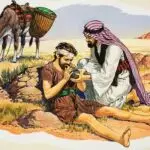
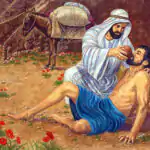
Finally, a Samaritan came. When he saw the man, he felt sorry for him. He went to him, cleaned his wounds, put him on his donkey, and took him to an inn. He paid the innkeeper to take care of the man.
Jesus asked, “Which of these three was a neighbor to the injured man?” The answer was: “The one who helped him.”
Lessons from the Parable
Jesus taught us that anyone who sees a person in need should help. We should not ignore people who are suffering. Being a good neighbor means showing kindness.
Teaching Methods
To deliver this lesson, the teacher will adopt the following methods: Storytelling, Discussion, Explanation, Role Play, Question and Answer, Visual Aids
Instructional Procedures
To deliver this lesson, the teacher will adopt the following steps:
Step 1: Introduction
Time: 5 mins
Teaching Skill: Set Induction
Teacher’s Activity: Tells a short story about someone in need and asks pupils who they think should help in that situation.
Pupils’ Activity: Pupils listen and share opinions on who should help.
Learning Point: Stimulates interest in the topic.
Step 2: The Parable of the Good Samaritan
Time: 10 mins
Teaching Skill: Storytelling
Teacher’s Activity: Narrates the parable using visuals and props to show the actions of each character.
Pupils’ Activity: Pupils listen attentively and identify the characters in the story.
Learning Point: Understands the story and the message of help.
Step 3: Lessons from the Story
Time: 5 mins
Teaching Skill: Explanation
Teacher’s Activity: Explains the lesson Jesus wants us to learn from the story.
Pupils’ Activity: Pupils discuss what they learned from the parable.
Learning Point: Learns moral lessons from the parable.
Step 4: People Who Should Help Others
Time: 5 mins
Teaching Skill: Group Work
Teacher’s Activity: Guides pupils in listing people who are supposed to help others in the society.
Pupils’ Activity: Pupils suggest names of people who should help and copy the list.
Learning Point: Identifies key people in society who help.
Step 5: Role Play Activity
Time: 5 mins
Teaching Skill: Dramatization
Teacher’s Activity: Assigns roles for dramatizing the parable and supervises the short drama.
Pupils’ Activity: Pupils act out the story of the Good Samaritan.
Learning Point: Demonstrates understanding through role play.
Step 6: Note Taking
Time: 3 mins
Teaching Skill: Writing
Teacher’s Activity: Writes or displays summary notes on the board for pupils to copy.
Pupils’ Activity: Pupils copy notes into their exercise books.
Learning Point: Records key points of the lesson.
Step 7: Evaluation
Time: 4 mins
Teaching Skill: Assessment
Teacher’s Activity: Asks questions to review the story and learning points.
Pupils’ Activity: Pupils answer questions and complete quick tasks.
Learning Point: Checks understanding of the lesson.
Step 8: Conclusion
Time: 3 mins
Teaching Skill: Instructional, Social
Teacher’s Activity: Recaps the topic and encourages pupils to practice helping others in real life.
Pupils’ Activity: Pupils respond with how they will help others.
Learning Point: Reinforces the value of helping others.
Home Task: Write three lessons learned about People Who Should Help Others and one suitable way to apply the teaching responsibly.
Lesson Keywords
- Priest – A church leader who leads people in worship
- Levite – A worker in the temple from the tribe of Levi
- Samaritan – A person from Samaria, often disliked by Jews
- Neighbor – Anyone near you who needs help
- Help – To give support or do something kind for someone
Lesson Evaluation
To evaluate the learning, the teacher asks pupils to:
- Who told the parable of the Good Samaritan?
- Who were the three people that saw the injured man?
- Who helped the injured man?
- Mention two people who should help others in our society.
- What lesson did Jesus teach from the parable?
- Recite the memory verse.
Differentiation
The teacher will group pupils for discussion and role play, provide picture charts for visual learners, and use repetition for slow learners.
Note for teachers using this lesson plan
Ensure pupils understand that helping others is not based on religion or tribe. Emphasize compassion and responsibility.


Community Join the conversation Open discussion +