

Class: Primary 4
Term: 3rd Term
Week: 7
Age: 10 years
Duration: 40 minutes
Subject: Christian Religion Studies
Curriculum Theme: Christian Religion Studies
Previous Lesson: Consequences Of Abandoning Talents
Topic: Kindness To Others
Content/Learning Area: Narrate the story of the good Samaritan (Luke 10:29–37)
(at home, church, school, communities)
Performance Objectives
By the end of the lesson, pupils should be able to:
Cognitive Domain: Explain the meaning of kindness using the story of the good Samaritan
Affective Domain: Show willingness to help others in need regardless of who they are
Psychomotor Domain: Dramatize the story of the good Samaritan in groups
Social Domain: Demonstrate kindness in class or during play by helping a classmate
Reference Materials
The following resources were used in planning this lesson:
- 9 Years Basic Education Curriculum
- Abuja Educational Resource Centre Scheme of Work
- NAPPS National Unified Scheme of Work
- Online Information from: wikipedia – Parable of the Good Samaritan
- Relevant Textbooks
Instructional Materials
The teacher will teach this lesson with the aid of:
- Holy Bible
- Picture chart of the good Samaritan story
- Story flash cards
- Costume items for dramatization (bandages, robe, etc.)
- Drawing materials for pupils
Rationale for the Lesson
To help pupils understand the importance of kindness through the biblical story of the good Samaritan.
Prerequisite/Previous Knowledge
Pupils are familiar with Bible stories and understand simple concepts of good behaviour such as helping others.
Lesson Content
Kindness To Others
Kindness means being good and helpful to others. God wants us to show love to everyone, no matter who they are. The Bible teaches us how to be kind through the story of the good Samaritan.
Memory Verse: Be ye kind one to another. — Ephesians 4:32
Bible Readings
- Luke 10:29–37
- Proverbs 19:17
- Matthew 7:12
The Story of the Good Samaritan
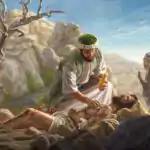
Jesus told a story about a man who was travelling from Jerusalem to Jericho. Along the way, some robbers attacked him. They beat him up, took all he had, and left him half-dead.
A priest came by, saw the man, but crossed to the other side and walked away. Later, a Levite came, looked at the man, and also went away without helping. But a Samaritan came by, and when he saw the injured man, he felt sorry for him.
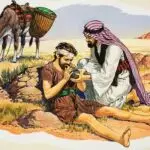
The Samaritan cleaned the man’s wounds, put him on his donkey, and took him to an inn. He paid the innkeeper to take care of him and promised to pay more if needed.
Jesus said this Samaritan was a good neighbour because he showed kindness.
Lessons from the Story
- We should be kind to everyone, not just our friends
- A true neighbour is anyone who helps others
- We must not ignore people who are suffering
- Kindness is an act of love
- Helping others makes God happy
Teaching Methods
To deliver this lesson, the teacher will adopt the following methods: Storytelling, Discussion, Explanation, Dramatization, Visual Aids, Group Work
Instructional Procedures
To deliver this lesson, the teacher will adopt the following steps:
Step 1: Introduction
Time: 5 mins
Teaching Skill: Set Induction
Teacher’s Activity: Uses a short story of a child who helped a stranger and links it to the Bible story
Pupils’ Activity: Pupils listen and answer questions
Learning Point: Build interest and curiosity about the lesson
Step 2: Story of the Good Samaritan
Time: 10 mins
Teaching Skill: Storytelling
Teacher’s Activity: Narrates the story from Luke 10:29–37 using a picture chart and dramatic voice
Pupils’ Activity: Pupils listen and observe visuals
Learning Point: Understand the message of kindness and compassion
Step 3: Lessons from the Story
Time: 5 mins
Teaching Skill: Explanation
Teacher’s Activity: Explains the moral lessons of the story and relates them to pupils’ everyday lives
Pupils’ Activity: Pupils discuss and share ideas
Learning Point: Learns how to be kind in real-life situations
Step 4: Places to Show Kindness
Time: 5 mins
Teaching Skill: Discussion
Teacher’s Activity: Asks pupils to list places where they can show kindness
Pupils’ Activity: Pupils list examples with teacher guidance
Learning Point: Applies the concept of kindness in different places
Step 5: Note Taking
Time: 5 mins
Teaching Skill: Writing
Teacher’s Activity: Writes key notes on the board and guides pupils in copying into their books
Pupils’ Activity: Pupils write notes in their exercise books
Learning Point: Retains key points from the lesson
Step 6: Evaluation
Time: 5 mins
Teaching Skill: Assessment
Teacher’s Activity: Asks oral questions on the story, lessons learned, and places to show kindness
Pupils’ Activity: Pupils answer questions aloud
Learning Point: Checks understanding and retention of topic
Step 7: Conclusion
Time: 5 mins
Teaching Skill: Instructional/Cognitive/Social
Teacher’s Activity: Summarizes the story and leads pupils in a short song about loving one another
Pupils’ Activity: Pupils sing and repeat the lesson’s main idea
Learning Point: Reinforces value of kindness and compassion
Home Task: Write three lessons learned about Kindness To Others and one suitable way to apply the teaching responsibly.
Lesson Keywords
- Kindness – Being good and helpful to others
- Compassion – Feeling sorry and wanting to help someone
- Samaritan – A person from Samaria, seen as an outsider by Jews
- Neighbour – Anyone who needs our help
- Parable – A simple story told by Jesus to teach a lesson
Lesson Evaluation
To evaluate the learning, the teacher asks pupils to:
- What is kindness?
- Who told the story of the good Samaritan?
- Mention one person that ignored the wounded man.
- Who helped the man in the story?
- Recite the memory verse.
Differentiation
The teacher will use visual aids and storytelling to support slow learners and allow role play to help all pupils express understanding in different ways.
Note for teachers using this lesson plan
Use real-life examples of kindness and allow pupils to share their own experiences. Reinforce the lesson through songs, drama, or class responsibilities like helping a classmate.


Community Join the conversation Open discussion +