Class: Primary Two
Term: First Term
Subject: Basic Science and Technology
Curriculum Theme: Basic Technology
Previous Lesson:
Topic: Clay Soil
Content/Learning Area: Defining Clay soil, Describing the properties of clay soil, Identifying some uses of clay soil
Time Allocation: 40 minutes
Performance Objectives
By the end of the lesson, pupils should be able to:
- Cognitive Domain:
1. Define clay soil.
2. Describe the properties of clay soil.
3. Identify some uses of clay soil.
- Psychomotor Domain:
1. Manipulate clay soil to understand its texture.
- Affective Domain:
1. Show appreciation for the importance of clay soil.
- Social Domain:
1. Work collaboratively in group activities.
Reference Materials
- 9 – Years Basic Education curriculum
- Abuja Educational Resource Center Scheme of Work
- NAPPS National Unified Scheme of Work
- relevant Textbooks
Instructional materials
To deliver this lesson, the teacher will use the following materials:
- Samples of clay soil
- Pictures of clay soil and its uses
- Whiteboard or chart paper
- Markers
Rationale for the Lesson
understanding clay soil is crucial for appreciating its properties and diverse applications in various fields. This lesson lays a foundation for future learning about soil types and their importance in agriculture and construction.
Prerequisite/Previous Knowledge
the teacher will start by asking pupils what they know about different types of soil. A brief discussion will follow, leading into the introduction of clay soil.
Lesson Content
Clay Soil
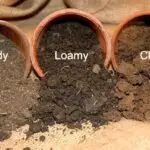
Clay soil is a type of soil known for its stickiness and moldability.It’s made of very fine particles, smaller than sand or silt. This makes clay soil feel smooth and dense.
What is Clay Soil?
Clay soil is made of very fine particles packed tightly together, making it sticky and dense. It’s often found in rainy areas as water helps break down rocks and minerals that form clay.
Properties of Clay Soil
The characteristics of clay soil determine its suitability for various applications. These include:
- Stickiness: Clay soil is very sticky when wet as the fine particles hold onto water.
- Moldability: It can be easily molded,making it useful for pottery and bricks.
- water Retention: It holds water well, which is good for plants but can cause waterlogging.
- Poor Drainage: Water drains slowly due to the fine particles.
- Nutrient Rich: It often contains many nutrients, beneficial for plant growth.
- High Compaction: Clay soil tends to compact easily, reducing air spaces.
- Slow Warming: It warms up slowly in the spring due to its high water content.
uses of Clay Soil
Clay soil has several practical applications due to its unique properties.Examples are:
- Pottery: A key ingredient in making pottery, from bowls to sculptures.
- Bricks: Used to make bricks for houses and buildings.
- Soil Amendment: Can improve other soils, like adding it to sandy soil to improve water retention.
- Construction: Used in the construction of dams and embankments due to its low permeability.
- Cosmetics: Some types of clay are used in facial masks and other cosmetic products.
- traditional Medicine: Used in some cultures for its perceived healing properties.
Teaching Methods
To deliver this lesson, the teacher will adopt the following methods: Discussion, Demonstration, Question and Answer
Instructional Procedures
To deliver this lesson, the teacher will adopt the following steps:
Step 1: Introduction
Time: 5 minutes
teaching Skill: Set Induction
Teacher’s activity: Introduces the topic, Clay Soil, and asks pupils what they already know about soil.
Pupils’ Activity: respond to the teacher’s questions and share their prior knowledge.
Step 2: Description of Key Concepts
Time: 10 minutes
Teaching Skill: Explaining
Teacher’s Activity: Explains the definition and characteristics of clay soil using visual aids.Pupils’ Activity: Listen attentively and ask clarifying questions.
Step 3: Demonstration/Guided practice
Time: 10 minutes
Teaching Skill: Demonstrating
Teacher’s Activity: Demonstrates the properties of clay soil (stickiness, moldability) using samples.
Pupils’ Activity: Observe the demonstration and participate in hands-on activities with clay soil samples.
Step 4: Self-reliant Practise
Time: 5 minutes
Teaching Skill: Monitoring
Teacher’s Activity: Guides pupils as they work independently on a simple activity related to clay soil.
Pupils’ Activity: Complete the activity, applying what they have learned.
Step 5: Note-Taking
Time: 5 minutes
Teaching Skill: Note-taking
teacher’s Activity: Guides pupils in taking notes on key concepts and properties of clay soil.
Pupils’ Activity: Wriet down notable information in their notebooks.
Step 6: Evaluation/Review
Time: 5 minutes
Teaching Skill: Questioning
Teacher’s Activity: Asks review questions to assess understanding.
Pupils’ activity: Answer the review questions.
Objective-aligned checks:
- Define clay soil.
- Describe the properties of clay soil.
- Identify some uses of clay soil.
Step 7: Conclusion
Time: 2 minutes
Teaching Skill: Summarizing
Teacher’s Activity: Summarizes the key points about clay soil and its uses, emphasizing its importance in everyday life.
Pupils’ Activity: Listen attentively and ask clarifying questions.
Lesson Keywords
- Clay Soil – A type of soil with fine particles, known for stickiness and moldability.
- Stickiness – The quality of clay soil that makes it adhere to surfaces when wet.
- Moldability – The ability of clay soil to be shaped easily.
- Water Retention – The capacity of clay soil to hold water.
- Nutrient Rich – Containing many nutrients beneficial for plant growth.
Lesson Evaluation
To evaluate the learning, the teacher asks pupils to:
- What is clay soil?
- how does clay soil feel when wet?
- Name two uses of clay soil.
- What is one property of clay soil that is both good and bad for plants?
- can you think of another use for clay soil?
Assignment/homework
- Collect a sample of clay soil from your surroundings.
- Describe the texture and properties of the clay soil you collected.
- List three things that can be made from clay soil.
Differentiation
- For slower learners: Provide one-on-one assistance and simplified explanations.
- For advanced learners: Encourage them to research additional uses of clay soil.
- For visual/auditory/kinesthetic learners: Use visual aids, verbal explanations, and hands-on activities to cater to different learning styles.
note for teachers
Ensure to bring enough clay soil samples for pupils to handle. supervise the hands-on activities closely to avoid mess and ensure safety. Encourage pupils to ask questions and share their observations.