

Class: Primary Two
Term: Third Term
Subject: basic Science and Technology
Curriculum Theme: Basic Technology
Previous Lesson: Modern Instruments That Produce Sound
Topic: Local instruments That Produce Sound
Content/Learning Area: What are Local Instruments?, Types of Local Instruments, Examples of Local Instruments
Time Allocation: 40 minutes
Performance Objectives
By the end of the lesson, pupils should be able to:
- Cognitive Domain:
1. Identify and name three local instruments that produce sound.
2. Explain the cultural meaning of local musical instruments.
3. Distinguish between different types of local instruments.
- Psychomotor Domain:
1.Attempt to mimic sounds produced by local instruments using their voice or available materials.
- Affective Domain:
1. Show gratitude for the cultural significance of local musical instruments.
- Social Domain:
1. Participate actively in class discussions about local instruments.
Reference Materials
- 9 – Years Basic Education Curriculum
- Abuja Educational Resource Center Scheme of Work
- NAPPS National Unified Scheme of Work
- Relevant Textbooks
Instructional Materials
To deliver this lesson, the teacher will use the following materials:
- Pictures of various local instruments
- audio recordings of local instruments
- Whiteboard or chart paper
- Markers or crayons
Rationale for the Lesson
Understanding local instruments fosters gratitude for cultural heritage and musical diversity. This lesson provides a foundation for future studies in music and cultural understanding, enriching pupils’ knowledge of their surroundings and traditions.
prerequisite/Previous Knowledge
The teacher will begin by asking pupils what they remember from the previous lesson on modern instruments. A brief review will follow, leading into a discussion about instruments found in their communities, setting the stage for learning about local instruments.
Lesson Content
What are Local Instruments?
Local instruments are musical instruments traditionally made and used within a specific region or culture. They’re often crafted from locally sourced materials like wood,gourds,animal skin,and bamboo. Many have been passed down through generations, forming a key part of a community’s heritage.
Types of Local Instruments
Local instruments serve various purposes:
- Accompanying songs and dances
- Storytelling
- Communicating messages
- Celebrating special occasions
- Religious ceremonies
- Entertainment during festivals
Examples of Local Instruments
Examples are:
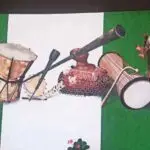
- Djembe: A drum made from hollow wood and animal skin, played wiht hands to create varying pitches. common in African music and dance.
- Shekere: A dried gourd with beads woven into a net, producing rhythmic sounds when shaken. Popular in West African music.
- Talking Drum: An hourglass-shaped drum that can mimic human speech inflections and tone, used for communication and storytelling in West Africa.
- Flute: Often made from bamboo,producing sound when air is blown into it. Used globally in various musical styles.
- Mbira: A thumb piano with metal tines on a wooden board, played by plucking the tines. A conventional instrument of Zimbabwe and southern africa.
- Goge: A customary fiddle played in Northern Nigeria, often used in Hausa music.
- Algaita: A double reed wind instrument common in Northern Nigeria, similar to an oboe.
Teaching Methods
To deliver this lesson, the teacher will adopt the following methods: Discussion, Question and answer, use of visuals, exhibition.
Instructional Procedures
To deliver this lesson, the teacher will adopt the following steps:
Step 1: Introduction
Time: 5 minutes
Teaching Skill: Set Induction
Teacher’s Activity: Review previous lesson; introduce the topic of local instruments.
Pupils’ Activity: Respond to teacher’s questions; listen attentively.
Step 2: Clarification of Key Concepts
Time: 10 minutes
Teaching Skill: Explaining
Teacher’s Activity: Define and explain what local instruments are, their uses, and their cultural significance.
Pupils’ Activity: Listen attentively; ask clarifying questions.
Step 3: Demonstration/guided Practice
Time: 10 minutes
Teaching Skill: Demonstrating
Teacher’s Activity: Show pictures and play audio recordings of various local instruments; explain how they are made and played.
Pupils’ Activity: Observe; listen; identify the instruments.
Step 4: Self-Reliant Practice
Time: 5 minutes
Teaching Skill: Guiding
Teacher’s Activity: Guide pupils in mimicking the sounds of the instruments.
Pupils’ Activity: attempt to mimic sounds; participate in class discussion.
Step 5: note-Taking
Time: 5 minutes
Teaching Skill: Note-taking
Teacher’s Activity: Guide pupils in taking notes on key concepts and examples.
Pupils’ Activity: Take notes; ask questions for clarification.
Step 6: evaluation/Review
time: 5 minutes
Teaching Skill: Questioning
Teacher’s Activity: Ask evaluation questions to assess understanding.
Pupils’ Activity: Answer questions; participate in class discussion.
Objective-aligned checks:
- Identify and name three local instruments that produce sound.
- Explain the cultural meaning of local musical instruments.
- Distinguish between different types of local instruments.
Step 7: Conclusion
Time: 2 minutes
Teaching Skill: summarizing
Teacher’s Activity: Summarize the key concepts learned and encourage pupils to continue exploring the world of local instruments and their cultural significance.
Pupils’ Activity: Listen attentively and ask any final questions.
Lesson Keywords
- Local Instruments – Musical instruments traditionally made and used within a specific region or culture.
- Djembe – A type of drum from West Africa.
- Shekere – A percussion instrument made from a dried gourd.
- Talking Drum – An hourglass-shaped drum that mimics human speech.
- Mbira – A thumb piano with metal tines.
Lesson Evaluation
To evaluate the learning, the teacher asks pupils to:
- Name three local instruments discussed today.
- What materials is the djembe made from?
- Why are instruments used in celebrations?
- How do local instruments differ from modern instruments?
- Can you name any local instruments from your community?
Assignment/Homework
- Ask your parents or grandparents about local instruments they know.
- Draw a picture of your favorite local instrument.
- Find out what local instruments are used in your community’s festivals.
Differentiation
- For slower learners: Provide one-on-one assistance and simplified explanations.
- for advanced learners: Research additional local instruments and present their findings to the class.
- For visual/auditory/kinesthetic learners: Use visual aids, audio recordings, and hands-on activities to engage different learning styles.
Note for Teachers
Encourage pupils to share their personal experiences with local instruments to make the lesson more engaging and relevant. Also, emphasize the importance of preserving and celebrating cultural heritage through music.

Community Join the conversation Open discussion +