

Class: Primary Two
Term: First Term
subject: Basic Science and Technology
Curriculum Theme: basic Technology
Previous lesson: Types of Clay Soil
Topic: Sources of Soil
Content/learning Area: What is Soil?, Sources of Soil
Time Allocation: 40 minutes
Performance Objectives
By the end of the lesson, pupils should be able to:
- Cognitive Domain:
- List at least two sources of soil.
- Explain the formation of soil from different sources.
- Identify the components of soil.
- Affective Domain:
- Show interest in learning about soil.
- Appreciate the importance of soil.
- Psychomotor Domain:
- Participate actively in class discussions.
- Take notes on the lesson.
- Social Domain:
- Work cooperatively with classmates.
- Listen attentively to the teacher and peers.
Reference Materials
9 – Years Basic education Curriculum
Abuja Educational Resource Center Scheme of Work
NAPPS national Unified Scheme of Work
Relevant Textbooks
Instructional Materials
To deliver this lesson, the teacher will use the following materials:
Whiteboard or chart paper
Markers or crayons
Pictures or illustrations of different soil sources
Rationale for the Lesson
Understanding the sources of soil is crucial for appreciating its importance in the surroundings and for developing responsible environmental practices.This lesson lays the foundation for future lessons on soil conservation and lasting agriculture.
Prerequisite/Previous Knowledge
The teacher will start by asking pupils what they know about soil and where they think it comes from. A brief discussion will follow,leading into the lesson’s topic.
Lesson Content
What is Soil?
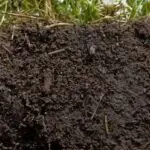
Soil is a vital part of our environment, providing a home for plants, animals, and humans. It’s a mixture of broken-down rocks, minerals, and organic matter. Soil formation takes a long time,highlighting its importance and the need for protection. Learn more about the environment.
Sources of Soil
Soil originates from various sources:
The following are examples of sources of soil:
- Rivers: Rivers carry small rocks and minerals, which break down to form soil.
- Ponds: Ponds contain water and organic matter that decomposes to create soil.
- Quarries: Quarries, where rocks are mined, provide broken-down rocks used in soil creation.
- Forests: Decaying leaves and organic matter in forests produce rich soil.
- Beaches: Beaches, composed of sand, are a type of soil.
- Volcanoes: Volcanic ash and lava can break down over time to form fertile soil.
- Deserts: Weathering of rocks and sand dunes in deserts contributes to soil formation.
Teaching Methods
To deliver this lesson, the teacher will adopt the following methods: Discussion, Question and answer, Visual aids
Instructional Procedures
To deliver this lesson, the teacher will adopt the following steps:
Step 1: Introduction
Time: 5 minutes
Teaching Skill: Set Induction
Teacher’s Activity: Asks pupils what they know about soil and its importance.
Pupils’ Activity: Share their prior knowledge and ideas about soil.
Step 2: Clarification of Key Concepts
Time: 10 minutes
Teaching Skill: Explaining
Teacher’s Activity: Explains what soil is and its components.
Pupils’ Activity: Listen attentively and ask clarifying questions.
Step 3: exhibition/Guided Practice
Time: 10 minutes
Teaching Skill: Demonstrating
Teacher’s Activity: Shows pictures of different soil sources and explains how soil forms in each location.
Pupils’ Activity: Observe the pictures and participate in discussions.
Step 4: Autonomous Practice
Time: 5 minutes
Teaching Skill: monitoring
Teacher’s Activity: Guides pupils in answering questions about soil sources.
Pupils’ Activity: Answer questions individually or in small groups.
Step 5: Note-Taking
Time: 5 minutes
Teaching Skill: note-taking
Teacher’s Activity: Guides pupils in taking notes on key concepts.
Pupils’ Activity: Write down crucial points from the lesson.
Step 6: Evaluation/Review
Time: 5 minutes
Teaching Skill: Questioning
Teacher’s Activity: Asks review questions to assess understanding.
Pupils’ Activity: Answer review questions.
Objective-aligned checks:
- List at least two sources of soil.
- Explain the formation of soil from different sources.
- Identify the components of soil.
Step 7: Conclusion
Time: 5 minutes
Teaching Skill: Summarizing
Teacher’s Activity: Summarizes the key points about soil sources and their importance, emphasizing the need for soil conservation.
Pupils’ Activity: Listen to the summary and ask any remaining questions.
Lesson Keywords
Soil – The upper layer of earth in which plants grow.
Erosion – the process of soil being worn away by wind or water.
Weathering – The breaking down of rocks into smaller particles.
Organic Matter – Decayed plant and animal material in soil.
Minerals – Natural substances found in the earth.
Lesson Evaluation
To evaluate the learning, the teacher asks pupils to:
- Name two sources of soil.
- What are the main components of soil?
- Why is it important to protect soil?
- Suggest ways to protect soil.
assignment/Homework
- Draw a picture of a soil source.
- List three things that can be found in soil.
- Explain why soil is critically important for growing plants.
Differentiation
For slower learners: Provide one-on-one assistance and use simpler language.
For advanced learners: Encourage them to research additional sources of soil and present their findings to the class.
For visual/auditory/kinesthetic learners: use visual aids, discussions, and hands-on activities to cater to different learning styles.
Note for Teachers
Ensure to use real-life examples and visual aids to make the lesson engaging and understandable for the pupils. Encourage active participation and provide constructive feedback.
Community Join the conversation Open discussion +