

Class: primary Two
Term: first Term
Subject: Basic Science and Technology
Curriculum Theme: Basic Technology
Previous Lesson: Sources of Soil
Topic: Properties of Clay Soil
Content/Learning Area: What is Clay Soil?, Some of the properties of clay soil include:
Time Allocation: 40 minutes
Performance Objectives
by the end of the lesson, pupils should be able to:
- Cognitive Domain:
1. List three properties of clay soil.
2. Describe the texture and color of clay soil.
3. Explain why clay soil holds water well.
- Psychomotor Domain:
1. Observe and describe the texture of clay soil samples.
- Affective Domain:
1. Show interest in learning about different types of soil.
- Social Domain:
1. participate actively in class discussions.
reference Materials
- 9 – Years Basic Education Curriculum
- Abuja Educational Resource Center scheme of work
- NAPPS National Unified Scheme of Work
- Relevant Textbooks
Instructional Materials
To deliver this lesson, the teacher will employ the help of the following materials:
- Samples of clay soil
- Whiteboard or chart paper
- Markers
- Relevant pictures or diagrams
Rationale for the Lesson
Understanding the properties of clay soil is crucial for future lessons on agriculture and environmental studies. Knowing how clay soil behaves helps in understanding water management and plant growth.
Prerequisite/Previous Knowledge
Pupils have prior knowledge of soil and different types of soil.
Lesson Content
What is Clay Soil?
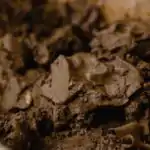
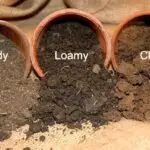
Clay soil is a type of soil made up of very fine particles, so small they are invisible to the naked eye. It’s often found in wet areas near rivers or lakes. Fine particles make it unique.
some of the properties of clay soil include:
Clay soil has unique characteristics that distinguish it from other types of soil. Thes include:
- Fine texture: Clay soil has a very fine texture; its particles are very small, making it feel smooth and silky.
- Stickiness: When wet, clay soil is very sticky as its small particles hold water well.
- Water holding capacity: Clay soil holds a lot of water due to its small, water-retaining particles.
- Slow drainage: Water drains slowly through clay soil as its tightly packed particles impede water flow.
- Compaction: Clay soil compacts easily because its small particles fit together closely.
- Plasticity: Clay soil is highly plastic, meaning it can be molded and retain its shape.
- Low permeability: Clay soil has low permeability, which means that water and air cannot pass through it easily.
Teaching Methods
To deliver this lesson, the teacher will adopt the following methods: Inquiry-based learning, Presentation, Discussion.
Instructional Procedures
To deliver this lesson,the teacher will adopt the following steps:
Step 1: Introduction (Set Induction)
Time: 5 minutes
Teaching Skill: Questioning,demonstration
Teacher’s activity: Show samples of clay soil and ask pupils to describe them.
Pupils’ Activity: Observe and describe the soil samples.
Step 2: Description of Key Concepts
Time: 10 minutes
Teaching Skill: Explanation, discussion
Teacher’s Activity: Explain the definition and characteristics of clay soil.
Pupils’ Activity: Listen attentively and participate in discussions.
Step 3: Demonstration/Guided practise
Time: 10 minutes
Teaching Skill: Demonstration, guided practice
Teacher’s activity: Demonstrate the properties of clay soil (texture, stickiness, water holding capacity).
Pupils’ Activity: Observe the demonstration and participate in hands-on activities.
Step 4: Self-reliant Practice
time: 5 minutes
Teaching Skill: Observation, feedback
Teacher’s Activity: Allow pupils to work independently to test the properties of clay soil.
Pupils’ Activity: Test the properties of clay soil and record their observations.
Step 5: Note-Taking
Time: 5 minutes
Teaching Skill: Note-taking, summarization
Teacher’s Activity: Guide pupils in summarizing key concepts.
Pupils’ activity: Take notes and summarize key concepts.
Step 6: Evaluation/Review
Time: 5 minutes
Teaching skill: Questioning, feedback
Teacher’s Activity: Ask evaluation questions.
Pupils’ Activity: answer evaluation questions.
Objective-aligned checks:
- List three properties of clay soil.
- Describe the texture and color of clay soil.
- Explain why clay soil holds water well.
Step 7: Conclusion
Time: 2 minutes
Teaching Skill: Summarization
Teacher’s Activity: Summarize the key properties of clay soil and assign homework.
Pupils’ Activity: Listen to the summary and note the homework assignment.
Lesson Keywords
- Clay Soil – A type of soil made up of very fine particles.
- Texture – The feel and appearance of the soil.
- Stickiness – The quality of clay soil when wet.
- Water Holding Capacity – The ability of clay soil to retain water.
- Drainage – The process of water flowing through the soil.
- Compaction – The process of soil particles fitting together closely.
lesson Evaluation
To evaluate the learning, the teacher asks pupils to:
- What are three properties of clay soil?
- Describe the texture of clay soil.
- Why does clay soil hold water well?
- What are some uses of clay soil? Uses of clay soil
- What are some challenges of growing plants in clay soil?
Assignment/Homework
- Collect a sample of clay soil from your environment.
- Describe the texture and color of the clay soil sample.
- List three uses of clay soil in your community.
Differentiation
- For slower learners: Provide one-on-one assistance and simplified explanations.
- for advanced learners: Encourage them to conduct further research on clay soil and its uses.
- For visual/auditory/kinesthetic learners: Use visual aids, verbal explanations, and hands-on activities to cater to different learning styles.
Note for Teachers
Ensure to provide clear and concise explanations,use visual aids to enhance understanding,and encourage active participation from all pupils. Adjust the pace of the lesson based on pupils’ understanding and provide additional support as needed.


Community Join the conversation Open discussion +