

Class: Senior Secondary School 1 (SS1, SS 1, SSS1, SSS 1)
Term: 3rd Term
Week: 6
Age: 15 years
Duration: 45 minutes
Subject: Agricultural Science
Curriculum Theme: Agricultural Economics
Previous Lesson: Agricultural value chain and Value addition in agriculture.
Topic: Factors of Production
Subject Matter: Land as a factor of production, Labour as a factor of production, Capital as a factor of production, Management as a factor of production, Examples of factors of production in agriculture
Specific Objectives
By the end of the lesson, pupils should be able to:
Cognitive Domain:
- Define factors of production.
- List the four main factors of production.
- Explain each factor of production with relevant examples in agriculture.
Affective Domain:
- Appreciate the importance of each factor in agricultural production.
- Show interest in identifying different factors of production on a farm.
Psychomotor Domain:
- Identify specific examples of land, labour, capital, and management in an agricultural setting.
- Differentiate between fixed and working capital in agriculture.
Social Domain:
- Participate actively in group discussions about factors of production.
- Collaborate with peers to identify examples of factors of production in agricultural practices.
Reference Materials
The following resources were used in planning this lesson:
- 9 Years Basic Education Curriculum for Agricultural Science.
- State Unified Scheme of Work for Senior Secondary Schools.
- Essential Agricultural Science for Senior Secondary Schools by O.A. Iwena.
- https://www.agric.wa.gov.au/business-management/factors-production-agriculture
- https://www.britannica.com/money/factors-of-production
Instructional Materials
The teacher will teach this lesson with the aid of:
- Charts illustrating the factors of production.
- Photographs or video clips of large farms showcasing different factors.
- An observation checklist for identifying factors of production.
- An excursion plan (if applicable for a future lesson).
Rationale for the Lesson
This lesson helps pupils understand the basic resources needed for agricultural production. It enables them to recognize how land, people, money, and organization contribute to farming success, which is important for understanding agricultural economics.
Prerequisite/Previous Knowledge
Pupils have a basic understanding of farming activities and the general resources used in agriculture from their previous lessons.
Lesson Content/Board Summary
Factors of Production
Factors of production are the resources used to produce goods and services, including agricultural products. These resources are combined to create outputs.
1. Land
Land, in economics, refers to all natural resources used in production. This includes the physical space, soil, water, minerals, and climate.
The following are characteristics of land:
- It is fixed in supply.
- It is a free gift of nature.
- It is immobile.
- It is subject to the law of diminishing returns.
The following are examples of land as a factor of production in agriculture:
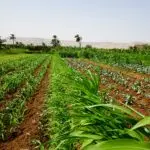
- Farmland for planting crops.
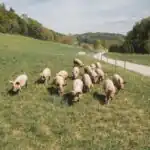
- Grazing pastures for livestock.
- Water bodies for aquaculture.
- Forests for timber and non-timber forest products.
2. Labour
Labour refers to the human effort, both physical and mental, applied in the production process. It includes all human skills and energy used to produce goods and services.
The following are types of labour:
- Skilled labour: Workers with specialized training or knowledge (e.g., veterinarians, agricultural engineers).
- Semi-skilled labour: Workers with some training but not specialized (e.g., tractor operators, farm supervisors).
- Unskilled labour: Workers who perform basic tasks requiring little or no specialized training (e.g., farm hands for weeding, harvesting).
The following are examples of labour in agriculture:
- Farmers planting crops.
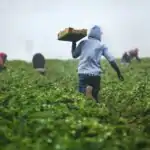
- Farmworkers harvesting produce.
- Herdsmen tending to livestock.
- Agricultural scientists conducting research.
3. Capital
Capital refers to all man-made resources used in the production of other goods and services. It is not consumed directly but aids in further production.
The following are types of capital:
- Fixed Capital: Assets that are used repeatedly over a long period (e.g., farm buildings, machinery, irrigation systems).
- Working Capital (or Circulating Capital): Assets that are used up or transformed in a single production cycle (e.g., seeds, fertilizers, pesticides, fuel, raw materials).
- Financial Capital: Money used to acquire other forms of capital (e.g., loans, savings).
The following are examples of capital in agriculture:
- Tractors, ploughs, and other farm machinery.
- Barns, silos, and storage facilities.
- Fertilizers, pesticides, and improved seeds.
- Livestock (as breeding stock or for milk/meat production).
4. Management (or Entrepreneurship)
Management refers to the human skill and ability to combine and coordinate the other factors of production (land, labour, and capital) efficiently. The manager or entrepreneur bears the risks and makes decisions.
The following are roles of management in agriculture:
- Making decisions on what to produce, how to produce, and for whom to produce.
- Organizing and coordinating farm activities.
- Bearing the risks associated with farming.
- Innovating and adopting new technologies.
The following are examples of management in agriculture:
- A farm manager deciding on crop rotation.
- An entrepreneur investing in a new poultry farm.
- A farmer planning the planting and harvesting schedule.
- An agricultural consultant advising on farm operations.
Teaching Methods/Instructional Techniques
Discussion, Lecture, Demonstration, Question and Answer, Visual Aids, Excursion/Field Trip
Instructional Procedures
Step 1: Introduction
Time: 5 minutes
Teaching Skill: Set Induction
Teacher’s Activity: The teacher greets the pupils and asks them to mention things needed to start a farm. The teacher then writes their responses on the board and introduces the topic, “Factors of Production,” linking it to their responses.
Pupils’ Activity: Pupils respond by mentioning items like land, money, workers, seeds, tools. They listen attentively as the teacher introduces the topic.
Learning Point: Pupils are engaged and relate prior knowledge to the new topic.
Step 2: Explanation of Factors of Production
Time: 7 minutes
Teaching Skill: Explanation/Definition
Teacher’s Activity: The teacher defines “factors of production” and lists the four main factors (Land, Labour, Capital, Management) on the board. The teacher uses charts to illustrate these factors.
Pupils’ Activity: Pupils listen, take notes, and ask questions for clarification. They observe the charts.
Learning Point: Pupils understand the definition and identify the four factors of production.
Step 3: Land as a Factor of Production
Time: 7 minutes
Teaching Skill: Elucidation/Illustration
Teacher’s Activity: The teacher explains land as a factor of production, discussing its characteristics and providing examples of its use in agriculture. The teacher shows pictures of different types of agricultural land.
Pupils’ Activity: Pupils listen, contribute examples, and take notes. They observe the pictures.
Learning Point: Pupils understand the concept of land as a factor and its agricultural applications.
Step 4: Labour as a Factor of Production
Time: 7 minutes
Teaching Skill: Explanation/Categorization
Teacher’s Activity: The teacher explains labour as a factor of production, categorizing it into skilled, semi-skilled, and unskilled labour. The teacher provides examples of each type in agriculture.
Pupils’ Activity: Pupils listen, identify different types of labour, and note down examples.
Learning Point: Pupils understand labour as a factor and its different classifications in agriculture.
Step 5: Capital as a Factor of Production
Time: 7 minutes
Teaching Skill: Explanation/Classification
Teacher’s Activity: The teacher explains capital as a factor of production, differentiating between fixed and working capital. The teacher provides various examples of capital used in agricultural practices.
Pupils’ Activity: Pupils listen, identify different types of capital, and give examples from their local environment.
Learning Point: Pupils understand capital as a factor and can distinguish its types and uses in agriculture.
Step 6: Management as a Factor of Production
Time: 5 minutes
Teaching Skill: Explanation/Role-playing
Teacher’s Activity: The teacher explains management (entrepreneurship) as the coordinating factor, highlighting the roles of a farm manager or entrepreneur. The teacher might ask pupils to imagine they are farm managers making decisions.
Pupils’ Activity: Pupils listen, discuss the importance of management, and participate in brief role-playing scenarios.
Learning Point: Pupils understand the role of management in combining other factors for successful production.
Step 7: Evaluation/Review
Time: 5 minutes
Teaching Skill: Questioning/Assessment
Teacher’s Activity: The teacher evaluates the learning by asking the following questions:
- Define factors of production.
- List the four main factors of production.
- Mention two characteristics of land as a factor of production.
- Give two examples of fixed capital in agriculture.
Pupils’ Activity: Pupils answer orally and in writing.
Learning Point: Pupils demonstrate understanding of the lesson.
Step 8: Conclusion
Time: 2 minutes
Teaching Skill: Summarization/Assignment
Teacher’s Activity: The teacher summarizes the key points of the lesson, reiterating the importance of each factor. The teacher assigns homework: “Identify and list the factors of production observed on a nearby farm or agricultural enterprise.”
Pupils’ Activity: Pupils listen to the summary and copy the homework.
Learning Point: Pupils consolidate their learning and prepare for further exploration of the topic.
Lesson Keywords
- Factors of Production – Resources used to produce goods and services.
- Land – Natural resources used in production, including soil, water, and climate.
- Labour – Human effort, both physical and mental, applied in production.
- Capital – Man-made resources used to produce other goods and services, such as machinery and buildings.
- Management – The skill and ability to combine and coordinate other factors of production effectively.
Differentiation
For pupils who grasp concepts quickly, the teacher can encourage them to research and present on the fifth factor of production (entrepreneurship) or discuss the remuneration for each factor. For struggling learners, the teacher will provide simplified definitions, use more visual aids, and offer one-on-one guidance to ensure they understand the basic definitions and examples.
Note for teachers using this lesson plan
Teachers should emphasize practical examples relevant to the local agricultural context. An actual or virtual excursion to a farm would greatly enhance pupils’ understanding of how these factors interact in real-world production. Encourage pupils to think critically about how each factor contributes to farm output.
Community Join the conversation Open discussion +