

Note for teachers using this lesson plan
Teachers should prepare by reviewing the concepts of animal farming, specifically focusing on ruminant and non-ruminant animals and their distinct feeding habits. Ensure access to the school farm or relevant video clips to make the concept concrete. By the end of this lesson, students should be able to identify different farm animals based on their feeding habits and stomach structures, understanding the practical implications for animal management.
Class: SS 1
Term: Second Term
Week: 2
Age: 15 years
Duration: 60 minutes
Subject: Agricultural Science
Curriculum Theme: Agricultural Management
Focal competence: Making informed decision on farming type
Key competencies/values: Collaboration; ICT and Digital Competencies; Digital Competencies; Entrepreneurship
Skills:
- Identifying farm animals
Previous Lesson: Crop and Animal Farming, Agronomic Practices
Topic: Crop And Animal Farming: Animal Farming And Feeding Habits
Subject Matter: Animal farming and feeding habits
Specific Objectives
By the end of the lesson, pupils/students should be able to:
Cognitive Domain
- Define animal farming and feeding habits.
- Identify key agricultural terms like ruminant and non-ruminant.
- Describe the feeding habits of ruminants and non-ruminants.
- Distinguish between ruminant and non-ruminant animals based on stomach compartments.
Affective Domain
- Appreciate the importance of understanding animal feeding habits for effective farming.
- Participate actively in group discussions about animal feeding.
Psychomotor Domain
- Identify farm animals as either ruminants or non-ruminants.
- Observe and differentiate stomach compartments of various farm animals (through diagrams or visuals).
Social Domain
- Collaborate effectively with peers during group discussions.
Reference Materials
The following resources were used in planning this lesson:
- 2025 New Revised Senior Secondary Education Curriculum (SSEC)
- Relevant State Unified Scheme of Work
- Agricultural Science for Senior Secondary Schools, Book 1
- The HeadTeacher Scheme of work For The New Revised Senior Secondary Education Curriculum (SSEC)
Instructional Materials
The teacher will teach this lesson with the aid of:
- School farm (if available)
- Video clips on agronomical practices (specifically animal feeding and digestive systems)
- Charts or diagrams showing the digestive systems of ruminants and non-ruminants
- Pictures of various farm animals (cattle, pigs, goats, sheep, poultry)
Rationale for the Lesson
This lesson is important because understanding animal farming and feeding habits is fundamental to successful livestock production. It helps students recognise different animal types and their specific dietary needs, which is crucial for making informed decisions on animal management and ensuring optimal growth and productivity in farming.
Prerequisite/Previous Knowledge
Pupils/students should have a basic understanding of different types of farming and common farm animals.
Lesson Content/Board Summary
Crop And Animal Farming: Animal Farming And Feeding Habits
Animal Farming
Animal farming, also known as livestock farming or animal husbandry, is the practice of raising and breeding animals for agricultural purposes, such as for meat, milk, eggs, wool, hides, or labour. It involves managing animals to produce food and other products for human use.
Feeding Habits of Farm Animals
Feeding habits refer to the types of food animals consume and the way they consume it. Farm animals can be broadly classified based on their feeding habits and digestive systems into ruminants and non-ruminants.
Key Agricultural Terminology
- Ruminant: An animal that has a four-compartment stomach and chews its cud. Ruminants typically feed on fibrous plant material like grass and hay.
- Non-Ruminant: An animal with a simple, single-compartment stomach. Non-ruminants cannot digest cellulose as efficiently as ruminants and often require more concentrated feeds.
- Feeding Habits: The characteristic way an animal obtains and consumes its food.
- Stomach Compartments: The distinct sections of an animal’s stomach, which vary in number and function among different animal types.
Classification of Farm Animals Based on Feeding Habits and Stomach Compartments
Ruminants (Example: Cattle)
Ruminants are hoofed, herbivorous mammals that have a unique digestive system allowing them to acquire nutrients from plant-based food by fermenting it in a specialized stomach prior to digestion, principally through microbial actions.
Characteristics of Ruminants:
- They possess a four-compartment stomach.
- They chew their cud (regurgitate partially digested food for further chewing).
- They are herbivores, primarily feeding on roughages like grass, hay, and silage.
- They have no upper incisor teeth, but a dental pad.
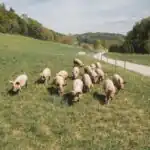
- Examples include cattle, sheep, goats, and deer.
Stomach Compartments of Ruminants:
- Rumen: The largest compartment, acts as a fermentation vat where microbes break down cellulose.
- Reticulum: Collects smaller particles and moves them into the omasum, also involved in cud formation.
- Omasum: Absorbs water and filters large particles.
- Abomasum: The “true stomach,” similar to a monogastric stomach, where enzymatic digestion occurs.
Feeding Habits of Cattle:
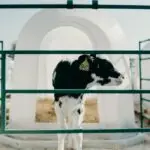
- Cattle graze on pasture, consuming large amounts of grass and forage.
- They swallow their food quickly, which then goes to the rumen and reticulum.
- Later, they regurgitate the partially digested food (cud) and chew it thoroughly before swallowing it again for further digestion.
- Their diet primarily consists of roughages, but they can also be fed concentrates like grains and supplements.
Non-Ruminants (Example: Pig)
Non-ruminants, also known as monogastric animals, have a single-chambered stomach, similar to humans. Their digestive system is less complex than that of ruminants.
Characteristics of Non-Ruminants:
- They possess a simple, single-compartment stomach.
- They do not chew cud.
- They are omnivores or herbivores, but cannot efficiently digest large amounts of fibrous material.
- They have a complete set of teeth, including incisors, canines, and molars.
- Examples include pigs, poultry, horses, and humans.
Stomach Compartments of Non-Ruminants:
- Simple Stomach: A single-chambered organ where enzymatic digestion of proteins begins.
- The digestive process relies on enzymes secreted in the stomach and small intestine.
Feeding Habits of Pigs:
- Pigs are omnivores, meaning they eat both plant and animal matter.
- Their diet typically includes grains (maize, sorghum), protein supplements (soybean meal, fish meal), and sometimes kitchen waste or forage.
- They consume their food and digest it directly in their single stomach, without regurgitation or cud chewing.
- Their digestive system is adapted to process a variety of food types, but they require a balanced diet for optimal growth.
Practical Significance of Understanding Animal Feeding Habits in Farming
Understanding the feeding habits and digestive systems of farm animals is crucial for:
- Feed Formulation: It helps farmers formulate appropriate diets that meet the nutritional needs of each animal type, ensuring efficient conversion of feed to product (meat, milk, eggs).
- Disease Prevention: Knowing digestive capabilities helps prevent digestive disorders caused by inappropriate feeding.
- Farm Management: It guides decisions on pasture management for ruminants and feed storage for non-ruminants.
- Economic Viability: Proper feeding based on animal type maximises productivity and reduces feed waste, leading to better economic returns for the farmer.
- Animal Welfare: Providing suitable feed contributes to the overall health and well-being of the animals.
Teaching Methods/Instructional Techniques
Discussion, Explanation, Question and Answer, Observation, Group Work, Demonstration
Instructional Procedures
Step 1: Introduction
Time: 5 minutes
Teaching Skill: Engaging/Activating Prior Knowledge
Teacher’s Activity: The teacher greets the students and asks them to mention some animals they know that are kept on farms. The teacher then introduces the topic: Animal Farming and Feeding Habits.
Pupils’ Activity: Pupils mention farm animals like goats, chickens, cattle, pigs, etc. They listen attentively to the introduction.
Learning Point: Familiar farm animals
Step 2: Discussion on Animal Farming
Time: 10 minutes
Teaching Skill: Group Discussion/Facilitation
Teacher’s Activity: The teacher divides the students into small groups and guides them to discuss the meaning of animal farming and its importance. The teacher moves around to provide support and clarify misconceptions.
Pupils’ Activity: Students discuss in groups, sharing their ideas on animal farming. A representative from each group presents their findings.
Learning Point: Meaning of animal farming
Step 3: Introduction to Ruminants and Non-Ruminants
Time: 10 minutes
Teaching Skill: Explanation/Visual Aid
Teacher’s Activity: The teacher explains the concepts of ruminants and non-ruminants, using charts or diagrams of their digestive systems. The teacher highlights cattle as an example of a ruminant and pigs as a non-ruminant.
Pupils’ Activity: Pupils observe the diagrams, listen to the explanations, and ask questions for clarification.
Learning Point: Ruminant and non-ruminant concept
Step 4: Characteristics and Feeding Habits of Ruminants
Time: 10 minutes
Teaching Skill: Detailed Explanation/Observation
Teacher’s Activity: The teacher describes the characteristics of ruminants, focusing on their four-compartment stomach and cud chewing. The teacher explains the feeding habits of cattle, emphasizing their diet of roughages. If possible, the teacher uses video clips or pictures to illustrate.
Pupils’ Activity: Pupils listen, take notes, and observe the visuals. They may share observations if they have seen cattle chewing cud.
Learning Point: Ruminant characteristics and feeding
Step 5: Characteristics and Feeding Habits of Non-Ruminants
Time: 8 minutes
Teaching Skill: Comparative Explanation
Teacher’s Activity: The teacher explains the characteristics of non-ruminants, highlighting their simple stomach and omnivorous diet. The teacher details the feeding habits of pigs and contrasts them with ruminants.
Pupils’ Activity: Pupils listen and compare the information with what they learned about ruminants. They identify key differences.
Learning Point: Non-ruminant characteristics and feeding
Step 6: Practical Significance
Time: 5 minutes
Teaching Skill: Application/Discussion
Teacher’s Activity: The teacher leads a brief discussion on the practical significance of understanding animal feeding habits for successful farming, linking it to feed formulation and animal health.
Pupils’ Activity: Pupils contribute their ideas on why this knowledge is important in real-life farming scenarios.
Learning Point: Importance of feeding habits
Step 7: Evaluation/Review
Time: 5 minutes
Teaching Skill: Questioning/Assessment
Teacher’s Activity: The teacher evaluates the learning by asking the following questions:
- What is animal farming?
- Mention two examples of ruminant animals.
- How many compartments does a ruminant stomach have?
- Describe the feeding habit of a pig.
Pupils’ Activity: Pupils answer orally and in writing.
Learning Point: Understanding animal feeding classifications
Step 8: Note-Taking
Time: 10 minutes
Teaching Skill: Guided Writing
Teacher’s Activity: The teacher guides pupils/students to copy the essential Board Summary notes on animal farming, ruminants, and non-ruminants into their notebooks.
Pupils’ Activity: Pupils/students copy the notes carefully into their notebooks.
Learning Point: Recording lesson information
Step 9: Conclusion
Time: 2 minutes
Teaching Skill: Summarisation
Teacher’s Activity: The teacher briefly summarises the main points of the lesson, reiterating the importance of knowing animal feeding habits for effective agricultural practice.
Pupils’ Activity: Pupils listen and reflect on the lesson.
Learning Point: Lesson recap
Continuous Assessment/Further Study
Type: Homework
Instruction: Answer the following questions in your notebook.
- Differentiate between ruminant and non-ruminant animals, giving two examples for each.
- Explain why understanding an animal’s feeding habit is important for a farmer.
- Draw and label the four compartments of a ruminant stomach.
Lesson Keywords
- Animal farming – The practice of raising and breeding animals for agricultural purposes.
- Feeding habits – The types of food animals consume and how they consume it.
- Ruminant – An animal with a four-compartment stomach that chews its cud.
- Non-ruminant – An animal with a simple, single-compartment stomach.
- Cud – Partially digested food regurgitated by ruminants for further chewing.
- Stomach compartments – Distinct sections of an animal’s stomach.
Differentiation
For students who grasp the concepts quickly, encourage them to research other examples of ruminant and non-ruminant animals and their specific dietary needs. For students needing more support, provide simplified diagrams and additional verbal explanations, focusing on one animal type at a time.
Suggested Lesson Videos
YouTube search: ruminant vs non-ruminant digestive system agricultural science SS1
Community Join the conversation Open discussion +