

Class: Senior Secondary School 1 (SS1, SS 1, SSS1, SSS 1)
Term: 3rd Term
Week: 2
Age: 15 years
Duration: 45 minutes
Subject: Agricultural Science
Curriculum Theme: Agricultural Science
Previous Lesson: Simple Farm Tools, Examples and Uses.
Topic: Mechanization
Subject Matter: definition of mechanization, meaning of mechanization in broad terms, examples of mechanized farm operations, mechanized farm service centres
Specific Objectives
By the end of the lesson, pupils should be able to:
Cognitive Domain:
- Define mechanization.
- State the meaning of mechanization in broad terms.
- List examples of mechanized farm operations.
- Describe the role of mechanized farm service centres.
Affective Domain:
- Appreciate the benefits of farm mechanization.
- Show interest in modern farming practices.
Psychomotor Domain:
- Identify various farm machines used in mechanized operations.
- Sketch simple diagrams of selected farm machines.
Social Domain:
- Collaborate effectively during group discussions.
- Share observations from resources or planned visits.
Reference Materials
The following resources were used in planning this lesson:
- 9 Years Basic Education Curriculum for Agricultural Science.
- State Unified Scheme of Work for Agricultural Science (SSS 1).
- Agricultural Science for Senior Secondary Schools, Book 1.
Instructional Materials
The teacher will teach this lesson with the aid of:
- Pictures of farm machinery (e.g., tractors, ploughs, planters, harvesters).
- Videos or charts illustrating mechanized farm operations.
- A whiteboard or chalkboard.
- Markers or chalk.
- A field visit plan (for future reference or discussion).
Rationale for the Lesson
This lesson helps pupils understand how modern technology improves farming efficiency and productivity. Learning about mechanization prepares them for future agricultural practices and potential careers in the sector, showing them how farming can be less laborious and more profitable.
Prerequisite/Previous Knowledge
Pupils have basic knowledge of simple farm tools and traditional methods of farming.
Lesson Content/Board Summary
Mechanization
Definition of Mechanization
Mechanization in agriculture refers to the use of machines and mechanical power to perform farm operations, replacing human and animal labour. It involves applying engineering principles to solve agricultural problems.
Meaning of Mechanization in Broad Terms
Broadly, mechanization signifies a shift from manual and animal-powered farming to a system that relies on engines, tractors, and various farm implements. This transition aims to increase efficiency, reduce labour costs, improve timeliness of operations, and enhance overall farm productivity.
Examples of Mechanized Farm Operations
The following are common examples of farm operations that can be mechanized:
- Land preparation (e.g., ploughing, harrowing, ridging with tractors).
- Planting/Sowing (e.g., using mechanical planters).
- Weeding (e.g., using mechanical cultivators).
- Fertilizer application (e.g., using mechanical spreaders).
- Pest and disease control (e.g., using power sprayers).
- Harvesting (e.g., using combine harvesters for grains).
- Threshing/Processing (e.g., using threshing machines).
- Transportation of farm produce.
Mechanized Farm Service Centres
Mechanized farm service centres (also known as agro-service centres) are facilities that provide essential services to farmers, especially small-scale farmers who cannot afford to own expensive farm machinery. They play a vital role in promoting agricultural mechanization.
These centres typically offer the following services:
- Hiring out of farm machinery (e.g., tractors, ploughs) at affordable rates.
- Repair and maintenance services for farm equipment.
- Supply of agricultural inputs such as improved seeds, fertilizers, and pesticides.
- Training and extension services on modern farming techniques and machine operation.
- Storage facilities for farm produce.
Teaching Methods/Instructional Techniques
Discussion, Lecture, Demonstration, Question and Answer, Visual Aids, Field Trip/Excursion (planned).
Instructional Procedures
Step 1: Introduction
Time: 5 minutes
Teaching Skill: Set Induction
Teacher’s Activity: The teacher greets the pupils and asks them to recall some simple farm tools they know and how they are used. The teacher then introduces the topic “Mechanization” by asking pupils how farming can be made easier and faster than using hand tools.
Pupils’ Activity: Pupils respond to questions, mention tools like hoes, cutlasses, and rakes, and share ideas on making farming easier.
Learning Point: Pupils connect previous knowledge of simple tools to the concept of modern farming methods.
Step 2: Definition of Mechanization
Time: 8 minutes
Teaching Skill: Explanation/Definition
Teacher’s Activity: The teacher explains the definition of mechanization in agriculture, emphasizing the use of machines and mechanical power. The teacher writes the definition on the board.
Pupils’ Activity: Pupils listen attentively, take notes, and ask questions for clarification.
Learning Point: Pupils understand what mechanization means in the context of agriculture.
Step 3: Meaning of Mechanization in Broad Terms
Time: 7 minutes
Teaching Skill: Elaboration/Discussion
Teacher’s Activity: The teacher further explains the broad meaning of mechanization, highlighting the transition from manual/animal labour to machine power and its benefits like increased efficiency and reduced labour. The teacher encourages pupils to discuss how this shift impacts farmers.
Pupils’ Activity: Pupils participate in the discussion, contributing ideas on the impact of mechanization on farming.
Learning Point: Pupils grasp the wider implications and advantages of adopting mechanized farming.
Step 4: Examples of Mechanized Farm Operations
Time: 10 minutes
Teaching Skill: Illustration/Identification
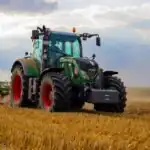
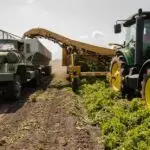
Teacher’s Activity: The teacher displays pictures or videos of various farm machinery and their operations (e.g., tractor ploughing, mechanical planting, combine harvesting). The teacher guides pupils to identify the machines and the operations they perform. The teacher lists examples on the board.
Pupils’ Activity: Pupils observe the pictures/videos, identify the machines, and name the operations. They copy the examples from the board.
Learning Point: Pupils can identify and list different mechanized farm operations and the machines involved.
Step 5: Mechanized Farm Service Centres
Time: 5 minutes
Teaching Skill: Explanation/Questioning
Teacher’s Activity: The teacher defines mechanized farm service centres and explains the types of services they offer to farmers. The teacher emphasizes their importance, especially for small-scale farmers.
Pupils’ Activity: Pupils listen, take notes, and ask questions about the services provided by these centres.
Learning Point: Pupils understand the concept and significance of mechanized farm service centres.
Step 6: Discussion on Field Visit
Time: 5 minutes
Teaching Skill: Planning/Engagement
Teacher’s Activity: The teacher discusses the importance of observing mechanized operations firsthand and mentions the possibility of organizing a field visit to a mechanized farm or agro-service centre. The teacher solicits pupils’ interest and ideas for what to look out for during such a visit.
Pupils’ Activity: Pupils express interest and suggest questions or observations for a potential field visit.
Learning Point: Pupils are prepared for and appreciate the value of practical observation of mechanized farming.
Step 7: Evaluation/Review
Time: 5 minutes
Teaching Skill: Questioning/Assessment
Teacher’s Activity: The teacher evaluates the learning by asking the following questions:
- Define agricultural mechanization.
- State two broad meanings of mechanization.
- List three examples of mechanized farm operations.
- Mention two services provided by mechanized farm service centres.
Pupils’ Activity: Pupils answer orally and in writing.
Learning Point: Pupils demonstrate understanding of the lesson.
Step 8: Conclusion
Time: 2 minutes
Teaching Skill: Summarization/Assignment
Teacher’s Activity: The teacher summarizes the main points of the lesson, reiterating the importance of mechanization in modern agriculture. The teacher gives pupils homework to draw and label any two farm machines discussed in class.
Pupils’ Activity: Pupils listen to the summary and copy down the homework.
Learning Point: Pupils consolidate their learning and apply it through homework.
Lesson Keywords
- Mechanization – The process of using machines to perform farm operations, replacing human and animal labour.
- Tractor – A powerful motor vehicle with large rear wheels, used for pulling farm machinery.
- Plough – A farm implement used for initial cultivation of soil in preparation for sowing seed or planting.
- Harvester – A machine used to cut and gather crops.
- Agro-service centre – A facility providing services like machinery hire, repairs, and inputs to farmers.
Differentiation
For visual learners, the lesson incorporates pictures and videos of farm machinery. Auditory learners benefit from teacher explanations and class discussions. Kinesthetic learners will be engaged by the discussion of a potential field visit and the homework requiring drawing. Group activities encourage peer learning and support.
Note for teachers using this lesson plan
Teachers should encourage active participation and real-life examples relevant to their local farming community. If a field visit is not immediately feasible, supplementary videos or virtual tours of mechanized farms can be used to enhance understanding. Ensure that pupils understand the economic and social impacts of mechanization, beyond just the technical aspects.

Community Join the conversation Open discussion +