

Class: Junior Secondary School 1 (JSS1, JSS 1)
Term: 2nd Term
Week: 1
Age: 12 years
Duration: 45 minutes
Subject: Business Studies
Curriculum Theme: Business Studies
Previous Lesson:
Topic: Factors Of Production
Subject Matter: Land, Labour, Capital, Entrepreneur
Specific Objectives
By the end of the lesson, pupils should be able to:
- Cognitive Domain:
(a) Identify and explain the four main factors of production.
(b) Describe the importance of each factor of production in business. - Affective Domain:
(a) Appreciate the role of each factor of production in the success of a business. - Psychomotor Domain:
(a) Illustrate the factors of production using simple charts or examples. - Social Domain:
(a) Work cooperatively in groups to discuss how the factors of production are combined in real-life business activities.
Reference Materials
The following resources were used in planning this lesson:
- 9 Years Basic Education Curriculum
- Lagos State Unified Scheme of Work for Junior Secondary Schools
- Investopedia – “Factors of Production: Definition and Examples” (https://www.investopedia.com/terms/f/factors-production.asp)
- Economics Help – “Factors of Production” (https://www.economicshelp.org/blog/glossary/factors-of-production/)
- Relevant Textbooks
Instructional Materials
The teacher will teach this lesson with the aid of:
- Chart showing factors of production
- Flash cards with terms: Land, Labour, Capital, Entrepreneur
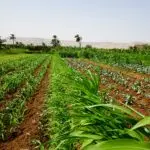
- Pictures of farm land, workers, machines, and business owners
- Short video or slides on production process
- Whiteboard and markers
Rationale for the Lesson
This lesson helps pupils understand the key resources needed for production, how they interact to produce goods and services, and their importance in business and economic growth.
Prerequisite/Previous Knowledge
Pupils have already learned about the meaning and importance of production. They can identify examples of goods and services and know that people and resources are required to produce them.
Lesson Content/Board Summary
Factors of Production
Land
Land refers to all natural resources provided by nature and used in production. It includes physical land and all things that come from it, such as soil, forests, minerals, and water.
The following are the features of land as a factor of production:
- It is a free gift of nature.
- It is fixed in supply.
- It cannot be moved from one place to another.
- Its value can change depending on location and use.
- It is essential for all types of production—agriculture, industry, and housing.
Labour
Labour refers to all human efforts, physical or mental, used in the process of production. It includes the work of farmers, factory workers, teachers, doctors, and managers.
The following are the types of labour:
- Skilled labour – workers with special training or education (e.g. doctors, engineers).
- Unskilled labour – workers without formal training (e.g. cleaners, messengers).
- Semi-skilled labour – workers with some level of training (e.g. drivers, machine operators).
The following are the characteristics of labour:
- Labour is human effort.
- It is mobile—it can move from place to place.
- It cannot be stored.
- Its efficiency depends on education, skill, and health.
Capital
Capital refers to all man-made resources used in the production of goods and services. It includes machines, buildings, tools, money, and vehicles.
The following are the types of capital:
- Fixed capital – long-term assets like buildings, machines, and tools.
- Working capital – short-term items like raw materials and money used in daily production.
- Social capital – government-provided facilities like roads, power, and water supply that aid production.
The following are the importance of capital:
- It increases efficiency in production.
- It helps to expand business operations.
- It provides income for business owners.
- It makes large-scale production possible.
Entrepreneur
The entrepreneur is the person who organizes and coordinates all other factors of production. He bears the risk of business and takes important decisions about what to produce, how to produce, and for whom to produce.
The following are the functions of an entrepreneur:
- Organizes and manages the other factors of production.
- Bears the risks and uncertainties of business.
- Makes business decisions.
- Innovates and introduces new ideas or products.
- Provides employment opportunities.
Teaching Methods/Instructional Techniques:
Lecture, Discussion, Explanation, Question and Answer, Group Work, Visual Aids, Demonstration
Instructional Procedures
To deliver this lesson, the teacher will adopt the following steps:
Step 1: Introduction
Time: 5 minutes
Teaching Skill: Set Induction
Teacher’s Activity: The teacher introduces the lesson by asking pupils what resources are needed to produce bread or clothes. The teacher then links their responses to the topic—Factors of Production.
Pupils’ Activity: Pupils mention examples such as land, workers, and machines.
Learning Point: Pupils understand that production requires different resources.
Step 2: Explanation of Land
Time: 8 minutes
Teaching Skill: Explanation
Teacher’s Activity: The teacher explains the meaning and features of land as a factor of production using charts and examples.
Pupils’ Activity: Pupils listen and identify examples of land resources.
Learning Point: Pupils understand the importance and characteristics of land in production.
Step 3: Explanation of Labour and Capital
Time: 10 minutes
Teaching Skill: Discussion
Teacher’s Activity: The teacher discusses the meaning, types, and importance of labour and capital, using visual aids and real-life examples.
Pupils’ Activity: Pupils participate in discussion and relate examples to daily life.
Learning Point: Pupils understand how human effort and capital contribute to production.
Step 4: Explanation of Entrepreneur
Time: 10 minutes
Teaching Skill: Storytelling and Explanation
Teacher’s Activity: The teacher explains who an entrepreneur is and narrates a short story of a successful Nigerian entrepreneur like Aliko Dangote.
Pupils’ Activity: Pupils listen and mention examples of entrepreneurs they know.
Learning Point: Pupils understand the role of entrepreneurs in business and risk-taking.
Step 5: Note-Taking
Time: 5 minutes
Teaching Skill: Explanation
Teacher’s Activity: The teacher dictates or writes the board summary for pupils to copy.
Pupils’ Activity: Pupils write notes neatly into their exercise books.
Learning Point: Pupils have a written summary of the factors of production.
Step 6: Evaluation/Review
Time: 5 minutes
Teaching Skill: Questioning
Teacher’s Activity: The teacher evaluates the learning by asking the following questions:
- List the four factors of production.
- State two features of land.
- Mention two types of labour.
- What are the functions of an entrepreneur?
- Explain the importance of capital in production.
Pupils’ Activity: Pupils answer questions orally and in writing.
Learning Point: Pupils demonstrate understanding of the factors of production.
Step 7: Conclusion
Time: 2 minutes
Teaching Skill: Reinforcement
Teacher’s Activity: The teacher summarizes the lesson and encourages pupils to observe how these factors operate in businesses around them.
Pupils’ Activity: Pupils listen and ask questions.
Learning Point: Pupils appreciate the importance of all factors of production in business.
Home Task: Give three correct examples of Factors Of Production and explain what each example shows.
Lesson Keywords
- Production – process of creating goods and services
- Land – natural resources used for production
- Labour – human effort in the production process
- Capital – man-made resources used for production
- Entrepreneur – person who organizes other factors and bears business risks
Differentiation
Teacher gives additional support to slower learners through visual aids and simple examples, while advanced learners lead group discussions and present findings.
Note for teachers using this lesson plan
Ensure pupils can distinguish clearly between each factor of production. Use relatable, real-life examples to help them connect theory with practice. Encourage participation and teamwork.


Community Join the conversation Open discussion +