

Class: Senior Secondary School 1 (SS1, SS 1, SSS1, SSS 1)
Term: 3rd Term
Week: 11
Age: 15 years
Duration: 45 minutes
Subject: Agricultural Science
Curriculum Theme: Agricultural Science
Previous Lesson: Solutions to challenges in agricultural value chain.
Topic: Practical: Identification of farm machines and their parts
Subject Matter: Identification of common farm machines, identification of parts of farm machines, basic functions of machine parts, safety awareness during machine identification
Specific Objectives
By the end of the lesson, pupils should be able to:
Cognitive Domain:
- Identify at least three common farm machines.
- State the major parts of identified farm machines.
- Explain the basic functions of various machine parts.
Affective Domain:
- Appreciate the importance of farm machines in modern agriculture.
- Observe safety precautions when interacting with farm machines.
Psychomotor Domain:
- Correctly point out and label major parts of farm machines during a practical session.
- Handle pictures or models of farm machines with care.
Social Domain:
- Collaborate effectively with peers during the identification exercise.
Reference Materials
The following resources were used in planning this lesson:
- 9 Years Basic Education Curriculum for Agricultural Science.
- State Unified Scheme of Work for Agricultural Science (SSS 1).
- Essential Agricultural Science for Senior Secondary Schools.
Instructional Materials
The teacher will teach this lesson with the aid of:
- A visit to an agro service centre or a farm with machines.
- Actual farm machines and their parts (if available).
- Pictures or charts showing tractors and various farm implements.
- Safety gear (e.g., gloves, boots) where available.
Rationale for the Lesson
This lesson helps pupils understand the tools and equipment used in modern agriculture. Identifying farm machines and their parts enables them to appreciate how technology assists farmers, which is important for their future engagement with agricultural practices.
Prerequisite/Previous Knowledge
Pupils have basic knowledge of farming activities and some common farm tools.
Lesson Content/Board Summary
Practical: Identification of Farm Machines and their Parts
Common Farm Machines
Farm machines are mechanical devices used in farming operations to perform tasks more efficiently, saving time and labor.
The following are examples of common farm machines:
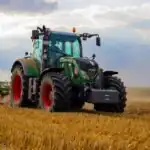
- Tractor
- Plough
- Harrow
- Planter
- Sprayer
- Harvester
- Sheller
- Thresher
- Irrigation Pump
Parts of Farm Machines and their Functions
Each farm machine has specific parts that perform particular functions.
The following are parts of some farm machines and their functions:
- Tractor:
- Engine: Provides power to operate the tractor and its implements.
- Wheels: Enable movement and traction.
- Steering Wheel: Used to control the direction of the tractor.
- Hydraulic System: Lifts and lowers implements attached to the tractor.
- Drawbar: A hitch point for attaching trailing implements.
- Plough:
- Ploughshare: Cuts a horizontal slice of soil.
- Mouldboard: Lifts, turns, and inverts the soil slice.
- Landside: Helps to absorb side thrust and stabilize the plough.
- Beam: Connects the plough to the tractor or animal.
- Sprayer:
- Tank: Holds the liquid (e.g., water, pesticides).
- Pump: Creates pressure to force the liquid out.
- Nozzle: Breaks the liquid into fine droplets for application.
- Hose: Carries the liquid from the tank/pump to the nozzle.
Safety Precautions During Machine Identification
It is important to observe safety rules when identifying or working near farm machines to prevent accidents.
The following are safety precautions to observe:
- Maintain a safe distance from operating machines.
- Do not touch any moving parts of a machine.
- Wear appropriate safety gear like gloves and safety boots, if available.
- Listen carefully to the teacher’s or guide’s instructions.
- Report any observed hazards or dangers immediately.
Teaching Methods/Instructional Techniques
Discussion, Lecture, Demonstration, Question and Answer, Visual Aids
Instructional Procedures
Step 1: Introduction
Time: 5 minutes
Teaching Skill: Set Induction
Teacher’s Activity: The teacher greets the pupils and introduces the topic by asking pupils about tools they know that farmers use. The teacher then explains that today’s lesson will focus on larger equipment called farm machines.
Pupils’ Activity: Pupils respond to the teacher’s questions and listen attentively.
Learning Point: Pupils are prepared for the lesson and recall prior knowledge of farm tools.
Step 2: Presentation of Common Farm Machines
Time: 7 minutes
Teaching Skill: Explanation/Identification
Teacher’s Activity: The teacher introduces various common farm machines using pictures, charts, or by pointing them out if at an agro service centre. The teacher names each machine and briefly states its general use.
Pupils’ Activity: Pupils observe the machines/pictures and listen to the teacher, identifying the machines.
Learning Point: Pupils identify and name common farm machines.
Step 3: Identification of Machine Parts
Time: 7 minutes
Teaching Skill: Demonstration/Observation
Teacher’s Activity: The teacher guides pupils to identify the major parts of selected farm machines (e.g., tractor, plough, sprayer). The teacher points to each part and mentions its name.
Pupils’ Activity: Pupils observe carefully and try to point out the parts as instructed by the teacher.
Learning Point: Pupils can identify major parts of farm machines.
Step 4: Discussion of Functions of Machine Parts
Time: 7 minutes
Teaching Skill: Explanation/Questioning
Teacher’s Activity: The teacher explains the basic functions of the identified parts of the farm machines, using simple language. The teacher encourages pupils to ask questions for clarification.
Pupils’ Activity: Pupils listen, take notes, and ask questions for better understanding.
Learning Point: Pupils understand the functions of various farm machine parts.
Step 5: Safety Awareness
Time: 5 minutes
Teaching Skill: Instruction/Cautioning
Teacher’s Activity: The teacher discusses the importance of safety when around farm machines. The teacher lists and explains key safety precautions to observe during identification and general interaction with machines.
Pupils’ Activity: Pupils listen and note the safety precautions.
Learning Point: Pupils are aware of safety measures when near farm machines.
Step 6: Practical Application/Guided Tour
Time: 5 minutes
Teaching Skill: Practical Application/Supervision
Teacher’s Activity: If at an agro service centre or a farm, the teacher supervises pupils as they practically identify machines and their parts, reinforcing the lesson content. If using pictures, the teacher asks pupils to label parts on diagrams.
Pupils’ Activity: Pupils actively participate in identifying and labeling machines and their parts under supervision.
Learning Point: Pupils apply their knowledge in a practical context.
Step 7: Evaluation/Review
Time: 5 minutes
Teaching Skill: Questioning/Assessment
Teacher’s Activity: The teacher evaluates the learning by asking the following questions:
- Mention three common farm machines you identified today.
- State two major parts of a tractor.
- Explain the function of the mouldboard in a plough.
- List two safety precautions to observe when identifying farm machines.
Pupils’ Activity: Pupils answer orally and in writing.
Learning Point: Pupils demonstrate understanding of the lesson.
Step 8: Conclusion
Time: 4 minutes
Teaching Skill: Summarization/Assignment
Teacher’s Activity: The teacher summarizes the main points of the lesson, reiterating the importance of farm machines and safety. The teacher assigns homework for pupils to draw and label a farm machine.
Pupils’ Activity: Pupils listen to the summary and copy the homework.
Learning Point: The lesson is concluded, and pupils have follow-up tasks.
Lesson Keywords
- Farm Machine – A mechanical device used in farming operations.
- Tractor – A powerful motor vehicle used for pulling farm machinery.
- Plough – An implement used to turn over and cut soil.
- Harrow – An implement used to break up and smooth the soil.
- Mouldboard – The part of a plough that turns the soil over.
- Hydraulic System – A system that uses fluid pressure to lift or move heavy objects.
- Safety Precautions – Measures taken to prevent harm or accidents.
Differentiation
For pupils who grasp concepts quickly, the teacher can challenge them to identify more complex machine parts or research different types of ploughs. For those who require more support, the teacher will provide closer guidance during identification and use simplified diagrams.
Note for teachers using this lesson plan
Teachers should endeavor to make the practical session as interactive as possible. If an actual visit to an agro service centre is not feasible, detailed pictures, videos, or models should be used to achieve the objectives.


Community Join the conversation Open discussion +