

Class: Primary Six
Term: First Term
Subject: Pre-vocational Studies
Curriculum Theme: Home Economics
Previous Lesson: Steps In Cleaning The Classroom Environment
Topic: Definition and Types Of Stitches
Content/Learning Area: Temporary, permanent, and decorative stitches
Time Allocation: 40 minutes
Performance objectives
By the end of the lesson, pupils should be able to:
- Cognitive Domain:
1. Define stitches and identify different types of stitches.
- Affective domain:
1. Appreciate the importance of neat stitches in clothing and household items.
- Psychomotor Domain:
1. Demonstrate how to make at least one type of stitch.
- Social Domain:
1. Collaborate with peers in practicing stitching during group activities.
Reference Materials
- 9 – Years Basic education Curriculum
- Abuja educational Resource Center Scheme of Work
- NAPPS National Unified Scheme of work
- Online Data from Treasurie – Types of Stitches & Stitching- 35 Best Stitches for Sewing
- Relevant Textbooks
Instructional Materials
To deliver this lesson, the teacher will employ the help of the following materials:
- Samples of fabric
- Needles and thread
- Diagrams showing types of stitches
- Chart on the uses of different types of stitches
Rationale for the lesson
understanding stitches is crucial for basic sewing, clothing repair, and household tasks. It also develops fine motor skills and patience, valuable life skills.
Prerequisite/Previous Knowledge
The teacher begins by asking pupils about their experiences with sewing or stitching,prompting discussion and connecting prior knowledge to the lesson’s topic. This creates engagement and sets the stage for learning.
Lesson Content
Meaning of Stitches
Stitches are loops of thread made with a needle that hold pieces of fabric together. They can also serve decorative or functional purposes on fabrics.
Types of Stitches
There are different types of stitches, each serving a specific purpose in sewing and fabric work.These include:
1. Temporary stitches
Temporary stitches are used to hold fabric pieces together temporarily before a permanent stitch is applied. They are meant to be removed after the final stitching is done.Examples are:
- Running Stitch: A simple,rapid stitch used for gathering or basting fabric.
- Diagonal Basting Stitch: Used to temporarily hold fabric layers together,especially when fitting garments.
- Even Basting Stitch: Used for holding layers of fabric together, typically with longer stitches for easy removal.
- Slip basting Stitch: Used to hold folded edges in place, such as hems, before permanent stitching.
2. Permanent Stitches
Permanent stitches are designed to securely hold fabric pieces together for the long term. They are stronger and more durable than temporary stitches. Examples are:
- Back Stitch: A strong, hand-sewn stitch that resembles machine stitching, often used for seams.
- Straight Stitch: The most basic machine stitch,used for joining fabric and creating seams.
- Zigzag Stitch: A versatile stitch used for finishing edges, sewing stretch fabrics, and decorative purposes.
- Overlock Stitch: A stitch that sews over the edge of one or two pieces of cloth for edging, hemming, or seaming.
3. Decorative Stitches
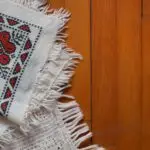
Decorative stitches are used to add embellishments and designs to fabric. They enhance the aesthetic appeal of the finished product. Examples are:
- Satin Stitch: A series of close, even stitches used to create a smooth, solid area, often for monograms or appliques.
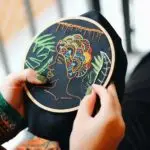
- Embroidery Stitch: A broad category of stitches used to create decorative designs on fabric, such as floral patterns or intricate motifs.
- Chain Stitch: A looped stitch that forms a chain-like pattern, often used for outlining designs or creating decorative borders.
- Blanket Stitch: A decorative stitch used to finish the edges of blankets or other items, providing a neat and attractive border.
Teaching Methods
To deliver this lesson, the teacher will adopt the following methods: Question and Answer,Clarification,Visual Presentation,Hands-on Activity,and Note Taking.
Instructional Procedures
To deliver this lesson, the teacher will adopt the following steps:
Step 1: Introduction
Time: 5 mins
Teaching Skill: Set Induction
Teacher’s Activity: The teacher introduces the lesson by asking pupils about any experience they have with sewing or stitching.
Pupils’ Activity: Pupils share their experiences with sewing.
Step 2: Definition of Stitches
Time: 8 mins
Teaching Skill: Description
Teacher’s Activity: The teacher explains the meaning of stitches and displays samples of fabrics with stitches.
Pupils’ Activity: Pupils observe and ask questions.
Step 3: Types of Stitches
Time: 10 mins
Teaching Skill: Visual Presentation
Teacher’s Activity: The teacher explains temporary, permanent, and decorative stitches using diagrams and fabric samples.
Pupils’ Activity: Pupils observe the examples and listen carefully.
Step 4: Exhibition
Time: 7 mins
teaching Skill: Hands-on Activity
Teacher’s Activity: The teacher demonstrates how to make a basic stitch (running stitch).
Pupils’ Activity: Pupils practise stitching on fabric with the teacher’s guidance.
Step 5: Note-Taking
Time: 5 mins
Teaching Skill: Explanation
Teacher’s Activity: The teacher instructs pupils to take notes on the types of stitches.
Pupils’ Activity: Pupils write down the classroom notes.
Step 6: Evaluation/Review
Time: 3 mins
Teaching Skill: Question and Answer
Teacher’s Activity: The teacher asks pupils questions to evaluate their understanding.
Pupils’ Activity: Pupils respond to the questions orally.
Objective-aligned checks:
- Define stitches and identify different types of stitches.
- Demonstrate how to make at least one type of stitch.
Step 7: conclusion
Time: 2 mins
Teaching Skill: Summary
Teacher’s Activity: The teacher summarizes the lesson and reinforces the importance of learning how to stitch.
Pupils’ Activity: Pupils listen and ask final questions if needed.
Lesson Keywords
- Stitch – A loop of thread made with a needle to hold fabric together.
- Temporary Stitch – A stitch used to hold fabric temporarily before permanent stitching.
- Permanent Stitch – A strong stitch used to hold fabric together permanently.
- Decorative Stitch – A stitch used to add embellishments and designs to fabric.
Lesson Evaluation
to evaluate the learning, the teacher asks pupils to:
- Define what a stitch is.
- Name three types of stitches.
- Explain the difference between a temporary and a permanent stitch.
- Describe one way decorative stitches can be used.
Assignment/Homework
- Practice making a running stitch on a piece of fabric.
- research and write down two additional types of decorative stitches.
- explain why neat stitches are important in clothing and household items.
Differentiation
- For slower learners: Provide one-on-one assistance and simplified diagrams of the stitches.
- For advanced learners: Encourage them to explore more complex stitches and create a small stitched design.
- For visual/auditory/kinesthetic learners: Use visual aids, verbal explanations, and hands-on practice to cater to different learning styles.
Note for Teachers
Ensure that pupils have adequate supervision during the hands-on activity to prevent injuries from needles. Provide clear and simple instructions, and encourage pupils to practice and experiment with different types of stitches.
Community Join the conversation Open discussion +