

Class: Primary 6
Term: Third Term
Subject: Pre-Vocational Studies
Curriculum Theme: Home Economics
Previous Lesson: Kitchen, Factors to consider when planning a kitchen
topic: Kitchen
Content/Learning Area: Meaning of hygiene. Definition of kitchen hygiene
Time Allocation: 40 Minutes
Performance Objectives
By the end of the lesson, pupils should be able to:
- Cognitive Domain: Define hygiene and kitchen hygiene.
- Affective domain: Appreciate the importance of maintaining kitchen hygiene.
- Psychomotor Domain: Demonstrate practices that promote kitchen hygiene.
- Social Domain: Collaborate with peers to identify and implement kitchen hygiene practices.
Reference Materials
- 9 Years Basic Education Curriculum
- Abuja Educational Resource Center Scheme of work
- NAPPS National Unified Scheme of Work
- Basic Science and Technology for Primary Schools, Book 6
- Pre-Vocational Studies for Primary Schools, Book 6
Instructional Materials
To deliver this lesson, the teacher will employ the help of the following materials: charts illustrating kitchen hygiene practices, cleaning supplies (e.g., soap, disinfectant), and visual aids depicting a clean and organized kitchen.
Rationale for the Lesson
Understanding kitchen hygiene is crucial for preventing foodborne illnesses and maintaining a healthy home environment. This lesson equips pupils with essential knowledge and skills for safe food readiness.
Prerequisite/Previous Knowledge
Pupils have prior knowledge of basic cleanliness and sanitation practices.
Lesson Content
Kitchen
Meaning of Hygiene
Hygiene refers to practices that promote cleanliness and health, preventing the spread of germs and diseases.
Definition of Kitchen Hygiene
Kitchen hygiene involves maintaining total cleanliness in the kitchen to prevent food contamination and ensure a safe food preparation environment.
Meaning of Kitchen Hygiene
Kitchen hygiene is the set of practices that keep hands, food, water, utensils, surfaces and storage areas clean enough to reduce contamination. Cleaning removes dirt; sanitising reduces microorganisms after cleaning when the method requires it.
Wash hands, separate raw and ready-to-eat food, use safe water, control pests and keep chemicals away from food.
Kitchen Hygiene
Hygiene means practices that help maintain health and cleanliness. Kitchen hygiene keeps hands, food, water, equipment, surfaces and waste under control so that food is not contaminated.
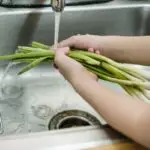
Wash hands before food preparation, separate raw and cooked food, use safe water, clean spills promptly, cover food, control pests and keep chemicals away from ingredients. The earlier lesson on raw-food contamination risks explains why separation matters. A surface that looks clean may still carry microorganisms.
Teaching Methods
To deliver this lesson, the teacher will adopt the following methods: Explanation, Discussion, Demonstration, Visual Aids.
Instructional Procedures
To deliver this lesson, the teacher will adopt the following steps:
Step 1: introduction
Time: 5 minutes
Teaching Skill: Set Induction
Teacher’s Activity: Engages pupils by asking about their experiences with kitchen cleanliness at home and the importance of keeping the kitchen clean.Pupils’ Activity: Share their experiences and ideas about kitchen cleanliness.
Step 2: Explaining Hygiene
Time: 10 minutes
Teaching Skill: Explanation
Teacher’s Activity: Explains the meaning of hygiene and its importance in preventing diseases.
Pupils’ Activity: Listen attentively and ask clarifying questions.
Step 3: Defining Kitchen Hygiene
time: 10 minutes
Teaching Skill: Explanation
Teacher’s Activity: Defines kitchen hygiene and emphasizes its role in ensuring food safety.
Pupils’ Activity: Take notes on the definition and importance of kitchen hygiene.
Step 4: Demonstrating Kitchen hygiene Practices
Time: 10 minutes
Teaching Skill: Demonstration
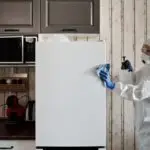
Teacher’s Activity: Demonstrates practical kitchen hygiene practices, such as proper handwashing and surface cleaning.
Pupils’ Activity: Observe the demonstration and ask questions.
step 5: Note-taking
time: 2 minutes
Teaching Skill: summarization
Teacher’s Activity: Guides pupils to summarize the key points of the lesson in their notebooks.
Pupils’ Activity: Write down the key points in their notebooks.
Step 6: Evaluation/review
time: 3 minutes
Teaching Skill: Assessment
Teacher’s Activity: Asks questions to assess pupils’ understanding of the lesson.
Pupils’ Activity: Answer the questions to demonstrate their understanding.
Objective-aligned checks:
- Define hygiene and kitchen hygiene.
- Demonstrate practices that promote kitchen hygiene.
- Collaborate with peers to identify and implement kitchen hygiene practices.
Step 7: Conclusion
Time: 2 minutes
Teaching Skill: Closure
Teacher’s Activity: Summarizes the lesson and emphasizes the importance of practicing kitchen hygiene.
Pupils’ Activity: Listen to the summary and ask any remaining questions.
Lesson keywords
- Hygiene – Practices that promote cleanliness and health.
- Kitchen Hygiene – maintaining cleanliness in the kitchen to prevent food contamination.
- Food Safety – Ensuring that food is safe to eat and free from harmful contaminants.
- Cleanliness – The state of being clean and free from dirt or germs.
Lesson Evaluation
To evaluate the learning, the teacher asks pupils to:
- Define hygiene in their own words.
- Explain what kitchen hygiene means.
- List three reasons why kitchen hygiene is important.
Assignment/Homework
- List five practices that promote kitchen hygiene.
- Describe how you can definitely help maintain kitchen hygiene at home.
Differentiation
- For slower learners: Provide simplified definitions and visual aids to reinforce understanding.
- For advanced learners: Challenge them to research and present on different types of kitchen disinfectants and their uses.
- For visual/auditory/kinesthetic learners: Use visual aids, verbal explanations, and hands-on demonstrations to cater to different learning styles.
Note for Teachers
Ensure that the demonstration of kitchen hygiene practices is conducted in a safe and controlled environment. Emphasize the importance of parental supervision when pupils practice these skills at home.

Community Join the conversation Open discussion +