

Class: Primary 6
Term: 2nd Term
Subject: Pre-Vocational Studies
Curriculum theme: Home Economics
Previous Lesson:
Topic: Meaning of Seam
Content/Learning Area: Meaning of seam, types of seams, and their importance in sewing.
Time Allocation: 40 minutes
Performance Objectives
By the end of the lesson, pupils should be able to:
- Cognitive Domain: Define a seam and mention at least two types of seams.
- Affective Domain: Explain the importance of seams in clothing construction.
- Psychomotor Domain: Identify seams on their clothes and describe their appearance.
- Social Domain: Work in pairs to discuss the types of seams and their uses.
Reference Materials
The following resources were used in planning this lesson:
- 9 – Years Basic Education Curriculum, Abuja Educational Resource Center
- Scheme of Work, NAPPS National Unified Scheme of Work
- Online information from: Merriam-Webster – Seam Definition & Meaning
Instructional Materials
To deliver this lesson, the teacher will employ the help of the following materials:
- Samples of stitched fabrics showing different seams
- Sewing tools (needles, thread, fabric pieces)
- Chart displaying types of seams
Rationale for the Lesson
Seams are an essential part of sewing, as they hold fabric pieces together to form clothing and other textile products. Understanding seams helps pupils appreciate their importance in fashion, tailoring, and home repairs.
Prerequisite/previous Knowledge
Pupils wear clothes daily and may have seen stitched lines on their garments but might not know what they are called. They also have basic knowledge of fabric from previous lessons.
Lesson Content
Meaning of Seam
A seam is the line where two pieces of fabric are stitched together to form a garment or fabric item. Seams are used in sewing to give shape, structure, and strength to clothes.
Types of Seams
Seams are essential in garment construction, each serving a specific purpose. The following are different types of seams:
- Plain Seam – The simplest type, where two fabrics are stitched together and pressed open.
- French Seam – A neat seam where raw edges are enclosed, often used in delicate fabrics.
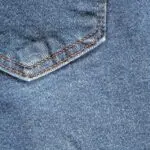
- flat-felled Seam – A strong, durable seam used in jeans and sportswear.
- Overlocked Seam – Uses an overlocking machine to prevent fraying.
- Welt Seam – Similar to a flat-felled seam but with the edges pressed to one side, often used in tailored garments.
- Bound Seam – Involves encasing the raw edges of the seam with a binding, providing a clean and durable finish.
Importance of Seams
Seams are crucial in garment construction, providing structure, durability, and aesthetic appeal. They are:
- Hold fabrics together securely.
- Give shape and design to garments.
- Strengthen clothing to make them last longer.
Teaching Methods
To deliver this lesson, the teacher will adopt the following methods: Discussion, Presentation, Group Work, Visual Aids, Questioning.
Instructional Procedures
To deliver this lesson,the teacher will adopt the following steps:
Step 1: Introduction (Set Induction)
Time: 5 mins
Teaching Skill: Set Induction
Teacher’s Activity: asks pupils to examine their clothes and describe what they notice about the stitched areas.
Pupils’ Activity: pupils observe their clothes and share their observations.
Step 2: Explanation of Seams
Time: 10 mins
Teaching Skill: Explanation
Teacher’s Activity: Defines a seam and explains its function in sewing.
Pupils’ Activity: Listen attentively and take notes.
Step 3: Types of Seams
Time: 10 mins
Teaching Skill: Demonstration
Teacher’s Activity: Displays fabric samples and explains the different types of seams.
Pupils’ Activity: Observe fabric samples and identify different seams.
Step 4: Importance of Seams
Time: 5 mins
Teaching Skill: Discussion
Teacher’s Activity: Asks pupils why seams are important and discusses their uses in clothing.
Pupils’ Activity: Participate in discussions and give reasons why seams are important.
Step 5: Note-Taking
Time: 3 mins
Teaching Skill: Writing
Teacher’s Activity: Asks pupils to copy the key points from the board.
Pupils’ Activity: Copy notes into notebooks.
Step 6: Evaluation/Review
Time: 5 mins
Teaching Skill: Assessment
Teacher’s Activity: Asks pupils to define a seam and mention two types.
Pupils’ Activity: Answer questions based on the lesson.
Objective-aligned checks:
- Define a seam and mention at least two types of seams.
- Explain the importance of seams in clothing construction.
- Identify seams on their clothes and describe their appearance.
Step 7: Conclusion
Time: 2 mins
Teaching Skill: Summarization
Teacher’s Activity: Summarizes the lesson and links it to real-life applications.
pupils’ activity: Listen and respond to the summary.
Lesson Keywords
- Seam – The line where two pieces of fabric are stitched together.
- Plain Seam – A simple seam with two fabrics stitched together and pressed open.
- French Seam – A neat seam with enclosed raw edges.
- Flat-felled Seam – A strong, durable seam used in jeans and sportswear.
- Overlocked Seam – A seam that uses an overlocking machine to prevent fraying.
Lesson Evaluation
To evaluate the learning, the teacher asks pupils to:
- Define a seam.
- Mention two types of seams.
- Explain why seams are critically important in sewing.
- Identify a type of seam on their own clothing.
- Describe how seams affect the durability of clothes.
Assignment/Homework
- Find examples of different types of seams in clothing at home.
- Draw and label two different types of seams.
- Write a short paragraph explaining the importance of seams in clothing construction.
Differentiation
- For slower learners: Use more fabric samples and one-on-one guidance to help them understand seam types.
- for advanced learners: Ask them to suggest other seam types they may have seen.
- For visual/auditory/kinesthetic learners: provide visual aids, verbal explanations, and hands-on activities to cater to different learning styles.
Note for Teachers
This lesson provides a foundation for pupils to understand the construction of garments. Use real-life examples, like school uniforms, to make the lesson relatable. Encourage practical demonstrations for better engagement. Happy teaching!
Community Join the conversation Open discussion +