

Class: Primary 6
Term: Third Term
Subject: Pre-Vocational Studies
Curriculum Theme: Home Economics
Previous Lesson:
Topic: Kitchen
Content/Learning Area: Definition of kitchen, Types of Kitchen
Time Allocation: 40 Minutes
Performance Objectives
By the end of the lesson, pupils should be able to:
- cognitive Domain: Define the term “kitchen.”
- Affective Domain: Show interest in learning about different types of kitchens.
- Psychomotor Domain: Differentiate between traditional and modern kitchens.
- Social Domain: Participate actively in discussions about kitchens.
Reference Materials
- 9 Years Basic Education Curriculum
- Abuja Educational Resource Centre Scheme of work
- NAPPS National Unified Scheme of Work
- Basic Technology for Primary Schools
- Pre-Vocational Studies for Primary Schools
Instructional Materials
To deliver this lesson,the teacher will use the following materials: pictures or illustrations of traditional and modern kitchens,charts,and textbooks.
rationale for the Lesson
Understanding the concept of a kitchen and its types is essential for pupils to appreciate food planning areas and their evolution.
Prerequisite/Previous Knowledge
Pupils are familiar with the concept of a home and its different rooms.
Lesson Content
Kitchen
A kitchen is a designated area where food preparation and cooking activities take place.
Types of Kitchen
There are different types of kitchens, including:
- Traditional Kitchen: This type of kitchen often features basic cooking tools and methods, such as firewood stoves and locally sourced ingredients.
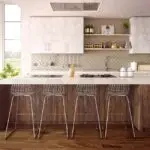
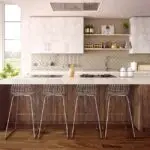
- Modern Kitchen: This type of kitchen is equipped with modern appliances like electric cookers, refrigerators, and microwave ovens, designed for efficiency and convenience.
Types of Kitchen by Setting and Equipment
Kitchens may be described as traditional or modern according to setting, fuel, ventilation, surfaces and equipment. Either type can be kept orderly and safe; “traditional” does not automatically mean dirty, and “modern” does not automatically mean hygienic.
Compare cooking area, smoke removal, water access, storage and waste handling rather than judging only appearance.
Types of Kitchens
A kitchen may be classified by arrangement or use. A one-wall kitchen places main work areas along one wall; a galley has two facing work lines; L-shaped and U-shaped kitchens use two or three connected sides; an island kitchen has a separate central work surface.
A domestic kitchen serves a household, while a commercial kitchen prepares food for many customers under stricter workflow and hygiene controls. The safest layout separates heat, washing, storage and movement routes.
Teaching Methods
To deliver this lesson, the teacher will adopt the following methods: Discussion,Clarification,Visual Aids.
Instructional Procedures
To deliver this lesson, the teacher will adopt the following steps:
Step 1: Introduction
Time: 5 minutes
Teaching Skill: Set Induction
Teacher’s Activity: The teacher asks pupils about where food is prepared at home.
Pupils’ Activity: Pupils respond by naming the kitchen.
Step 2: Defining the Kitchen
Time: 10 minutes
Teaching Skill: Explanation
Teacher’s Activity: The teacher explains the meaning of a kitchen.
Pupils’ Activity: Pupils listen attentively and ask questions.
step 3: Traditional Kitchens
time: 10 minutes
Teaching Skill: Visual Aids
Teacher’s Activity: The teacher shows pictures of traditional kitchens and explains their features.Pupils’ Activity: Pupils observe the pictures and ask questions.
Step 4: modern Kitchens
Time: 10 minutes
Teaching Skill: Explanation
Teacher’s Activity: The teacher explains the features of modern kitchens.
Pupils’ Activity: Pupils listen attentively and ask questions.
Step 5: Note-Taking
Time: 2 minutes
Teaching Skill: Summarization
Teacher’s Activity: The teacher writes a summary of the lesson on the board.
Pupils’ Activity: Pupils copy the notes into their notebooks.
Step 6: Evaluation/Review
Time: 2 minutes
Teaching Skill: Questioning
Teacher’s Activity: The teacher asks questions to assess pupils’ understanding.
Pupils’ Activity: Pupils answer the questions.
Step 7: Conclusion
Time: 1 minute
Teaching Skill: Closure
Teacher’s Activity: The teacher summarizes the lesson.Pupils’ Activity: Pupils listen attentively.
Lesson Keywords
- Kitchen – A place where food is prepared.
- Traditional Kitchen – A kitchen with basic cooking tools and methods.
- modern Kitchen – A kitchen equipped with modern appliances.
Lesson Evaluation
To evaluate the learning, the teacher asks pupils to:
- Define the term “kitchen.”
- Mention two types of kitchens.
- State one feature of a traditional kitchen.
- State one feature of a modern kitchen.
Assignment/Homework
- Draw a picture of either a traditional or modern kitchen.
- List three appliances found in a modern kitchen.
Differentiation
- For slower learners: Provide simplified explanations and visual aids.
- For advanced learners: Encourage them to research different kitchen designs.
- for visual/auditory/kinesthetic learners: Use pictures, discussions, and hands-on activities.
Note for Teachers
Ensure to use relevant visual aids to enhance pupils’ understanding of the different types of kitchens.


Community Join the conversation Open discussion +