

Class: Primary Six
Term: First Term
Subject: Pre-vocational Studies
Curriculum Theme: Home Economics
previous Lesson: Definition And Types Of Stitches
Topic: Uses of Stitches
Content/Learning Area: Uses of Stitches
Time Allocation: 40 minutes
Performance Objectives
By the end of the lesson,pupils should be able to:
- Cognitive Domain:
– List six uses of stitches.
- Affective Domain:
– Appreciate the importance of stitches in everyday life.
- Psychomotor Domain:
– Demonstrate simple stitches using fabric.
- Social Domain:
– Work collaboratively in small groups to discuss how stitches are used in their homes.
Reference Materials
- 9 – Years Basic Education curriculum
- Abuja Educational Resource Center Scheme of Work
- NAPPS National Unified Scheme of Work
- Online Facts from Sussex Seamstress – basic stitch Types and Their Uses
- relevant Textbooks
Instructional Materials
To deliver this lesson, the teacher will employ the help of the following materials:
- Samples of different types of stitches on fabric
- Needle and thread
- Pieces of cloth for demonstration
- Chart showing various uses of stitches
- Chalkboard and chalk
Rationale for the lesson
This lesson is crucial for developing essential life skills. knowing how to use stitches enables pupils to mend clothes, create simple items, and appreciate the value of handcrafts.
Prerequisite/Previous Knowledge
Pupils have prior knowledge of basic sewing tools and materials.
Lesson Content
Uses of Stitches
stitches are essential in daily life. They help join fabrics, fix tears, and create patterns. The following are some uses:
- Mending clothes: Fixing torn clothes.
- Joining fabrics: Connecting pieces of fabric.
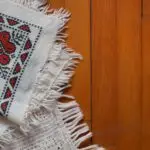
- Making designs: Creating decorative patterns.
- Sewing buttons: Attaching buttons to clothes.
- Finishing edges: Finishing the edges of clothes (hems).
- Making items: Creating things like bags, curtains, and handkerchiefs.
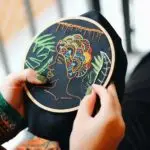
- Embroidery: Adding decorative designs to fabric using needle and thread.
- Quilting: Joining layers of fabric together with stitches to create a padded material.
Uses of Stitches
Temporary stitches hold fabric during fitting; permanent stitches join pieces or secure edges; decorative stitches add pattern; and repair stitches close tears or attach buttons. The stitch is chosen according to strength, appearance and whether it must later be removed.
Even spacing and suitable thread make work stronger. Remove pins as sewing progresses and store every needle after use.
Teaching Methods
To deliver this lesson, the teacher will adopt the following methods: direct Instruction, Demonstration, Guided Practice, Discussion.
Instructional Procedures
To deliver this lesson, the teacher will adopt the following steps:
Step 1: Introduction
time: 5 mins
Teaching Skill: Set Induction
Teacher’s Activity: Reviews the previous lesson on stitches and asks, “Who has ever sewn a button or mended clothes?”
Pupils’ Activity: Answer the question based on their experiences.
Step 2: Description of Key Concepts
Time: 8 mins
Teaching skill: Explanation
Teacher’s Activity: Lists and explains six uses of stitches (mending, joining fabrics, making designs, sewing buttons, finishing edges, making items).
Pupils’ Activity: listen attentively and take notes.
Step 3: Demonstration/Guided Practice
Time: 7 mins
Teaching Skill: Demonstration
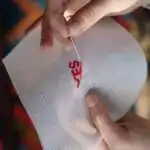
Teacher’s Activity: Demonstrates simple stitches on fabric, explaining their uses.
Pupils’ Activity: Observe and follow along.
Step 4: Autonomous Practice
Time: 7 mins
Teaching Skill: Monitoring
Teacher’s Activity: Divides the class into groups and guides them in practicing basic stitches.
Pupils’ activity: Work in groups, practicing stitches.
Step 5: Note-taking
Time: 5 mins
Teaching Skill: Dictation
Teacher’s Activity: Dictates notes on the uses of stitches.
Pupils’ Activity: Copy notes into their exercise books.
Step 6: Evaluation/Review
Time: 5 mins
Teaching Skill: Questioning
Teacher’s Activity: Asks questions about the lesson (e.g., “What are some uses of stitches?”).Pupils’ Activity: Answer questions individually.
Step 7: Conclusion
Time: 3 mins
Teaching Skill: Summarizing
Teacher’s Activity: summarizes the lesson and encourages practice at home.
Pupils’ Activity: Listen and share thoughts on applying stitches at home.
Lesson Keywords
- Stitch – A single loop or pass of thread through fabric.
- Mending – Repairing something that is broken or torn.
- Fabric – Cloth or othre material made by weaving or knitting fibers.
- Embroidery – The art of decorating fabric with needlework.
- Quilting – The process of joining layers of fabric with stitches.
Lesson evaluation
To evaluate the learning, the teacher asks pupils to:
- List 3 uses of stitches.
- Explain why stitches are meaningful in daily life.
- Demonstrate a basic running stitch on fabric.
- Mention a situation at home were you would need to use stitches.
Assignment/Homework
- Identify three items at home that have been stitched and describe the type of stitch used.
- Practice making a running stitch on a piece of fabric.
- Write a short paragraph on why knowing how to stitch is a useful skill.
Differentiation
- For slower learners: Provide one-on-one assistance and simpler tasks.
- For advanced learners: Introduce more complex stitches.
- For visual/auditory/kinesthetic learners: use visual aids,verbal explanations,and hands-on activities.
Note for Teachers
Ensure that pupils have access to safe needles and threads. Supervise closely during the practical activities.Encourage creativity and patience.
Community Join the conversation Open discussion +