

Class: Primary Six
Term: First Term
Subject: Pre-vocational Studies
Curriculum Theme: Home Economics
Previous Lesson: Guideline For Weekly Cleaning Of The Home And its Surroundings
Topic: Steps In Cleaning The Classroom Habitat
Content/Learning Area: Gather the necessary tools, Sweeping the floor, Dusting surfaces, Mopping the floor, Dispose of the waste, Arrange the furniture
Time Allocation: 40 minutes
Performance Objectives
By the end of the lesson, pupils should be able to:
- Cognitive Domain:
– Identify the steps involved in cleaning the classroom environment.
- Affective Domain:
– Show care and responsibility for maintaining cleanliness in their classroom.
- Psychomotor Domain:
– Demonstrate the proper use of cleaning tools like brooms, dustpans, and mops.
- Social Domain:
– Work effectively with their peers in cleaning the classroom as a team.
Reference Materials
- 9–Years Basic Education Curriculum
- Abuja Educational Resource center Scheme of work
- NAPPS National Unified Scheme of Work
- Online data from The Classroom Store – How to keep Your Classroom clean
- Relevant Textbooks
Instructional Materials
To deliver this lesson, the teacher will employ the help of the following materials:
- Broom, dustpan, and mop
- Wastebasket
- Cleaning cloths
- Blackboard and chalk
- Visual aids (charts showing cleaning tools and their uses)
Rationale for the Lesson
This lesson teaches pupils practical life skills and the importance of maintaining a clean and healthy classroom. It fosters responsibility and teamwork, contributing to a positive learning environment.
Prerequisite/Previous Knowledge
The teacher will begin by asking pupils about their experiences cleaning at home, prompting a discussion about the importance of a clean environment. A quick review of cleaning tools will follow.
Lesson Content
Steps in Cleaning the Classroom Environment
To maintain a clean and healthy classroom,follow these steps:
- Gather necessary tools: broom,mop,dustpan,cloths,wastebasket.
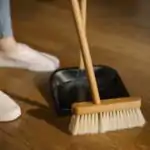
- Sweep the floor from back to front, piling dirt.
- Dust desks, chairs, and other surfaces with a clean cloth.
- Mop the floor from back to front, wringing out the mop often.
- Dispose of waste properly.
- Arrange furniture neatly.
Classroom-cleaning Sequence
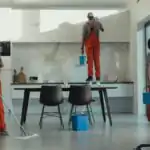
Open the room for safe ventilation, pick litter with suitable protection, arrange movable items, dust from high to low, sweep without raising needless dust, wipe desks with an approved method, clean the floor and empty bins into the correct collection point.
Do not ask pupils to handle broken glass, body fluids, unknown chemicals or heavy furniture. Report these hazards to responsible adults.
Cleaning a Classroom Safely
- Open windows where appropriate and remove pupils’ belongings.
- Pick litter with suitable protection and sort waste.
- Dust from higher surfaces downward.
- Wipe desks and frequently touched surfaces.
- Sweep, then mop from the far corner toward the exit.
- Dry the floor, wash tools and return furniture safely.
Use labelled cleaning products only as directed. Never mix bleach with acids or ammonia, and place a warning near a wet floor.
Teaching methods
To deliver this lesson, the teacher will adopt the following methods: Discussion, Presentation, Practical Activity, Question and Answer.
Instructional Procedures
To deliver this lesson, the teacher will adopt the following steps:
Step 1: Introduction
Time: 5 minutes
Teaching Skill: Set Induction
Teacher’s Activity: Asks pupils about the importance of a clean classroom.
Pupils’ Activity: Share their thoughts on classroom cleanliness.
step 2: Identifying Cleaning Tools
Time: 5 minutes
Teaching skill: Demonstration
Teacher’s Activity: Shows and explains the use of each cleaning tool.
Pupils’ activity: observe and listen attentively.
Step 3: Sweeping the Floor
Time: 8 minutes
Teaching Skill: Demonstration and Guided Practice
Teacher’s Activity: Demonstrates proper sweeping technique.
Pupils’ Activity: Practise sweeping under teacher supervision.
Step 4: Dusting Surfaces
Time: 7 minutes
Teaching Skill: Guided Practice
Teacher’s Activity: Demonstrates dusting techniques.Pupils’ Activity: Practice dusting desks and chairs.
Step 5: Mopping the Floor
Time: 7 minutes
teaching Skill: Demonstration and Guided Practice
Teacher’s Activity: Demonstrates proper mopping technique.
Pupils’ Activity: Practice mopping in small groups.
Step 6: Note-Taking
Time: 3 minutes
Teaching Skill: Note-Taking
Teacher’s Activity: Guides pupils in taking notes on the cleaning steps.
Pupils’ Activity: Write down key points in their notebooks.
Step 7: Evaluation/Review
Time: 5 minutes
Teaching Skill: Questioning
Teacher’s Activity: Asks questions to review the lesson.
Pupils’ Activity: Answer questions and summarize the steps.
Step 8: Conclusion
Time: 2 minutes
Teaching Skill: Closure
Teacher’s Activity: Summarizes the key steps in cleaning the classroom and commends pupils for their participation and effort.
Pupils’ Activity: Listen attentively and ask clarifying questions.
Lesson Keywords
- Broom – A tool used for sweeping floors.
- Mop – A tool used for cleaning floors with water.
- Dustpan – A flat container with a handle used to collect swept dirt.
- Wastebasket – A container for disposing of waste materials.
- Cleaning Cloth – A piece of fabric used for wiping surfaces.
Lesson Evaluation
To evaluate the learning,the teacher asks pupils to:
- Name three cleaning tools used in the classroom.
- Explain how to sweep the classroom effectively.
- Why is dusting notable?
- Describe the correct way to mop the floor.
- What’s the final step in cleaning the classroom?
Assignment/Homework
- List the cleaning tools available at home and their uses.
- Describe the steps you would take to clean your bedroom.
- Explain why it is important to keep your home and school environment clean.
Differentiation
- For slower learners: Provide one-on-one assistance and simplified instructions.
- For advanced learners: Assign leadership roles in guiding their peers and encourage them to research additional cleaning methods.
- For visual/auditory/kinesthetic learners: Use visual aids, verbal explanations, and hands-on activities to cater to different learning styles.
Note for Teachers
Ensure all cleaning materials are safe for pupils to use and that proper hygiene practices are followed during and after the cleaning activities. Supervise pupils closely to prevent accidents and ensure effective cleaning.

Community Join the conversation Open discussion +