

Class: Primary One
Term: Third Term
Subject: Cultural & Creative Arts
Curriculum Theme:
Previous Lesson: Types and Importance of Ceremonies
Topic: Importance of ceremonies
Content/Learning Area: What are Ceremonies?, Some of the reasons why ceremonies are significant include:
Time Allocation: 40 minutes
Performance Objectives
By the end of the lesson, pupils should be able to:
- Cognitive Domain:
1. List two importance of ceremonies.
2. Discuss ceremonies they have attended or know about.
- Affective Domain:
1. Appreciate the meaning of participating in ceremonies.
- Psychomotor Domain:
1. Actively participate in class discussions about ceremonies.
- Social Domain:
1. Share their experiences of attending ceremonies with classmates.
Reference Materials
- 9 – Years Basic Education Curriculum
- Abuja Educational Resource Center Scheme of Work
- NAPPS National Unified Scheme of Work
- Relevant Textbooks
Instructional Materials
To deliver this lesson, the teacher will use the following materials:
- Whiteboard or chart paper
- Markers or crayons
- Pictures or videos of different ceremonies
Rationale for the Lesson
Understanding the importance of ceremonies helps children appreciate cultural traditions and the significance of shared experiences. This knowledge fosters a sense of belonging and respect for diverse customs.
Prerequisite/Previous Knowledge
The teacher will begin by asking pupils to share any special events they have celebrated with their families. This will lead into a discussion about what makes these events special and introduce the concept of ceremonies.
Lesson Content
What are Ceremonies?
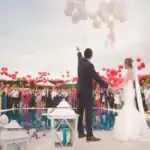
Ceremonies are planned events that follow specific rules and traditions. They celebrate important moments like birthdays, weddings, or funerals. Some are religious, others aren’t.
Some of the reasons why ceremonies are critically important include:
ceremonies play a vital role in society, providing structure, meaning, and connection. The following are some reasons why ceremonies are important:
- Celebrating special occasions: Ceremonies help us celebrate important events like birthdays and graduations, bringing loved ones together to share joy.Celebrating these events strengthens bonds.
- Marking important milestones: Ceremonies mark meaningful life events, helping us remember and reflect on their meaning. This includes births, deaths, or finishing big projects.
- Bringing people together: Ceremonies unite people from different backgrounds, building relationships and community.
- Remembering and honoring past events or people: Ceremonies help us remember and honor important people or events, paying tribute to their impact.
- Teaching us about our culture and traditions: Ceremonies teach us about our culture and traditions, helping us understand important values and beliefs.
- Introducing structure and order during significant events: Ceremonies provide structure and order during critically important events, helping us know what to expect and how to behave.
- Teaching us respect and etiquette for different occasions: Participating in ceremonies teaches us respect and appropriate behavior for various social situations.
- Providing a sense of continuity and stability: Ceremonies offer a sense of continuity and stability, connecting us to the past and providing a framework for the future.
- Reinforcing social norms and values: Ceremonies reinforce social norms and values, helping to maintain order and cohesion within a community.
- Offering emotional support and healing: Ceremonies can offer emotional support and healing during times of grief, loss, or transition.
Teaching Methods
To deliver this lesson, the teacher will adopt the following methods: Discussion,Question and answer,Show and tell.
Instructional Procedures
To deliver this lesson, the teacher will adopt the following steps:
Step 1: Introduction
Time: 5 minutes
Teaching Skill: questioning
Teacher’s Activity: Asks pupils to share examples of special events they’ve attended.
Pupils’ activity: Share their experiences and examples.
Step 2: Description of Key concepts
Time: 10 minutes
Teaching Skill: Explaining
Teacher’s Activity: Defines ceremonies and explains their purpose.
Pupils’ Activity: Listen attentively and ask clarifying questions.
Step 3: Exhibition/Guided Practice
Time: 10 minutes
Teaching Skill: Modeling
teacher’s Activity: Shows pictures/videos of various ceremonies and discusses their significance.
Pupils’ Activity: observe and participate in discussions.
Step 4: Self-reliant Practice
Time: 5 minutes
Teaching Skill: Facilitating
Teacher’s Activity: Guides pupils in listing reasons why ceremonies are critically important.
Pupils’ Activity: Work individually or in pairs to complete the activity.
Step 5: Note-taking
Time: 5 minutes
teaching Skill: Note-taking
Teacher’s Activity: Summarizes key points on the board.
Pupils’ Activity: Copy key points into their notebooks.
Step 6: Evaluation/Review
Time: 5 minutes
Teaching Skill: Questioning
Teacher’s Activity: Asks evaluation questions.
Pupils’ Activity: Answer the evaluation questions.
Step 7: Conclusion
Time: 5 minutes
Teaching Skill: Summarizing
Teacher’s Activity: reviews the key points about the importance of ceremonies.
Pupils’ Activity: Share their own experiences and reflections on the topic.
Lesson Keywords
- ceremony – A planned event with specific rules and traditions.
- Tradition – Customs or beliefs passed down through generations.
- Culture – The customs, arts, social institutions, and achievements of a particular nation, people, or group.
- Party – A joyful occasion for festivities to mark a special event.
- Milestone – A significant stage or event in the advancement of somthing.
Lesson Evaluation
To evaluate the learning, the teacher asks pupils to:
- Name two reasons why ceremonies are important.
- Describe a ceremony you’ve been to. What did you learn?
- Why is it critically important to take part in ceremonies?
- Give examples of ceremonies you know.
- How do ceremonies help us connect with our culture and traditions?
Assignment/Homework
- Ask your parents about a ceremony that is critically important in your family. Write a short paragraph about it.
- Draw a picture of a ceremony you would like to attend.
- List three things you have learned about ceremonies in this lesson.
Differentiation
- For slower learners: Provide one-on-one assistance and simplified explanations.
- For advanced learners: Encourage them to research and present on different types of ceremonies from around the world.
- For visual/auditory/kinesthetic learners: Use visual aids, discussions, and hands-on activities to cater to different learning styles.
Note for Teachers
Ensure to use real-life examples and visual aids to make the lesson engaging and relatable for the pupils. Encourage active participation and create a supportive learning habitat.

Community Join the conversation Open discussion +