

Class: Primary 5
Term: 3rd Term
Subject: Basic Science And Technology
Curriculum Theme: Basic Science
Previous Lesson: Types Of Acids And Bases
Topic: Uses Of Acid And Base
Content/Learning Area: Uses Of Acid And Base
Time Allocation: 40 minutes
Performance Objectives
By the end of the lesson, pupils should be able to:
- Cognitive Domain: list five uses of acid and base in everyday life.
- Affective Domain: Show recognition for the usefulness of acids and bases in homes and industries.
- Psychomotor Domain: Identify and match substances to either acid or base categories.
- Social Domain: Collaborate with peers to discuss safe uses of acids and bases.
Reference Materials
The following resources were used in planning this lesson:
- 9 Years Basic Education Curriculum
- Abuja Educational Resource Center Scheme of work
- NAPPS National Unified Scheme of Work
- Online Facts from: Monarch Chemicals – 10 most common acids and their uses
- Relevant Textbooks
Instructional Materials
To deliver this lesson, the teacher will use the following materials:
- Chart showing common acids and bases
- Samples of vinegar, lemon juice, soap, baking soda
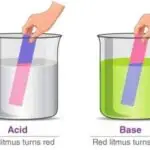
- Litmus paper
- Whiteboard and marker
- Pictures of cleaning agents and batteries
Rationale for the Lesson
Understanding the uses of acids and bases helps pupils know how these substances are used safely at home and in industries.
Prerequisite/Previous Knowledge
Pupils have learned about the properties of acids and bases and can identify some common acidic and basic substances.
Lesson Content
Uses Of Acid And Base
Acids are useful substances found in many everyday items. They are used for cleaning, cooking, and even in medicine.
The following are uses of acids:
- Used in batteries to produce electricity
- used to remove stains from metals
- Used in making soft drinks and food
- Used in making medicines like vitamin C
- Used to clean toilets and tiles
- Used in the production of fertilizers for agriculture
- Used in the manufacturing of plastics and synthetic fibers
Uses of Bases
Bases are substances that feel slippery and are found in many cleaning agents. They help to remove dirt and grease.
The following are uses of bases:
- Used in making soap and detergents
- Used in toothpaste to clean teeth
- Used to neutralize acid spills
- Used in making paper and textiles
- Used to soften water in washing
- Used in the production of antacids to relieve heartburn
- used in the manufacturing of certain medications and pharmaceuticals
Teaching Methods
To deliver this lesson, the teacher will adopt the following methods: Discussion,Lecture,Description,Group Work,Demonstration,Use of Visual aids
Instructional Procedures
To deliver this lesson,the teacher will adopt the following steps:
Step 1: Introduction
Time: 5 mins
Teaching Skill: Set Induction
Teacher’s Activity: Tells a short story about how batteries work and asks pupils to mention substances used in homes for cleaning or cooking.
Pupils’ Activity: Pupils listen and respond to the teacher’s questions.
Step 2: Introduction to Acids
Time: 7 mins
Teaching Skill: Explanation
Teacher’s Activity: Explains what acids are and shows samples of acid-containing items like lemon and vinegar.
Pupils’ Activity: Pupils observe and identify acidic items.
Step 3: Uses of Acids
Time: 8 mins
Teaching Skill: Demonstration
Teacher’s Activity: Lists and explains the uses of acids with pictures and shows how toilet cleaner works.
Pupils’ Activity: Pupils take turns to observe the acid samples and match them with their uses.
Step 4: Uses of Bases
Time: 8 mins
Teaching Skill: Group Work
Teacher’s Activity: shows pictures and real samples of base substances like soap and baking soda, and explains their uses.
Pupils’ Activity: Pupils discuss in groups and match base substances with their uses.
Step 5: Note-Taking
Time: 3 mins
Teaching Skill: Writing
Teacher’s Activity: Guides pupils to write down key points about the uses of acids and bases.
Pupils’ Activity: Pupils copy the class note into their notebooks.
Step 6: Evaluation/Review
Time: 5 mins
Teaching Skill: Questioning
Teacher’s Activity: Asks pupils to list three uses of acids and three uses of bases.
Pupils’ Activity: Pupils answer questions and do short group presentations.
Objective-aligned checks:
- list five uses of acid and base in everyday life.
- Show recognition for the usefulness of acids and bases in homes and industries.
- Identify and match substances to either acid or base categories.
Step 7: Conclusion
Time: 4 mins
Teaching Skill: instructional Closure
Teacher’s Activity: Summarizes the lesson, highlights the importance of acids and bases, and encourages pupils to observe these substances in use at home and school.
Pupils’ Activity: Pupils ask final questions, reflect on learning, and appreciate the lesson.
Lesson Keywords
- Acid – A substance that can taste sour and is used in cleaning and cooking
- base – A substance that feels slippery and is used in making soap
- Battery – A device that stores and provides electricity using acid
- Toothpaste – A base product used to clean teeth
- Neutralize – To cancel the effect of an acid using a base
Lesson Evaluation
To evaluate the learning, the teacher asks pupils to:
- Mention two uses of acids
- Mention two uses of bases
- Match vinegar, soap, and toothpaste to either acid or base
- Say one place where acid is used at home
- Explain how bases help in cleaning
Assignment/Homework
- List five items at home that contain acids or bases.
- Describe how acids and bases are meaningful in industries.
- Research and write about the safety precautions when using acids and bases.
Differentiation
- For slower learners: Provide simplified examples and hands-on activities with direct guidance.
- For advanced learners: Encourage independent research on the chemical reactions of acids and bases.
- For visual/auditory/kinesthetic learners: Use real-life samples for visual learners, verbal explanations for auditory learners, and hands-on experiments for kinesthetic learners.
Note for Teachers
Encourage hands-on observation using safe materials. Emphasize safety while handling acids and bases, even when they are common household substances.
Community Join the conversation Open discussion +