

Class: Primary 5
Term: 3rd Term
Subject: Basic Science And Technology
curriculum Theme: Basic Science
Previous Lesson: Physical Properties Of Acids And Bases
Topic: types Of Acids And Bases
Content/Learning area: Types Of Acids And Bases
Time allocation: 40 minutes
Performance Objectives
By the end of the lesson, pupils should be able to:
- Cognitive Domain: Identify and classify types of acids and bases.
- Affective Domain: Show interest in learning about acids and bases.
- Psychomotor Domain: Group given items as either acids or bases.
- social Domain: Work cooperatively in groups to list acids and bases from their environment.
Reference Materials
The following resources were used in planning this lesson:
- 9 Years Basic Education Curriculum
- Abuja Educational Resource Center Scheme of work
- NAPPS National Unified Scheme of Work
- Online Information from: Britannica – Acid | Definition, Examples, Types, Uses, & Facts
- Relevant Textbooks
Instructional Materials
To deliver this lesson, the teacher will use the following materials:
- Chart showing common acids and bases
- Lemon, vinegar, soap water, baking soda solution
- Blue and red litmus paper
- Whiteboard and marker
- pictures of acidic and basic substances
Rationale for the Lesson
Understanding types of acids and bases helps pupils identify common household substances and their properties in everyday life.
Prerequisite/Previous Knowledge
Pupils already know that substances have different tastes and can be classified based on how they react with other materials.
Lesson Content
Types of Acids And Bases
Acids are substances that taste sour and can be found in food and drinks.
The following are types of acids:
- Citric acid
- Acetic acid
- Tartaric acid
- Ascorbic acid
- Sulfuric acid
- Hydrochloric acid
- Nitric Acid
Types of Bases
Bases are substances that feel soapy and are found in cleaning products.
These include:
- Sodium hydroxide
- Potassium hydroxide
- Ammonium hydroxide
- Calcium hydroxide
- Magnesium hydroxide
- aluminum hydroxide
- sodium Bicarbonate
Strong, Weak and Source-based Grouping
Acids and bases may be described as strong or weak according to how completely they form ions in water; strong does not mean the same as concentrated. At Primary 5, pupils can also group safe examples by source: food acids such as citric acid, household weak bases such as baking soda, and laboratory substances handled only by trained adults.
A substance’s everyday name may not reveal its type. Use the label and an approved test. Never assume all cleaning products are bases or mix an acid cleaner with another chemical.
Teaching Methods
To deliver this lesson, the teacher will adopt the following methods: Discussion, lecture, exhibition, clarification, visual aids, group work
instructional Procedures
To deliver this lesson, the teacher will adopt the following steps:
Step 1: Introduction
Time: 5 min
Teaching Skill: Set Induction
Teacher’s Activity: Greets pupils, tells a story about lemon and soap, asks pupils to mention substances they know that are sour or soapy.
Pupils’ Activity: Respond and mention examples of substances they have used.
Step 2: Meaning and Types
time: 10 min
Teaching Skill: Explanation
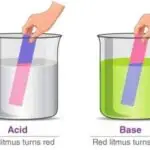
Teacher’s Activity: Explains acids and bases using real objects and shows litmus paper color changes.Pupils’ Activity: Observe and listen to teacher’s explanation.
Step 3: Types of Acids
Time: 5 min
Teaching Skill: visual Aids
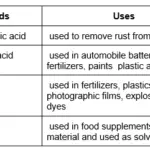
teacher’s Activity: Displays a chart of different types of acids and points to common examples.Pupils’ Activity: Name the acids shown and repeat after teacher.
Step 4: Types of Bases
time: 5 min
Teaching Skill: Demonstration
Teacher’s Activity: Demonstrates base reactions using soap and water, explains examples of bases.
pupils’ Activity: Observe and name the bases mentioned.
Step 5: Uses
Time: 5 min
teaching Skill: Discussion
Teacher’s Activity: Leads a discussion on were acids and bases are used at home or school.
Pupils’ Activity: Contribute to discussion and give examples.
Step 6: Note-Taking
Time: 3 min
Teaching Skill: Writing
Teacher’s Activity: Guides pupils to copy lesson note on the board.
Pupils’ Activity: Copy the lesson into their notebooks.
Step 7: Evaluation/Review
Time: 5 min
Teaching Skill: Assessment
Teacher’s Activity: Asks questions based on lesson content and monitors responses.
Pupils’ Activity: Answer questions and demonstrate knowledge.
Objective-aligned checks:
- Identify and classify types of acids and bases.
- Work cooperatively in groups to list acids and bases from their environment.
Step 8: Conclusion
Time: 2 min
Teaching skill: Instructional/Cognitive Closure
Teacher’s Activity: Reviews major points of the lesson, encourages pupils to look around for acids and bases at home.
Pupils’ Activity: Listen attentively and ask questions.
Lesson Keywords
- Acid – A sour substance found in some food and drinks
- Base – A bitter or soapy substance often used in cleaning
- Citric acid – An acid found in lemons and oranges
- Sodium hydroxide – A strong base used in making soap
- Litmus paper – A tool used to test if a substance is an acid or a base
Lesson Evaluation
To evaluate the learning, the teacher asks pupils to:
- Mention three examples of acids
- Mention three examples of bases
- Group items as acid or base from pictures shown by the teacher
Assignment/homework
- List five household items that are acids or bases.
- Explain how you can identify an acid or a base using litmus paper.
Differentiation
- For slower learners: Teacher pairs slow learners with faster learners and uses real objects to support understanding for all ability levels.
- For advanced learners: Encourage advanced learners to research the pH scale and its relevance to acids and bases.
- for visual/auditory/kinesthetic learners: Use visual aids, verbal explanations, and hands-on activities to cater to different learning styles.
Note for Teachers
Make the lesson interactive by letting pupils touch, see, or taste safe acids and bases to build curiosity and engagement. Emphasize safety when handling unknown substances.
Community Join the conversation Open discussion +