

Class: Primary 5
Term: 2nd Term
Subject: Basic Science And Technology
Curriculum Theme: Basic Science
previous Lesson: Functions Of The Bones And Joints
Topic: Reproduction In Plants
Content/Learning Area: Reproduction In plants.
Time Allocation: 40 minutes
Performance Objectives
By the end of the lesson, pupils should be able to:
- Cognitive Domain: Identify the process of reproduction in plants and the roles of different parts of a flower.
- Affective domain: Appreciate the importance of plants in nature and the importance of their reproduction.
- Psychomotor Domain: Demonstrate the different parts of a flower by labeling a diagram of a flower.
- Social Domain: Work in groups to discuss and share their understanding of how plants reproduce.
Reference Materials
The following resources were used in planning this lesson:
- 9 – Years Basic Education curriculum
- Abuja Educational Resource Center Scheme of work
- NAPPS National Unified Scheme of Work
- Online Information from: NCERT – Reproduction in Plants
- Relevant textbooks: “Science for Primary Schools” by A. E. Adeyemo
Instructional Materials
To deliver this lesson, the teacher will use the following materials:
- Hibiscus flowers (for exhibition)
- Charts of plant reproduction
- A diagram of the flower with labeled parts
Rationale for the Lesson
Understanding reproduction in plants helps pupils to appreciate nature’s processes and the importance of plants in the environment. It also introduces them to basic biological concepts such as pollination and fertilization that are essential in many areas of science.
Prerequisite/Previous Knowledge
Pupils should already have basic knowledge of plant parts, such as roots, stems, and leaves, which they learned in earlier lessons.
Lesson content
Reproduction in Plants
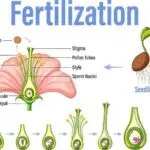
Plants reproduce to create new plants. The process involves several stages and parts of the flower that work together.Below are the main parts of a flower involved in reproduction:
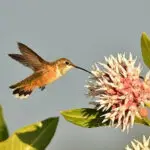
- Petals: These are the colorful parts of the flower that attract pollinators like bees, butterflies, and birds.
- Stigma: The sticky top part of the pistil where pollen is collected.
- Style: The tube that connects the stigma to the ovary.
- Ovary: The part of the flower that contains the ovules, which become seeds when fertilized.
- Anther: The part of the stamen that produces pollen,which contains the male gametes.
The process of reproduction begins with pollination, where pollen from the anther is transferred to the stigma. This leads to fertilization, where the male gamete from the pollen joins the female gamete in the ovary. After fertilization, seeds are formed, which can grow into new plants.
Teaching Methods
To deliver this lesson, the teacher will adopt the following methods: Questioning, Discussion, Demonstration, Visual Aids, Note-Taking, Oral Assessment, Summary.
Instructional Procedures
To deliver this lesson, the teacher will adopt the following steps:
Step 1: Introduction (Set Induction)
Time: 5 mins
Teaching Skill: set Induction
Teacher’s Activity: Ask pupils what they know about flowers and plant reproduction.
Pupils’ Activity: Pupils respond to questions and share their knowledge.
Step 2: Description of Flower Parts
Time: 8 mins
Teaching Skill: Demonstration
Teacher’s activity: Show a hibiscus flower, identify and explain the parts of the flower.
Pupils’ Activity: Pupils observe the flower and take notes.
Step 3: pollination Process
Time: 7 mins
Teaching Skill: Explanation
Teacher’s Activity: Explain how pollination occurs and why it is indeed vital for reproduction.Pupils’ Activity: Pupils ask questions and engage in a discussion.
Step 4: Fertilization
Time: 7 mins
Teaching Skill: Demonstration
Teacher’s Activity: Use a diagram to explain fertilization and its role in plant reproduction.
Pupils’ Activity: Pupils observe and take notes on fertilization.
Step 5: Note-Taking
Time: 5 mins
Teaching Skill: Note Taking
Teacher’s activity: Guide pupils in writing down the parts of the flower and the steps of reproduction.
Pupils’ Activity: Pupils write down the notes.
Step 6: Evaluation/review
Time: 5 mins
Teaching Skill: Questioning
Teacher’s Activity: Ask pupils questions about the lesson to assess their understanding.
Pupils’ Activity: Pupils answer the questions based on what they learned.
Objective-aligned checks:
- Identify the process of reproduction in plants and the roles of different parts of a flower.
- Demonstrate the different parts of a flower by labeling a diagram of a flower.
Step 7: Conclusion
Time: 3 mins
Teaching Skill: Recap
Teacher’s Activity: Summarize the key points of plant reproduction.
Pupils’ Activity: Pupils summarize what they have learned.
Lesson Keywords
- Reproduction – The process by which plants create new plants.
- Pollination – The transfer of pollen from the anther to the stigma.
- Fertilization – The joining of male and female gametes to form a seed.
- petals – The colorful parts of a flower that attract pollinators.
- Stigma – The part of the pistil that receives pollen.
- Ovary – The part of the flower that contains ovules and becomes the fruit.
- Anther – The part of the stamen that produces pollen.
Lesson Evaluation
To evaluate the learning, the teacher asks pupils to:
- name the five parts of a flower involved in reproduction.
- Explain what happens during pollination.
- Describe the process of fertilization in plants.
- Discuss why plants need to reproduce.
- Draw and label the parts of a flower.
Assignment/Homework
- Collect different types of flowers and identify their parts.
- Write a short paragraph on the importance of pollination.
- draw a diagram showing the process of fertilization in plants.
Differentiation
- For slower learners: Provide simplified diagrams and one-on-one assistance to understand the parts of the flower and the reproduction process.
- For advanced learners: Encourage them to research different methods of plant reproduction, such as vegetative propagation, and present their findings to the class.
- For visual/auditory/kinesthetic learners: Use colorful diagrams, videos, and hands-on activities like dissecting a flower to cater to different learning styles.
Note for Teachers
When conducting this lesson,ensure that the pupils understand each part of the flower and its role in reproduction. Encourage them to ask questions and work together during group discussions. You can also bring in different types of flowers to make the lesson more engaging. make sure to reinforce the importance of pollination and fertilization in the life cycle of plants. Happy teaching!

Community Join the conversation Open discussion +