

Class: Junior Secondary School 3 (JSS3, JSS 3)
Term: 2nd Term
Week: 5
Age: 14 years
Duration: 45 minutes
Subject: Basic Science And Technology
Curriculum Theme: Basic Science
Previous Lesson: Locations and Economic Importance of Solid Minerals
Topic: Light Energy
Subject Matter: Reflection, Refraction, Vision, Dispersion and rainbow
Specific Objectives
By the end of the lesson, pupils should be able to:
- Cognitive Domain:
(a) Explain light energy and its basic properties.
(b) Distinguish between reflection, refraction, and dispersion of light. - Affective Domain:
(a) Show interest in observing light phenomena in their environment. - Psychomotor Domain:
(a) Demonstrate reflection and refraction of light using simple materials. - Social Domain:
(a) Participate actively in group activities involving light experiments.
Reference Materials
The following resources was used in planning this lesson:
- 9 Years Basic Education Curriculum
- Lagos State Unified Scheme of Work for Junior Secondary Schools
- Britannica – Reflection | Definition, Types, Examples, & Facts
- Relevant Textbooks
Instructional Materials
The teacher will teach this lesson with the aid of:
- Torchlight
- Plane mirror
- Glass of water
- White cardboard or screen
- Prism or glass block
- Charts showing parts of the eye
Rationale for the Lesson
Light energy helps pupils understand how vision occurs and explains common natural phenomena like mirrors, shadows, rainbows, and images formed by lenses.
Prerequisite/Previous Knowledge
Pupils have prior knowledge of energy and have observed light sources such as the sun, electric bulbs, and torches in daily life.
Lesson Content
Light Energy
Meaning of Light Energy
Light energy is a form of energy that enables us to see objects. It travels in straight lines and is produced by sources such as the sun, candles, and electric bulbs.
Reflection of Light
Reflection of light occurs when light rays strike a smooth surface and bounce back into the same medium.
The following are examples of reflection:
- Image seen in a mirror
- Reflection on calm water
- Reflection on polished metal surfaces
Refraction of Light
Refraction of light is the bending of light when it passes from one medium to another of different density, such as from air to water.
These include examples of refraction:
- A straight stick appearing bent in water
- Apparent depth of a swimming pool
- Formation of images by lenses
Vision
Vision is the ability of the eye to see objects when light from the object enters the eye and forms an image on the retina.
The following are involved in vision:
- Light source
- Object
- Eye
- Brain
Dispersion of Light and Rainbow
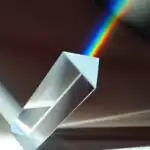
Dispersion of light is the separation of white light into its different colours when it passes through a prism.
Examples are the colours of the rainbow:
- Red
- Orange
- Yellow
- Green
- Blue
- Indigo
- Violet
Teaching Methods/Instructional Techniques:
Discussion, Explanation, Demonstration, Visual Aids, Question and Answer, Group Work
Instructional Procedures
To deliver this lesson, the teacher will adopt the following steps:
Step 1: Introduction
Time: 5 minutes
Teaching Skill: Set Induction
Teacher’s Activity: The teacher asks pupils about sources of light they know and demonstrates with a torchlight.
Pupils’ Activity: Pupils respond to questions and observe the demonstration.
Learning Point: Light is a form of energy.
Step 2: Reflection of Light
Time: 8 minutes
Teaching Skill: Explanation
Teacher’s Activity: The teacher explains reflection and demonstrates using a plane mirror.
Pupils’ Activity: Pupils observe and mention where they have seen reflections.
Learning Point: Light can bounce off surfaces.
Step 3: Refraction of Light
Time: 8 minutes
Teaching Skill: Demonstration
Teacher’s Activity: The teacher places a pencil in water and explains refraction.
Pupils’ Activity: Pupils observe the bending effect.
Learning Point: Light bends when it moves between media.
Step 4: Vision and Dispersion
Time: 9 minutes
Teaching Skill: Explanation
Teacher’s Activity: The teacher explains vision and shows a chart of the eye, then explains dispersion using a prism or chart.
Pupils’ Activity: Pupils identify parts of the eye and list rainbow colours.
Learning Point: Light enables sight and forms rainbows.
Step 5: Note-Taking
Time: 7 minutes
Teaching Skill: Chalkboard Summary
Teacher’s Activity: The teacher writes the lesson summary on the board.
Pupils’ Activity: Pupils copy the notes.
Learning Point: Key points of light energy.
Step 6: Evaluation/Review
Time: 5 minutes
Teaching Skill: Questioning
Teacher’s Activity: The teacher evaluates the learning by asking the following questions:
- What is light energy?
- Define reflection of light.
- State one example of refraction.
- List three colours of the rainbow.
Pupils’ Activity: Pupils answer questions orally.
Learning Point: Assessment of understanding.
Step 7: Conclusion
Time: 3 minutes
Teaching Skill: Reinforcement
Teacher’s Activity: The teacher summarizes the lesson and corrects misconceptions.
Pupils’ Activity: Pupils listen attentively.
Learning Point: Light energy explains many natural phenomena.
Lesson Keywords
- Light energy – energy that makes seeing possible
- Reflection – bouncing back of light
- Refraction – bending of light
- Vision – ability to see
- Dispersion – splitting of white light
Differentiation
Use of visual aids, group demonstrations, and simple experiments to support different learning abilities.
Note for teachers using this lesson plan
Ensure experiments are simple and safe. Use real-life examples to improve pupils’ understanding of light phenomena.


Community Join the conversation Open discussion +