

Class: Junior Secondary School 3 (JSS 3 / JS3)
Term: Third Term
Week: 5
Age: 14 years
Duration: 45 minutes
Subject: Basic Science and Technology
Curriculum Theme: Basic Science
Previous Lesson: Ethical Issues in Science and Development: Meaning and Wrong Application of Science.
Topic: SIMPLE MACHINE
Subject Matter: Definition: Examples of simple machines
Specific Objectives
By the end of the lesson, pupils should be able to:
Cognitive Domain:
- Define simple machine.
- List at least five examples of simple machines.
Affective Domain:
- Appreciate how simple machines make work easier.
- Show interest in identifying simple machines in their environment.
Psychomotor Domain:
- Identify various simple machines in real-life scenarios.
- Draw simple sketches of some simple machines.
Social Domain:
- Participate actively in group discussions about simple machines.
- Collaborate with peers to identify the functions of different simple machines.
Reference Materials
The following resources were used in planning this lesson:
- 9 Years Basic Education Curriculum
- Senior Secondary Schools Education Curriculum
- State Unified Scheme of Work
- MacMillan Basic Science and Technology for Junior Secondary Schools Book 3
- https://education.gov.ng/wp-content/uploads/2023/07/BASIC-SCIENCE-TECHNOLOGY-JSS-1-3.pdf
- https://www.lindaikejisblog.com/2023/9/simple-machines-definition-types-and-examples.html
Instructional Materials
The teacher will teach this lesson with the aid of:
- Pictures or charts showing different simple machines (lever, pulley, inclined plane, wedge, wheel and axle, screw).
- Actual examples of simple machines if available (e.g., a lever, a pulley system, a wedge).
- Whiteboard and markers.
Rationale for the Lesson
This lesson helps pupils understand how simple tools can make work easier and more efficient in their daily lives. It enables them to identify and appreciate the basic principles behind many common devices they encounter.
Prerequisite/Previous Knowledge
Pupils have a basic understanding of force, work, and energy from previous lessons.
Lesson Content/Board Summary
SIMPLE MACHINES
Definition of Simple Machines
A simple machine is a mechanical device that changes the direction or magnitude of a force. It uses a single applied force to do work against a single load force. Simple machines make work easier by multiplying force, changing the direction of force, or increasing the distance over which a force acts.
Examples of Simple Machines
There are six classical types of simple machines. These are:
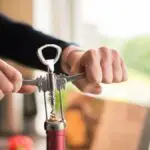
- Lever – A rigid bar that pivots around a fixed point called a fulcrum. Examples include a seesaw, crowbar, bottle opener, and wheelbarrow.
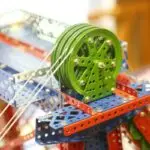
- Pulley – A wheel on an axle or shaft that is designed to support movement and change of direction of a cable or belt along its circumference. Examples include flagpoles, window blinds, and cranes.
- Inclined Plane – A flat surface tilted at an angle, with one end higher than the other, used to move objects to a higher or lower level. Examples include ramps, slides, and sloped roads.
- Wedge – A triangular-shaped tool, which is essentially two inclined planes joined back-to-back, used to split, cut, or tighten. Examples include an axe, knife, chisel, and doorstop.
- Wheel and Axle – A simple machine consisting of a wheel attached to a smaller rod or axle, both of which rotate together. Examples include a doorknob, steering wheel, bicycle wheels, and screwdrivers.
- Screw – An inclined plane wrapped around a central cylinder, used to lift objects, fasten things together, or apply pressure. Examples include wood screws, jar lids, and a drill bit.
Teaching Methods/Instructional Techniques
Discussion, Lecture, Demonstration, Question and Answer, Visual Aids
Instructional Procedures
Step 1: Introduction
Time: 5 minutes
Teaching Skill: Set Induction
Teacher’s Activity: The teacher asks pupils how they lift heavy objects or split firewood, leading to a discussion about tools that make work easier.
Pupils’ Activity: Pupils share their experiences and ideas about tools that help them perform tasks.
Learning Point: Pupils recall prior knowledge related to force and work, and are introduced to the concept of making work easier.
Step 2: Definition of Simple Machine
Time: 10 minutes
Teaching Skill: Explanation/Definition
Teacher’s Activity: The teacher defines a simple machine as a device that makes work easier by changing the direction or magnitude of force, and writes the definition on the board.
Pupils’ Activity: Pupils listen attentively, ask questions for clarity, and copy the definition into their notebooks.
Learning Point: Pupils understand the definition and basic function of simple machines.
Step 3: Introduction to Types of Simple Machines
Time: 10 minutes
Teaching Skill: Classification/Illustration
Teacher’s Activity: The teacher introduces the six main types of simple machines (lever, pulley, inclined plane, wedge, wheel and axle, screw) and shows pictures or actual examples of each.
Pupils’ Activity: Pupils observe the pictures and examples, listen to the teacher’s explanations, and identify familiar simple machines.
Learning Point: Pupils are introduced to the various categories of simple machines.
Step 4: Discussion on Levers and Pulleys
Time: 5 minutes
Teaching Skill: Elaboration/Examples
Teacher’s Activity: The teacher explains levers with examples like a seesaw and crowbar, and pulleys with examples like flagpoles, demonstrating their use if materials are available.
Pupils’ Activity: Pupils discuss the examples and identify other levers and pulleys they know.
Learning Point: Pupils understand levers and pulleys as simple machines and their practical applications.
Step 5: Discussion on Inclined Planes and Wedges
Time: 5 minutes
Teaching Skill: Elaboration/Examples
Teacher’s Activity: The teacher explains inclined planes (e.g., ramps) and wedges (e.g., knives), highlighting how they function to make work easier.
Pupils’ Activity: Pupils contribute examples of inclined planes and wedges from their daily lives.
Learning Point: Pupils understand inclined planes and wedges as simple machines and their practical applications.
Step 6: Discussion on Wheel and Axle and Screws
Time: 5 minutes
Teaching Skill: Elaboration/Examples
Teacher’s Activity: The teacher explains the wheel and axle (e.g., doorknobs) and screws (e.g., jar lids), explaining their mechanisms and uses.
Pupils’ Activity: Pupils identify more examples of wheel and axle systems and screws.
Learning Point: Pupils understand wheel and axle and screws as simple machines and their practical applications.
Step 7: Evaluation/Review
Time: 5 minutes
Teaching Skill: Questioning/Assessment
Teacher’s Activity: The teacher evaluates the learning by asking the following questions:
- What is a simple machine?
- Mention four examples of simple machines.
- Give one example each for a lever and a pulley.
- How does a simple machine help us do work?
Pupils’ Activity: Pupils answer orally and in writing.
Learning Point: Pupils demonstrate understanding of the lesson.
Step 8: Conclusion
Time: 5 minutes
Teaching Skill: Summarization
Teacher’s Activity: The teacher summarizes the key points of the lesson, emphasizing how simple machines are essential in everyday tasks, and gives pupils homework to identify five simple machines in their homes.
Pupils’ Activity: Pupils listen to the summary, ask any final questions, and note down the homework.
Learning Point: The lesson is reinforced, and pupils are encouraged to apply their knowledge outside the classroom.
Lesson Keywords
- Simple machine – A device that makes work easier by changing the direction or magnitude of a force.
- Lever – A rigid bar that pivots around a fulcrum.
- Pulley – A wheel with a grooved rim around which a rope or chain passes.
- Inclined plane – A flat surface set at an angle or slope.
- Wedge – A double inclined plane used to split or separate objects.
- Wheel and axle – A wheel attached to a smaller rod that turns together.
- Screw – An inclined plane wrapped around a cylinder.
Differentiation
For pupils who grasp the concepts quickly, the teacher can challenge them to explain the mechanical advantage of different simple machines. For those needing more support, the teacher can provide additional real-life examples and simplified diagrams, encouraging peer tutoring.
Note for teachers using this lesson plan
Encourage pupils to bring examples of simple machines from home (e.g., scissors, bottle openers, doorknobs) to make the lesson more practical and engaging. Emphasize safety if demonstrating actual machines.
Community Join the conversation Open discussion +