

Class: Junior Secondary School 3 (JSS3, JSS 3)
Term: 1st Term
Week: 4
Age: 14 years
Duration: 45 minutes
Subject: Basic Science And Technology
Curriculum Theme: Basic Science
Previous Lesson: Family Traits, Dominant and Recessive Traits, and Importance of Family Genealogy
Topic: Environmental Hazard – Soil Erosion
Subject Matter: Definition of Soil Erosion, Causes of Soil Erosion, Control of Soil Erosion
Specific Objectives
By the end of the lesson, pupils should be able to:
- Cognitive Domain:
(a) Describe soil erosion as an environmental hazard.
(b) Identify and explain the major causes of soil erosion.
(c) State various control measures of soil erosion. - Affective Domain:
(a) Appreciate the importance of protecting the soil from erosion.
(b) Show concern for the effects of poor land management on the environment. - Psychomotor Domain:
(a) Demonstrate through drawing how erosion occurs.
(b) Participate in classroom discussions or role plays on controlling soil erosion. - Social Domain:
(a) Work collaboratively in groups to identify local examples of erosion and suggest ways to prevent it.
Reference Materials
The following resources was used in planning this lesson:
- 9 Years Basic Education Curriculum
- Lagos State Unified Scheme of work for Junior Secondary Schools
- Wikipedia – Soil erosion
- Relevant Textbooks
Instructional Materials
The teacher will teach this lesson with the aid of:
- Chart showing pictures of different forms of soil erosion
- Diagrams illustrating causes and control of erosion
- Models of farmland or slopes
- Flash cards
- Video clip on soil erosion (if available)
- Whiteboard and markers
Rationale for the Lesson
This lesson helps students understand how soil erosion affects the environment and human activities, and how it can be controlled to ensure sustainable land use and agriculture.
Prerequisite/Previous Knowledge
Pupils have learned about environmental hazards and have basic knowledge of natural agents like wind and water. They can relate to soil erosion from what they see in farms, roadsides, and surroundings.
Lesson Content/Board Summary
Environmental Hazard – Soil Erosion
Definition of Soil Erosion
Soil erosion is the gradual wearing away and removal of the top layer of the soil by natural agents such as water, wind, or human activities. It leads to the loss of fertile soil necessary for plant growth.
The following are key points about soil erosion:
- It is a major environmental hazard affecting land and agriculture.
- It reduces soil fertility and crop yield.
- It causes loss of valuable topsoil.
- It leads to destruction of farmlands, roads, and buildings.
Causes of Soil Erosion
Soil erosion occurs due to both natural and human factors. These factors disturb the soil and expose it to erosion agents.
The following are the causes of soil erosion:
- Heavy rainfall: Strong rainwater washes away topsoil.
- Deforestation: Cutting down trees exposes soil to erosion.
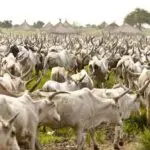
- Overgrazing: Excessive grazing removes grass cover that protects the soil.
- Poor farming methods: Practices like continuous cropping and ploughing across slopes encourage erosion.
- Wind action: In dry areas, strong winds blow away loose soil particles.
- Construction activities: Building roads and houses without proper drainage leads to erosion.
Control of Soil Erosion
Soil erosion can be controlled by applying methods that protect the soil surface and reduce the force of erosion agents.
The following are the control measures of soil erosion:
- Afforestation: Planting trees to hold soil firmly.
- Contour ploughing: Ploughing across slopes to reduce water flow speed.
- Terracing: Building steps on slopes to slow down runoff.
- Cover cropping: Growing crops that provide ground cover for the soil.
- Mulching: Covering the soil with leaves or straw to prevent direct rainfall impact.
- Proper drainage system: Constructing channels to control water flow.
- Avoid overgrazing: Limiting grazing animals to prevent loss of vegetation cover.
Teaching Methods/Instructional Techniques:
Lecture, Discussion, Demonstration, Explanation, Question and Answer, Group Work, Use of Visual Aids
Instructional Procedures
To deliver this lesson, the teacher will adopt the following steps:
Step 1: Introduction
Time: 5 minutes
Teaching Skill: Set Induction
Teacher’s Activity: Teacher displays pictures of eroded land and asks pupils what they observe and where such conditions are seen in their environment.
Pupils’ Activity: Pupils observe and respond by describing what they see and relate it to soil being washed away.
Learning Point: Pupils are introduced to the concept of soil erosion.
Step 2: Definition of Soil Erosion
Time: 8 minutes
Teaching Skill: Explanation
Teacher’s Activity: Teacher defines soil erosion and explains it as a major environmental hazard using charts or soil models.
Pupils’ Activity: Pupils listen, ask questions, and repeat the definition.
Learning Point: Pupils understand the meaning and nature of soil erosion.
Step 3: Causes of Soil Erosion
Time: 10 minutes
Teaching Skill: Discussion
Teacher’s Activity: Teacher discusses various causes of soil erosion and explains both natural and human factors.
Pupils’ Activity: Pupils participate in discussion and mention examples from their locality.
Learning Point: Pupils identify and understand different causes of soil erosion.
Step 4: Control of Soil Erosion
Time: 10 minutes
Teaching Skill: Demonstration
Teacher’s Activity: Teacher demonstrates control measures using pictures or small models showing contour ploughing, terracing, and tree planting.
Pupils’ Activity: Pupils observe and describe how these measures prevent soil erosion.
Learning Point: Pupils learn practical ways to control soil erosion.
Step 5: Note-Taking
Time: 5 minutes
Teaching Skill: Reinforcement
Teacher’s Activity: Teacher writes the lesson summary on the board for pupils to copy.
Pupils’ Activity: Pupils copy the notes into their notebooks.
Learning Point: Pupils have a written summary for reference.
Step 6: Evaluation/Review
Time: 5 minutes
Teaching Skill: Questioning
Teacher’s Activity: The teacher evaluates the learning by asking the following questions:
- What is soil erosion?
- Mention three causes of soil erosion.
- List three ways of controlling soil erosion.
- State one importance of preventing soil erosion.
Pupils’ Activity: Pupils respond to the evaluation questions orally.
Learning Point: Pupils recall key facts about soil erosion and its control.
Step 7: Conclusion
Time: 2 minutes
Teaching Skill: Closure
Teacher’s Activity: Teacher summarizes the lesson and emphasizes the importance of soil conservation in environmental protection.
Pupils’ Activity: Pupils listen attentively and ask questions for clarity.
Learning Point: Pupils understand the relevance of soil erosion control in daily life.
Lesson Keywords
- Erosion – the wearing away of the earth’s surface by wind, water, or human activity
- Deforestation – removal of trees and vegetation cover from land
- Afforestation – planting of trees to protect soil
- Contour Ploughing – farming method of ploughing across slopes
- Terracing – making steps on slopes to reduce soil erosion
Differentiation
Teacher supports slower learners with pictorial aids and simpler explanations, while advanced learners research local erosion control efforts and share findings.
Note for teachers using this lesson plan
Ensure learners participate actively by sharing local experiences of erosion. Use real-life examples and visuals to enhance understanding and retention.

Community Join the conversation Open discussion +