

Class: Primary One
Term: Third Term
Subject: Basic Science and Technology
Curriculum Theme: Basic Technology
Previous Lesson: Things That Use Energy
topic: Light Energy
Content/Learning Area: What is Light Energy?,How Light Energy Works
Time Allocation: 40 minutes
Performance Objectives
By the end of the lesson,pupils should be able to:
- Cognitive Domain:
1. Define light energy.
2. Identify sources of light energy.
3. Explain how light energy helps us see.
4. Describe what happens when light hits an object (reflection, absorption, transmission).
- Affective Domain:
1. Show curiosity and interest in exploring light energy.
2. Share personal experiences related to light energy.
- Psychomotor Domain:
1. Demonstrate an understanding of light energy through participation in class activities.
- Social Domain:
1. Participate actively in group discussions.
2. Share ideas and knowledge with classmates.
Reference materials
- 9 – Years Basic Education Curriculum
- Abuja Educational Resource Center Scheme of Work
- NAPPS National Unified Scheme of Work
- Relevant Textbooks
Instructional Materials
To deliver this lesson, the teacher will use the following materials:
- Whiteboard or chart paper
- markers or crayons
- Pictures or illustrations of light sources
- Mirrors, transparent objects (e.g., glass), and opaque objects (e.g., wood)
Rationale for the Lesson
Understanding light energy is basic to comprehending the world around us. this lesson provides a basic understanding of light and its properties, which will be built upon in future science lessons.
Prerequisite/Previous Knowledge
Pupils are familiar with different objects in their surroundings and can differentiate between day and night.
Lesson Content
What is Light Energy?
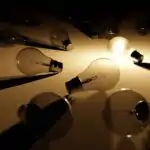
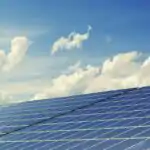
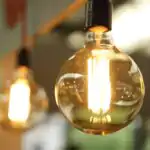
Light energy is a type of energy that allows us to see. It travels in straight lines and can bounce off (reflect), be taken in (absorb), or pass through (transmit) objects. the sun is a major source of light, but there are many others, such as lamps and flashlights. Other sources of light are also critically important.
How Light Energy Works
Light travels in straight lines. When light hits an object, three things can happen:
- Reflection: Light bounces off the object. We see ourselves in a mirror because of reflection.Objects that reflect light are called reflective objects. Examples are:
1. Mirrors
2. Polished metal surfaces
3. Shiny tiles
- Absorption: Light is taken in by the object. Dark objects absorb more light than light objects. Objects that absorb light are called opaque objects (not transparent). Examples are:
1. Dark clothing
2.Black paper
3. coal
- Transmission: Light passes through the object. We can see through a window as of transmission. Objects that transmit light are called transparent objects. Examples are:
1. Glass windows
2. Clear plastic bottles
3. Eyeglasses
Teaching Methods
To deliver this lesson, the teacher will adopt the following methods: Discussion, Presentation, Question and answer
Instructional Procedures
To deliver this lesson, the teacher will adopt the following steps:
Step 1: Introduction
Time: 5 minutes
Teaching Skill: Set Induction
Teacher’s Activity: Ask pupils what they can see and how they see things.Pupils’ Activity: Respond to the teacher’s questions.
Step 2: Description of Key Concepts
Time: 10 minutes
Teaching Skill: Explaining
Teacher’s activity: Define light energy and explain how it helps us see.
Pupils’ Activity: Listen attentively and ask questions.
Step 3: Demonstration/Guided Practice
Time: 10 minutes
Teaching Skill: Demonstrating
Teacher’s Activity: Demonstrate reflection, absorption, and transmission of light using mirrors, transparent, and opaque objects.
Pupils’ Activity: Observe the demonstrations and participate in discussions.
Step 4: Independent Practice
Time: 5 minutes
Teaching Skill: Monitoring
Teacher’s Activity: Guide pupils to identify light sources in their surroundings.
Pupils’ Activity: Identify and list light sources.
Step 5: Note-Taking
Time: 5 minutes
Teaching Skill: Note-taking
Teacher’s Activity: Guide pupils in taking notes on key concepts.
Pupils’ Activity: Write down key points.
Step 6: Evaluation/Review
Time: 5 minutes
Teaching skill: Questioning
teacher’s Activity: Ask evaluation questions.
Pupils’ Activity: Answer the evaluation questions.
Objective-aligned checks:
- Define light energy.
- Identify sources of light energy.
- Explain how light energy helps us see.
Step 7: Conclusion
Time: 2 minutes
Teaching Skill: Summarizing
Teacher’s Activity: Summarize the key concepts of light energy and its properties.
Pupils’ Activity: Listen to the summary and ask any remaining questions.
Lesson Keywords
- Light Energy – A form of energy that makes it possible to see things.
- Reflection – when light bounces off an object.
- Absorption – When light is taken in by an object.
- Transmission – When light passes through an object.
- Opaque – Objects that do not allow light to pass through.
- Transparent – Objects that allow light to pass through.
Lesson Evaluation
To evaluate the learning,the teacher asks pupils to:
- What is light energy?
- How does light help us see?
- Name three things that can happen when light hits an object.
- Give examples of reflective, opaque, and transparent objects.
- List five sources of light.
Assignment/Homework
- Find three different objects at home: one that reflects light, one that absorbs light, and one that transmits light.
- Draw pictures of these objects and explain why they behave the way they do with light.
Differentiation
- For slower learners: Provide one-on-one assistance and use simpler language.
- For advanced learners: Encourage them to explore additional resources and conduct simple experiments.
- For visual/auditory/kinesthetic learners: Use visual aids, verbal explanations, and hands-on activities to cater to different learning styles.
Note for Teachers
Ensure to use real-life examples and demonstrations to make the lesson engaging and understandable for the pupils. Encourage active participation and questioning throughout the lesson.
Community Join the conversation Open discussion +