

Class: Primary One
Term: Third Term
Subject: Pre-vocational Studies
Curriculum Theme: Agricultural Science
Previous Lesson: Farm Animals II
Topic: Home For Farm Animals
Content/Learning Area: What are Habitats?, Types of Farm Animal homes
Time Allocation: 40 minutes
Performance Objectives
By the end of the lesson, pupils should be able to:
- Cognitive domain:
1. List different types of farm animal homes.
2. Identify and match farm animals with their correct homes through pictures.
- Affective Domain:
1. Show an understanding of the importance of providing suitable homes for farm animals.
- Psychomotor Domain:
1. Demonstrate appreciation for the importance of providing suitable homes for farm animals.
2. Work collaboratively to classify farm animals into their habitats.
- Social Domain:
1. Work cooperatively with peers to classify farm animals and their habitats.
Reference Materials
- 9 – Years Basic education Curriculum
- Abuja Educational Resource Centre Scheme of Work
- NAPPS National Unified scheme of Work
- Relevant textbooks
Instructional Materials
To deliver this lesson, the teacher will use the following materials:
- Pictures of different farm animals and their homes
- Whiteboard or chart paper
- Markers or crayons
Rationale for the Lesson
This lesson is crucial for developing pupils’ understanding of animal welfare and responsible animal care. Knowing about appropriate habitats for farm animals is essential for their health and productivity, and fosters empathy and respect for living creatures.
Prerequisite/Previous Knowledge
Pupils have prior knowledge of different farm animals.
Lesson Content
What are Habitats?
Habitats are the natural places where animals live and grow well. These places give animals food, shelter, and safety from danger. Farm animals also need special habitats to be healthy and produce well.
Types of Farm Animal Homes
Farm animals require specific types of homes to thrive. These include:
- barn: A large building for cows, pigs, and horses. Barns keep animals safe from bad weather and give them space to rest, eat, and have babies.
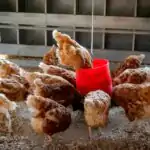
- Coop: A smaller cage or pen for chickens or rabbits. Coops are safe places for these smaller animals.
- Stable: A building for horses, often with separate spaces for each horse to rest and eat.
- Pen: An enclosed area for pigs or sheep, often used for grazing. Pens can be made of wood or metal.
- Pond: A water area for ducks and fish. Ponds are natural homes for water animals and can provide food and water for other farm animals.
- Kennel: A small shelter for dogs, providing protection from the elements.
- Hutch: A raised cage for rabbits, often made of wood and wire mesh.
Teaching Methods
To deliver this lesson, the teacher will adopt the following methods: Discussion, Picture identification, Group work
Instructional Procedures
To deliver this lesson, the teacher will adopt the following steps:
Step 1: Introduction
Time: 5 minutes
Teaching Skill: Set induction
Teacher’s Activity: Asks pupils what they know about farm animals and their living spaces. Shows pictures of farm animals.pupils’ Activity: Respond to teacher’s questions and participate in the discussion.
Step 2: Explanation of Key Concepts
Time: 10 minutes
Teaching Skill: Explanation
Teacher’s Activity: Explains the concept of habitats and introduces different types of farm animal homes (barns, coops, stables, pens, ponds).
Pupils’ Activity: Listen attentively and ask clarifying questions.
Step 3: Matching Animals to Homes
Time: 10 minutes
Teaching Skill: Exhibition, Guided Practice
Teacher’s Activity: Shows pictures of farm animals and their corresponding homes, guiding pupils to match them.
Pupils’ Activity: Participate in matching activities and answer teacher’s questions.
Step 4: Classifying Animals in Groups
Time: 5 minutes
Teaching Skill: Self-reliant Practice
Teacher’s Activity: Assigns pupils to work in groups to classify pictures of farm animals into their appropriate habitats.
Pupils’ Activity: Work collaboratively to classify farm animals.
Step 5: Note-Taking
Time: 5 minutes
Teaching Skill: Note-Taking
Teacher’s Activity: Guides pupils in taking notes on the different types of farm animal homes.Pupils’ Activity: Write down key points in their notebooks.
step 6: Evaluation/Review
Time: 5 minutes
Teaching Skill: Questioning, Review
Teacher’s Activity: Asks review questions to assess pupils’ understanding.Pupils’ Activity: Answer review questions.
Objective-aligned checks:
- List different types of farm animal homes.
- Identify and match farm animals with their correct homes through pictures.
- Show an understanding of the importance of providing suitable homes for farm animals.
Step 7: Conclusion
Time: 2 minutes
Teaching Skill: Summarizing
Teacher’s Activity: summarizes the key points about farm animal homes and their importance. Assigns homework.
Pupils’ Activity: Listen to the summary and note the homework assignment.
Lesson Keywords
- Habitat – The natural surroundings where an animal lives.
- Barn – A large building for housing farm animals.
- Coop – A cage or pen for chickens or rabbits.
- Stable – A building for housing horses.
- Pen – An enclosed area for farm animals like pigs or sheep.
- Pond – A body of water for ducks and fish.
Lesson Evaluation
To evaluate the learning, the teacher asks pupils to:
- What is a coop used for?
- Why is it critically important for animals to have specific homes?
- Name an animal that lives in a stable.
- What are some other types of homes for farm animals?
- Why is it important to keep farm animals’ homes clean and safe?
Assignment/Homework
- Draw yoru favorite farm animal and its home.
- List three reasons why farm animals need homes.
Differentiation
- For slower learners: Provide one-on-one assistance and use simpler language.
- For advanced learners: Encourage them to research additional types of farm animal homes and present their findings to the class.
- For visual/auditory/kinesthetic learners: Use visual aids, verbal explanations, and hands-on activities to cater to different learning styles.
Note for Teachers
Ensure to use real-life examples and relatable scenarios to explain the importance of providing suitable homes for farm animals. Encourage pupils to share their personal experiences with animals to foster empathy and understanding.

Community Join the conversation Open discussion +