

Class: Primary Two
Term: Second Term
Subject: Basic Science and Technology
Curriculum theme: Basic Science
Previous Lesson: Dangers Of Taking Harmful Substances
Topic: Harmful Objects and Sharp Objects
content/learning Area: Defining harmful objects and sharp objects, Listing examples of harmful and sharp objects
Time Allocation: 40 minutes
Performance Objectives
By the end of the lesson, pupils should be able to:
- Cognitive Domain:
1. Define harmful objects and sharp objects.2.List examples of harmful and sharp objects.
- Psychomotor Domain:
1. Demonstrate safe handling practices around harmful and sharp objects.
- Affective Domain:
1.Show awareness of potential dangers posed by harmful and sharp objects.
2. Develop responsible behavior around potentially hazardous items.
- Social Domain:
1. Communicate effectively about safety concerns related to harmful and sharp objects.
2.Cooperate with others to maintain a safe environment.
Reference Materials
- 9 – Years Basic Education Curriculum
- Abuja Educational Resource Center Scheme of Work
- NAPPS national Unified Scheme of Work
- relevant Textbooks
Instructional Materials
To deliver this lesson, the teacher will use the following materials:
- Whiteboard or chart paper
- Markers or crayons
- Pictures or real-life examples of harmful and sharp objects (if safe and appropriate)
Rationale for the Lesson
This lesson is crucial for developing pupils’ safety awareness and responsible behavior. Understanding the potential dangers of harmful and sharp objects is essential for preventing accidents and injuries at home and school.
Prerequisite/Previous Knowledge
The teacher will begin by asking pupils to share any experiences they have had with objects that caused them harm or injury. This will lead into a discussion about the importance of being careful around certain objects.
Lesson Content
What are Harmful Objects and Sharp Objects?
Harmful objects are things that can hurt you, make you sick, or make you feel bad if you aren’t careful. They can be in our homes, schools, or outside. Some examples are chemicals,medicines,and hot things.sharp objects have pointy or edged parts that can cut or poke you.These can cause serious injuries if you aren’t careful. Examples include scissors, knives, and needles.
examples of Harmful Objects and Sharp Objects
Harmful objects are items that can cause injury, illness, or damage if not handled properly. The following are examples of harmful objects:
- Cleaning Products: These can be harmful if swallowed or touch your skin. Always ask a grown-up before using them.
- Medications: Pills or liquids for adults can be harmful if taken without supervision. Never take medicine without asking a grown-up.
- Hot Surfaces: Stoves, irons, or anything hot can burn you. stay away from hot things and ask a grown-up for help.
- Electrical Appliances: Things like hot irons or toasters can be dangerous. Never touch them without asking a grown-up.
- Sharp Edges on Furniture: Furniture with sharp edges can hurt you if you bump into it or fall on it. Be careful near furniture and don’t run around.
- Poisonous Plants: Some plants can be harmful if touched or eaten. Learn to identify and avoid them.
- Expired Food: Eating food that has gone bad can make you sick. Always check the expiration date.
Sharp objects are items with edges or points that can cut or puncture the skin. Examples are:
- Scissors: These have sharp blades that can cut. Always ask a grown-up before using scissors.
- Knives: Kitchen knives or sharp utensils should only be used by grown-ups. Never touch knives without asking a grown-up.
- Needles: Sewing needles can hurt you if you aren’t careful. Always ask a grown-up before using needles.
- Broken Glass: Broken glass has sharp edges. Be careful and ask a grown-up for help.
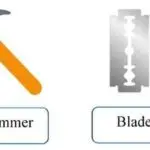
- Razor Blades: These should never be touched by children. Ask a grown-up for help if you find one.
- Thorns: found on some plants,thorns can cause painful punctures. Be cautious when handling thorny plants.
- Nails: loose or exposed nails can cause cuts or punctures. be careful around construction areas or old furniture.
Teaching Methods
To deliver this lesson, the teacher will adopt the following methods: Discussion, Question and answer, Show and tell (if using real-life examples).
Instructional Procedures
To deliver this lesson, the teacher will adopt the following steps:
Step 1: Introduction (Set Induction)
Time: 5 minutes
Teaching Skill: Questioning
Teacher’s Activity: Engage students in a brief discussion about safety.
Pupils’ Activity: participate in the discussion, sharing their experiences.
Step 2: Clarification of Key Concepts
Time: 10 minutes
Teaching Skill: Explaining
Teacher’s activity: Define harmful and sharp objects, providing clear examples.
Pupils’ Activity: Listen attentively and ask clarifying questions.
Step 3: Exhibition/Guided Practice
Time: 10 minutes
Teaching Skill: Demonstrating
teacher’s Activity: Show pictures or examples (if safe) of harmful and sharp objects, explaining safe handling practices.
Pupils’ Activity: Observe carefully and participate in discussions.
Step 4: Autonomous practice
Time: 5 minutes
Teaching Skill: monitoring
Teacher’s Activity: Guide pupils as they list examples of harmful and sharp objects.
Pupils’ Activity: Work individually or in small groups to complete the activity.
Step 5: note-Taking
Time: 5 minutes
Teaching skill: Note-taking
Teacher’s Activity: Guide pupils in summarizing key points.
Pupils’ Activity: Write down key definitions and examples.
Step 6: Evaluation/Review
Time: 5 minutes
Teaching Skill: Questioning
Teacher’s Activity: Ask review questions to assess understanding.
Pupils’ Activity: Answer questions to demonstrate understanding.
Objective-aligned checks:
- Define harmful objects and sharp objects.
- List examples of harmful and sharp objects.
- Demonstrate safe handling practices around harmful and sharp objects.
Step 7: Conclusion
Time: 2 minutes
Teaching Skill: Summarizing
Teacher’s Activity: Summarize the key points and emphasize the importance of safety around harmful and sharp objects. Remind pupils to always ask a grown-up for help if they are unsure about anything.
Pupils’ Activity: Listen attentively and ask clarifying questions.
Lesson Keywords
- Harmful Objects – Things that can cause injury, illness, or damage if not handled properly.
- Sharp Objects – Items with edges or points that can cut or puncture the skin.
- safety – Taking precautions to avoid harm or danger.
- Caution – Being careful and aware of potential risks.
- Supervision – Guidance and oversight from a responsible adult.
Lesson Evaluation
To evaluate the learning, the teacher asks pupils to:
- What are harmful objects?
- Give two examples of sharp objects.
- List three examples of harmful substances.
- Why is it important to be careful around sharp objects?
- What should you do if you find a harmful object?
Assignment/Homework
- Draw pictures of three harmful objects and three sharp objects found at home.
- Write a short paragraph explaining why it is important to be careful around these objects.
- Ask a family member to help you identify othre potentially harmful or sharp objects in your home and list them.
Differentiation
- For slower learners: Provide one-on-one assistance and use simpler language.
- For advanced learners: Encourage them to research additional examples of harmful and sharp objects.
- For visual/auditory/kinesthetic learners: Use visual aids,verbal explanations,and hands-on activities to cater to different learning styles.
Note for Teachers
Ensure to use real-life examples and visual aids to enhance understanding. Emphasize the importance of seeking adult supervision when dealing with potentially harmful or sharp objects. Regularly reinforce safety practices in the classroom.

Community 1 comment Open discussion +